



Framed Fishing Watercolour
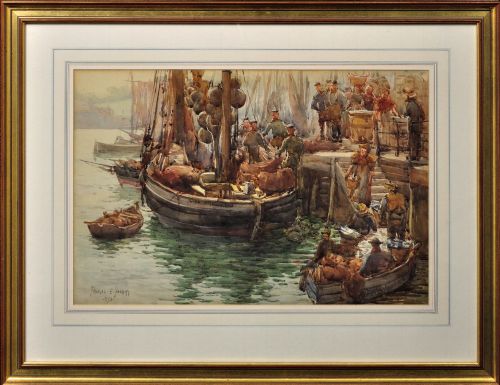
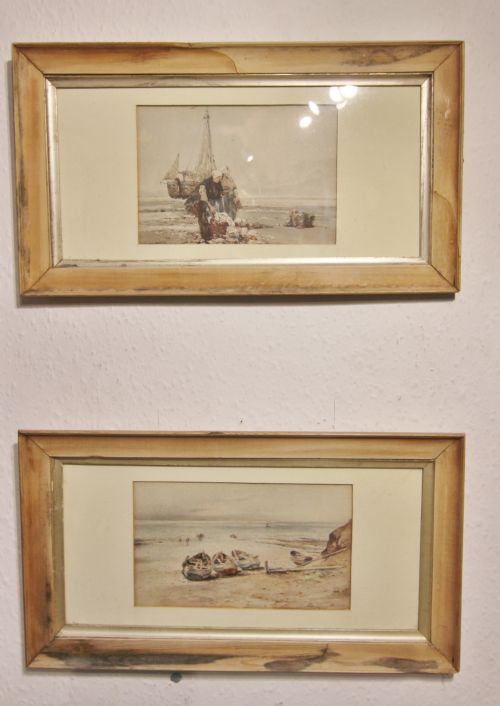
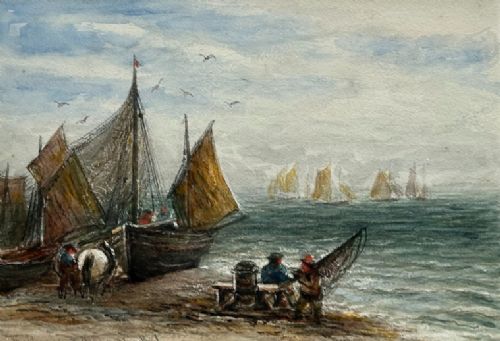
These framed fishing watercolour works capture coastal harbours and riverbanks across the nineteenth and twentieth centuries.
Framed Fishing Watercolour
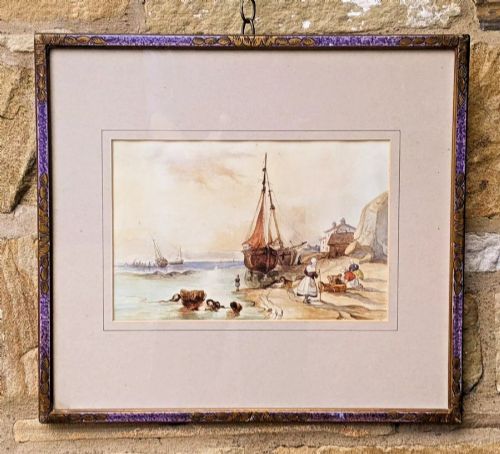
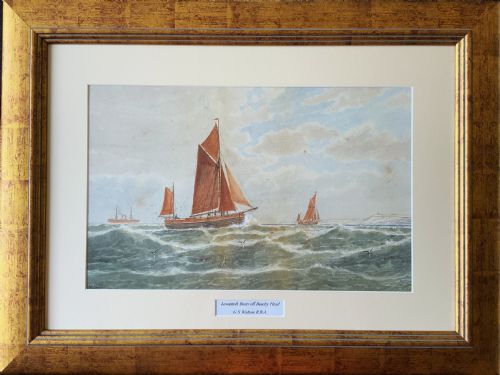
A framed fishing watercolour brings maritime and riverside scenes into domestic spaces, recording harbour life and coastal vessels through fluid pigment on paper.
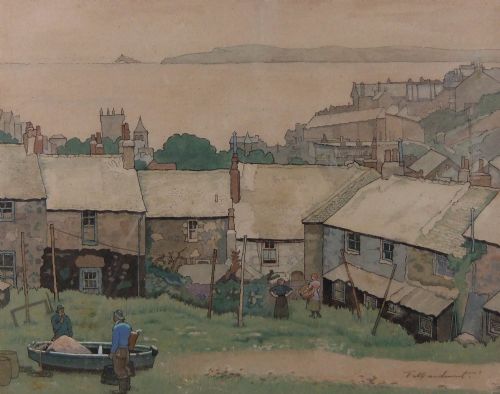
You meet Victorian marine watercolours alongside British Impressionism and St Ives School coastal views, spanning nineteenth-century beach scenes to mid-twentieth-century harbour paintings.
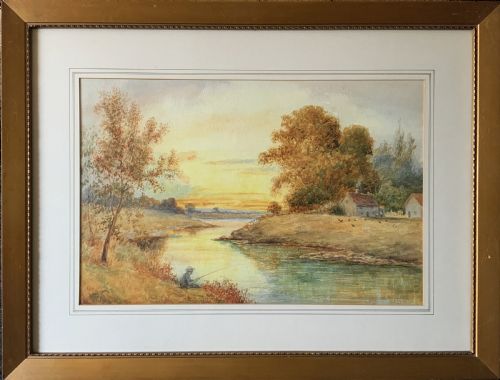
The subjects range from Brighton beach fishing boats and Cornish harbours like St Ives and Mousehole to quiet inland streams and Thameside villages.
How they were made
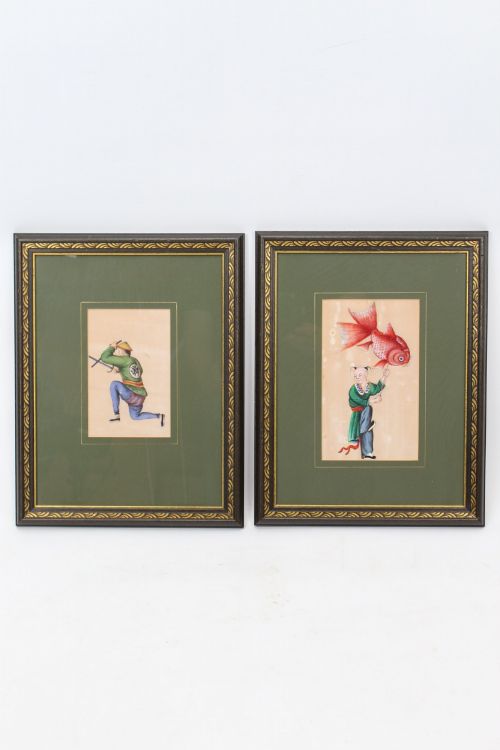
Artists applied watercolour pigment and bodycolour gouache onto paper supports, occasionally utilising pith paper for Chinese export paintings.
Finished works sit within wooden frames behind protective glass, frequently set beneath gilt mounts that separate the painting from the edge.
Framed Fishing Watercolour Retail Price Guide 2026
Typical asking prices for framed fishing watercolour among the pieces listed under this phrase on Sellingantiques today, from the lower quarter to the upper quarter. They describe what is for sale here now, not the wider market.
Look closely at the horizon lines to spot tiny painted seagulls perched quietly above invisible wooden pilings.
What varies in quality
Quality rests upon the artist's handling of light, atmosphere and water movement, distinguishing confident brushwork from rigid architectural rendering.
The preservation of the original paper surface and pigment intensity shapes the visual strength of each composition.
James Orrock·Thomas Maidment·George Stanfield Walters·William Lee Hankey·Thomas Bush Hardy·Frederick William Hattersley·Ernest F. Hill·Harry Davis·Henry Sykes·Walter Sweet·Frank Rousse·Henry John Sylvester Stannard·Robert Leslie Howey·John Pedder
The Framed Fishing Watercolour Glossary
- Gouache
- An opaque watercolour paint containing pigment mixed with a binding agent and white filler. This medium allows artists to add solid highlights and dense opaque passages over transparent washes.
- Pith paper
- A delicate material cut from the pith of the Tetrapanax papyrifer plant used in nineteenth-century Chinese export art. It absorbs watercolour and gouache with a velvet-like texture that gives paintings a luminous depth.
- Marine art
- Artistic representation of ships, coastal scenes and maritime activities. These works document working fishing fleets, turbulent seas and quiet harbour anchorages.
- Gilt mount
- A gold-coloured frame border or mat surrounding the paper edge. It isolates the watercolour from the glass and complements the tonal palette of the painting.
Framed Fishing Watercolour: Frequently Asked Questions
How do I date a framed fishing watercolour?
Dating relies on costume details in figures, the rig of the depicted fishing vessels and stylistic shifts between Victorian academic precision and later impressionist freedom.
Signatures, framing materials and paper types provide further clues when compared against documented working periods of known artists.
Where should I hang a watercolour?
Watercolour pigments are sensitive to strong ultraviolet light and direct sun exposure. Hang them away from south-facing windows to preserve the delicate washes.
Keep them in rooms with stable humidity levels to protect the paper support and wooden frame joints from warping.
What is the difference between watercolour and gouache?
Traditional watercolour relies on transparent washes where the white of the paper illuminates the pigment layers beneath. Gouache incorporates chalk or white pigment to create an opaque finish.
Many nineteenth-century marine painters combined both mediums to capture shimmering sea spray alongside solid boat hulls.
Are these paintings original works?
The pieces recorded here are original hand-painted works on paper rather than mechanical reproductions or mass-produced prints.
Brush textures, pencil guidelines beneath the pigment and variations in wash density confirm the direct touch of the artist.