

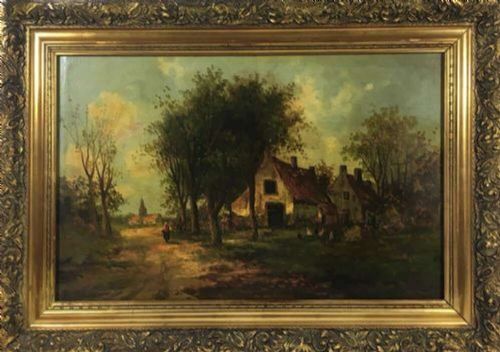
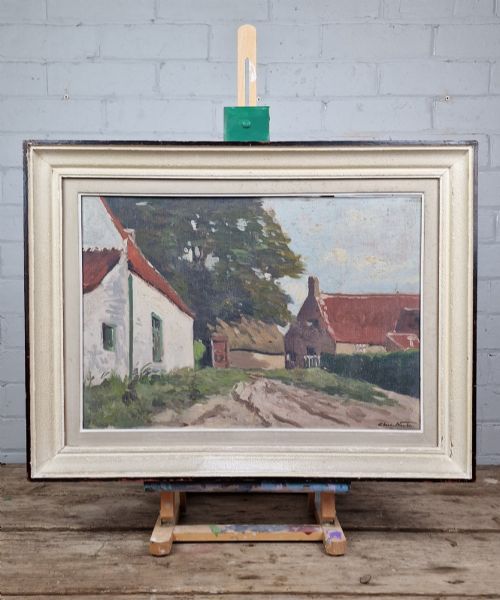
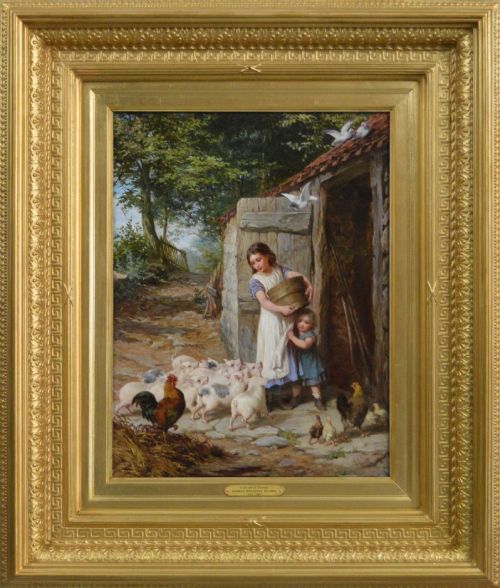

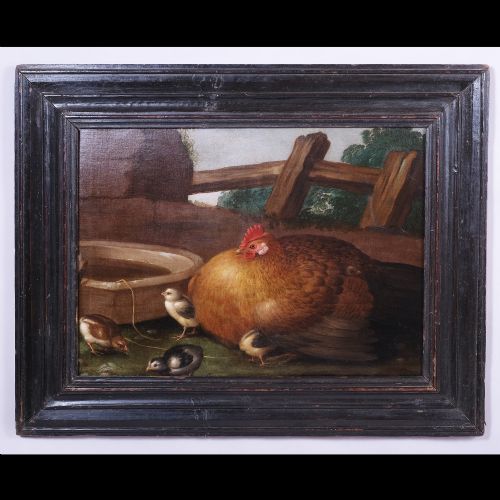
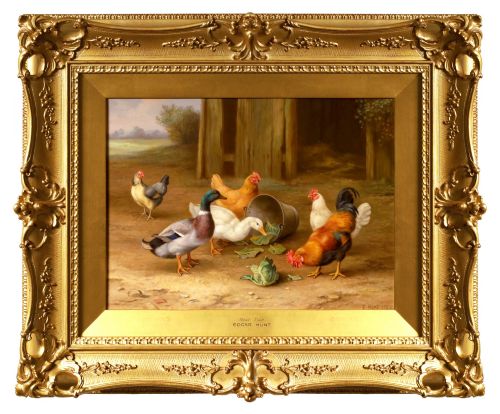
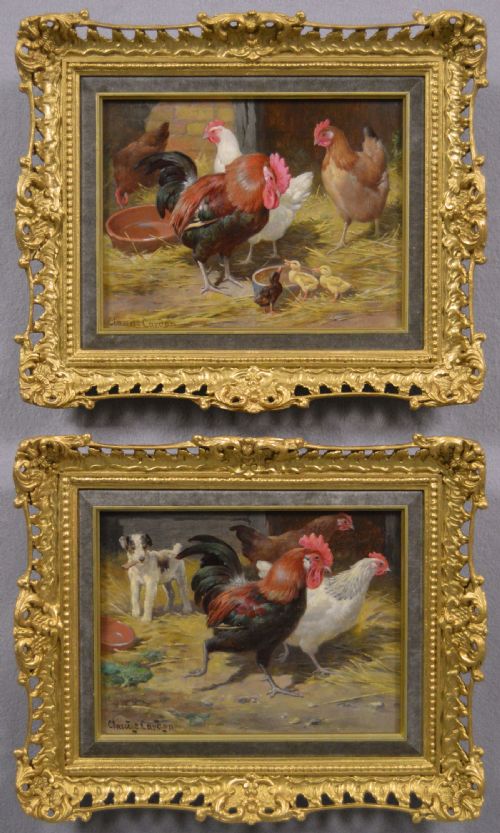


Framed Farmyard Scene
A framed farmyard scene brings rural life into a room through oil and watercolour depictions of animals, rustic buildings and agricultural work.
Framed Farmyard Scene
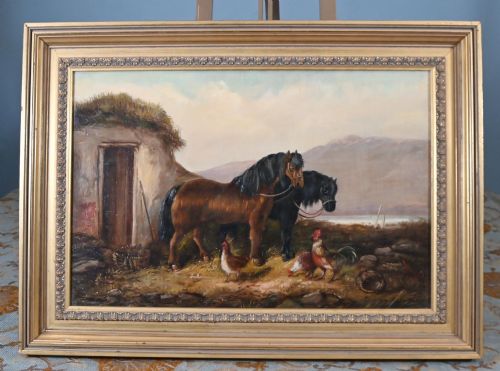
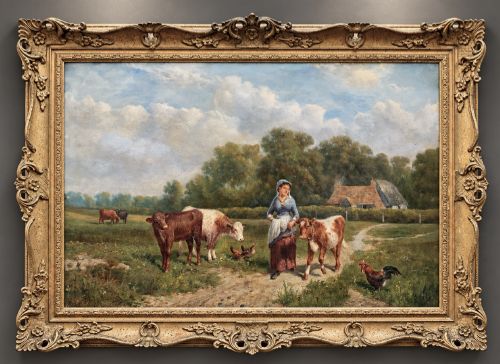
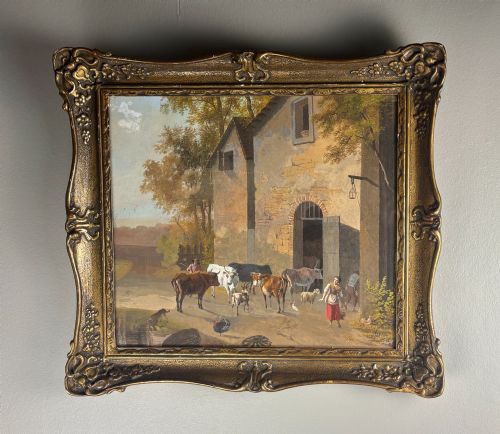
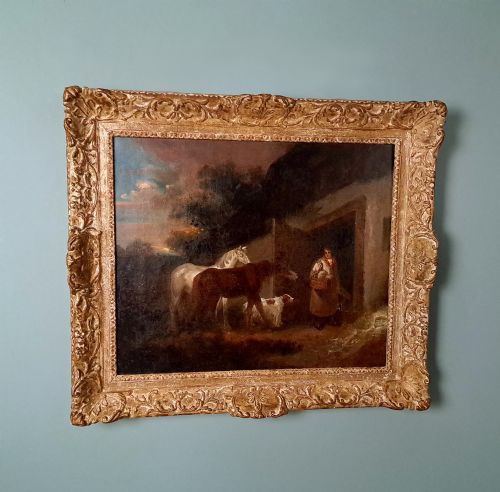
A framed farmyard scene captures rural life, depicting horses, cattle, pigs, poultry and agricultural settings across the eighteenth, nineteenth and early twentieth centuries. These works range from detailed Victorian genre paintings to expressive watercolours and gouache studies.
Buyers will most frequently encounter nineteenth century oil paintings on canvas or board, alongside Edwardian watercolours and coloured mezzotints. The subjects typically feature domestic farm animals, barns and figures engaged in daily agricultural tasks.
The aesthetic spans British pastoral traditions, Dutch Golden Age influences and French Barbizon approaches. Each piece presents a distinct interpretation of rural industriousness, rendered through varied regional and period lenses.
Materials and construction methods
Artists utilise oil paint on stretched canvas, wood panel or oil on board to build up rich textures for animal coats, feathers and rustic timber. Watercolours on paper offer a lighter alternative, often capturing delicate details in farm scenes and portraits.
Frames play a primary role in presentation, frequently constructed from wood with giltwood or gold leaf finishes. Supporting materials include paper and card mounts for watercolours, alongside specialist mediums such as gouache and sand picture techniques.
Framed Farmyard Scene Retail Price Guide 2026
Typical asking prices for framed farmyard scene among the pieces listed under this phrase on Sellingantiques today, from the lower quarter to the upper quarter. They describe what is for sale here now, not the wider market.
Frames span plain wood to ornate giltwood, housing subjects from Dutch Golden Age studies to British animalier painting.
Distinctions in quality and execution
Quality rests upon the artist's ability to render animal anatomy, natural light and spatial depth convincingly within the composition. Masterful brushwork brings texture to feathers, fur and weathered barn walls, separating refined works from simpler commercial outputs.
The condition of the canvas, paint surface and the matching period frame influence the overall integrity of the piece. Works that retain their original giltwood framing and stable pigment layers represent the upper tier of surviving examples.
Samuel Joseph Clark·Karel Dujardin·William Joseph Shayer Senior·Charles Houben·George Augustus Holmes·Edgar Hunt·Claude Cardon·John Frederick Herring Jnr·Helena Maguire·Pierre Emmanuel Dielmans·Julius Caesar Ibbetson·Arthur Charles Dodd·Robert Russell MacNee·B Kaufmann·Joseph Kirkpatrick·John R K Duff·Edward Killingworth Johnson·John Percy Cooke·Arthur Walker Redgate·Ernest Higgins Rigg·Georgina Lara·George Morland·Owen Bowen·Thomas Blinks·Fred Lawson
The Framed Farmyard Scene Glossary
- Oil on canvas
- Pigments suspended in a drying oil applied to a woven fabric support stretched across a wooden frame. This medium allows for deep colour saturation and layered blending.
- Giltwood
- Timber carved and coated with a thin layer of gold leaf or metallic powder. It provides a reflective, ornate border for traditional paintings.
- Gouache
- An opaque water-based paint consisting of pigment, water, and a binding agent such as gum arabic. It dries to a smooth, matte finish.
- Mezzotint
- A printmaking process of the intaglio family where the plate is roughened to produce dark tones and scraped to create light areas. It permits half-tints without line work.
- Genre painting
- The pictorial representation of scenes from everyday life, involving ordinary people in domestic or agricultural settings. These works focus on narrative and character.
Framed Farmyard Scene: Frequently Asked Questions
What periods do these farmyard scenes cover?
The available works span from the early eighteenth century through the Victorian era and into the early twentieth century. Painters of the Barbizon school, British pastoral traditions and post-impressionism are all represented.
Most pieces date from the nineteenth century, reflecting a widespread artistic interest in rural life and agricultural subjects during that period.
How were these artworks traditionally displayed?
These paintings and watercolours were predominantly framed in wood, often enhanced with giltwood or gold leaf finishes. The frames were selected to complement the tonal qualities of the pastoral subject matter.
Many retain their period frames, which help date the presentation and protect the edges of the canvas or paper support from environmental wear.
Which animals commonly appear in these scenes?
Horses and cattle are frequently depicted near barns, fields and milking sheds. Chickens, cockerels, ducks and pigs also populate the foregrounds of farmyard compositions.
Artists often integrated these animals alongside figures engaged in feeding, working the land or tending to livestock.
What mediums were used for these artworks?
Oil paint on canvas, board or panel forms the majority of the surviving works. Watercolours and gouache on paper also appear across the selection.
Unusual techniques such as sand pictures and coloured mezzotint engravings provide alternative methods of depicting these rural environments.