


Framed Duck Oil Painting
A framed duck oil painting brings the quiet of the riverbank and farmyard straight into the room, rendered in rich oil on canvas.
Framed Duck Oil Painting
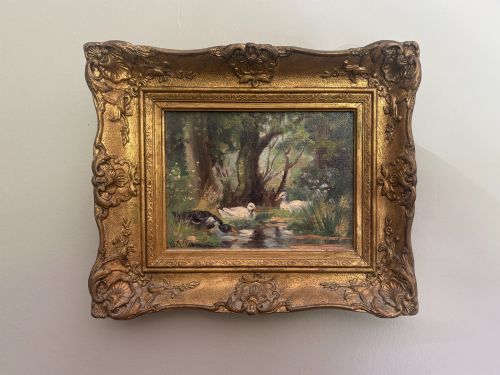
A framed duck oil painting captures waterfowl in various rural settings, from woodland pools and river banks to farmyards. These works span several periods, drawing on British Sporting, Victorian Pastoral, and 19th Century Continental traditions.
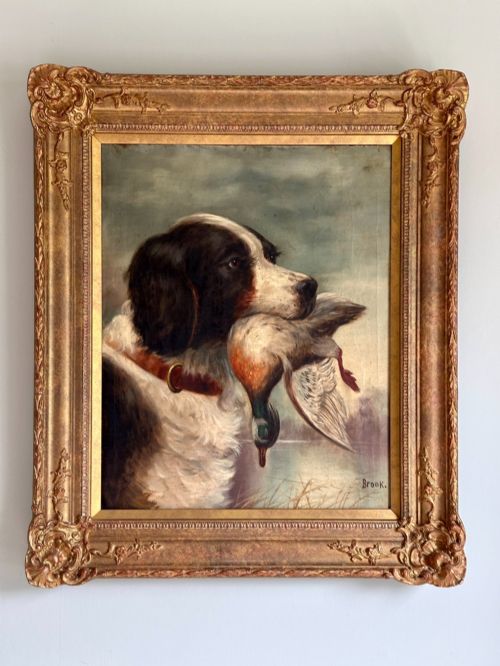
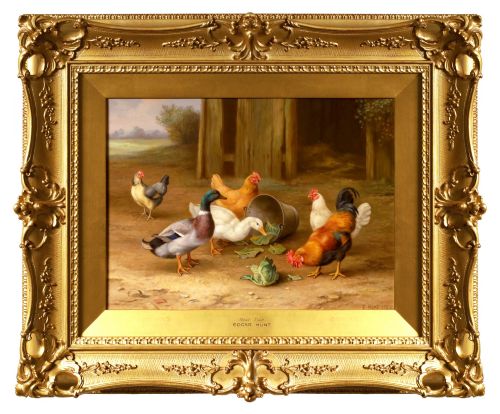
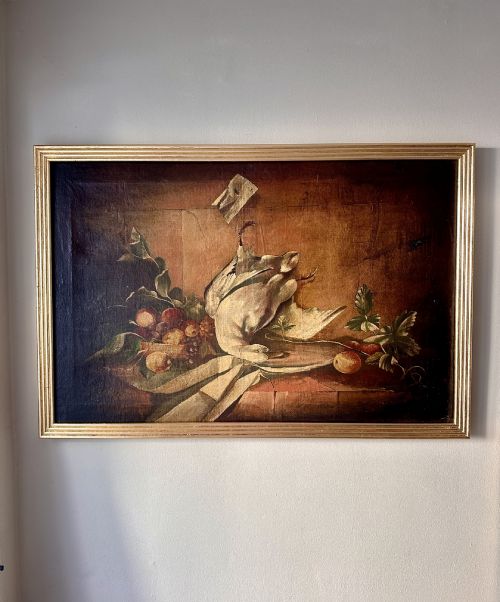
The compositions range from intimate studies of a mother duck with ducklings to wider landscape oil paintings featuring gundogs and mallards. Works frequently pair ducks with other farm animals or game, reflecting a strong historical interest in rural realism and wildlife.
How they were made
Artists painted primarily in oil on canvas, applying pigment to build up texture in the feathers, water, and surrounding landscape. This medium allowed for deep tonal variation and durable surfaces that have survived across centuries.
Canvases are typically housed in wooden surrounds, with many featuring elaborate giltwood frames or gilt wood finishes that enhance the visual weight and period character of the artwork.
Frogs and toads occasionally share the canvas with the ducks, keeping a watchful eye on proceedings from the river bank.
What varies in quality
Quality rests in the precision of the brushwork and the naturalism of the bird forms, where superior examples capture light on plumage and water with striking economy. The handling of the wider landscape and the integration of the ducks into their environment separate accomplished academic works from more formulaic pieces.
The craftsmanship of the housing also dictates the overall standing of the piece, with deep, ornate giltwood frames offering better material harmony than plain or later replacements.
Willem J Palman·Edgar Hunt·John Frederick Herring Jnr·Philipp Ferdinand de Hamilton·Percival Glenfern·John Frederick Herring·Claude Cardon·Arthur Walker Redgate·Alfred Banner·Thomas Blinks·Constant Ludovic Artz
The Framed Duck Oil Painting Glossary
- Giltwood
- Wood carved and coated with a thin layer of gold leaf or gilt. This material was commonly used for traditional picture frames to add a bright, reflective border.
- Canvas
- A heavy woven fabric stretched across a wooden frame to serve as a sturdy support for oil painting. It provides a slightly textured surface that grips the applied pigments.
- Sporting art
- A genre of painting depicting field sports, gundogs, and game animals. These works often record hunting dogs with retrieved quarry such as mallards.
- Pastoral
- A style of art that idealizes rural life, farmyards, and agricultural landscapes. It frequently incorporates domestic birds and livestock alongside tranquil rustic scenery.
- Oil painting
- A technique using pigments suspended in a drying oil medium. It permits slow blending, rich colour depth, and varied impasto textures.
Framed Duck Oil Painting: Frequently Asked Questions
How do I date a framed duck oil painting?
Dating relies on stylistic markers within the painting, the clothing or architecture in any landscape details, and the construction of the canvas stretcher behind.
The frame can also offer clues, though many older canvases were reframed in later periods to suit prevailing tastes.
Where should I hang an oil painting of ducks?
These works suit traditional studies, dining rooms, or hallways where natural light can bring out the tonal depths of the oil medium.
Avoid placing them in direct sunlight or damp areas to protect both the canvas and the wooden gilt frame.
What is the difference between rural realism and pastoral styles?
Rural realism tends to show the unvarnished realities of farmyard life and labour with a direct eye for detail. Pastoral scenes lean towards a more idyllic, softened view of the countryside and its animals.
Both approaches appear frequently across nineteenth-century works.
Are these paintings always signed by the artist?
Signatures appear on many pieces, often tucked into a lower corner near the water or river bank, though numerous historical works remain unattributed.
An unsigned painting can still be attributed to a particular school or period based on its technique and subject matter.