

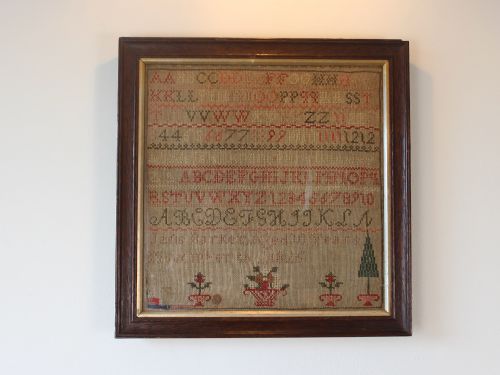

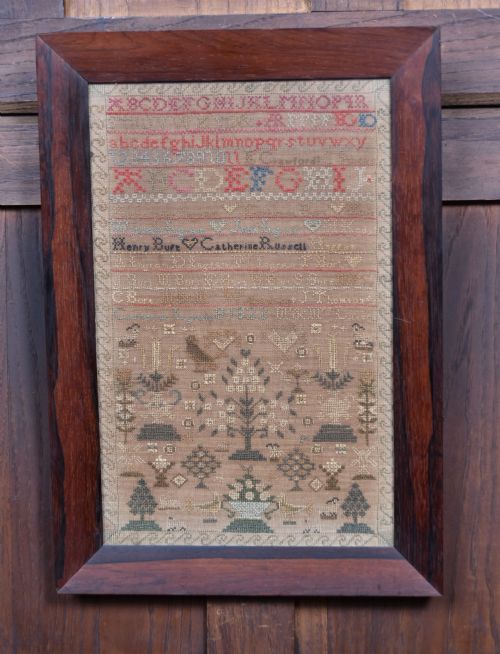


Framed Cross Stitch Sampler
These framed cross stitch sampler pieces are needlework textiles recording alphabets, verses, and names, offering a direct window into domestic handwork from past centuries.
Framed Cross Stitch Sampler
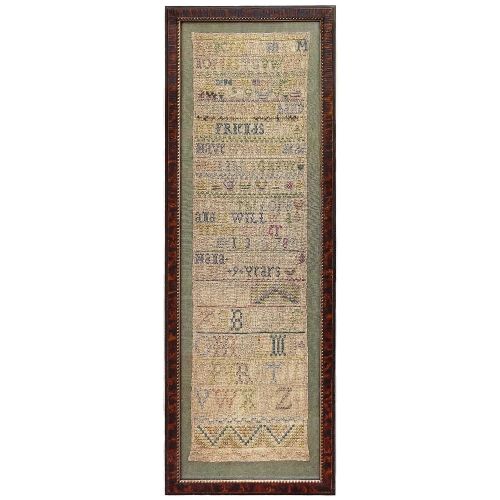
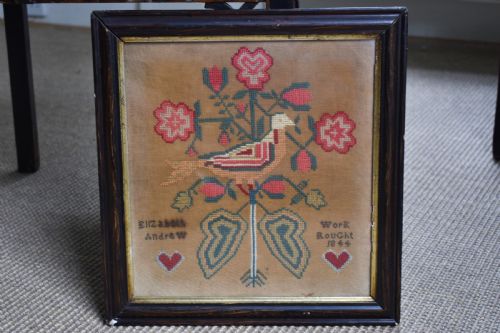
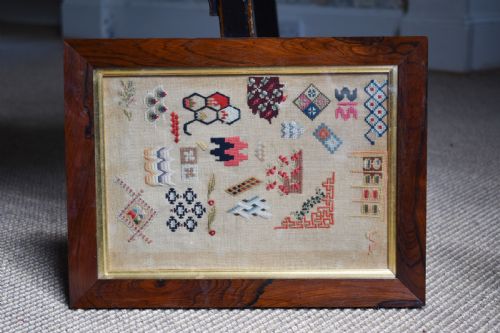
A framed cross stitch sampler is a historical textile panel worked in needlework, often created by young makers to practice stitches, alphabets, numbers, and pious verses. The pieces seen here span periods from the Georgian era through the Victorian period, with notable examples originating in Scotland and England.
Most examples you will encounter are worked on a linen ground using thread, silk thread, or wool. Formats range from simple alphabet boards and school exercises to complex pictorial works bearing names, dates, ages, and locations such as Crystal Palace or Oswestry National School.
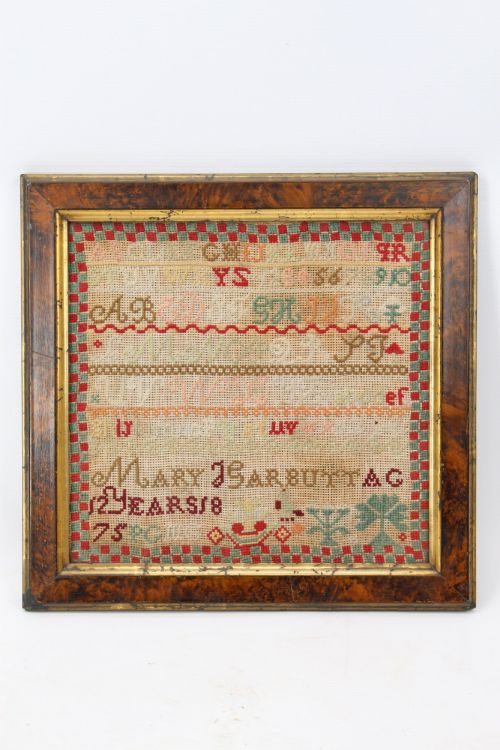
Makers often recorded personal milestones, such as their age or the date of completion, alongside moral texts like the Lord's Prayer or the Commandments. Surviving works are typically housed in period wood frames behind glass to protect the delicate textile fibres.
How they were made
These works were constructed by stitching coloured threads through plain woven linen grounds using counted thread techniques. Makers utilised silk thread, wool, and standard thread to build up dense alphabets, pictorial motifs, and borders.
The finished needlework panels were subsequently mounted into wood frames, frequently protected beneath glass to prevent dust and moisture damage to the delicate textiles over generations.
Framed Cross Stitch Sampler Retail Price Guide 2026
Typical asking prices for framed cross stitch sampler among the pieces listed under this phrase on Sellingantiques today, from the lower quarter to the upper quarter. They describe what is for sale here now, not the wider market.
One Victorian Scottish example bravely preserves an honest stitch error left by young Maggie Muir.
What varies in quality
Quality in these textiles rests upon the precision and regularity of the stitchwork, the complexity of the design, and the clarity of the lettering. Pieces featuring detailed pictorial elements, complete alphabets, or significant genealogical information generally represent the upper tier of the range.
Condition also plays a central role, distinguishing robustly preserved panels with stable thread colours from those affected by fading, fabric loss, or improper framing.
The Framed Cross Stitch Sampler Glossary
- Sampler
- A piece of needlework produced as a demonstration or test of skill in various stitches, often featuring alphabets and numerals.
- Linen
- A strong, lightweight fabric woven from flax fibres that served as the primary foundation ground for the vast majority of these needlework panels.
- Alphabet sampler
- A specific subcategory focused primarily on practicing letter forms and scripts, frequently accompanied by the maker's name and date.
- Needlepoint
- A type of canvas work embroidery where yarn is stitched through a stiff open weave canvas, creating a dense surface pattern.
- Tapestry sampler
- A needlework panel incorporating pictorial scenes or narrative designs alongside traditional lettering and border motifs.
Framed Cross Stitch Sampler: Frequently Asked Questions
How do I date a sampler?
Many samplers include the direct stitch of a year alongside the maker's name and age. When dates are absent, stylistic clues such as the lettering style, border motifs, and framing materials help narrow the period.
Changes in textile types and educational themes across the Georgian and Victorian eras also provide reliable chronological markers for unrecorded pieces.
What materials were used?
The foundational ground is almost uniformly linen, providing an even grid for counting stitches. Working threads consist of wool, standard thread, and fine silk thread.
Protecting frames are constructed from wood and enclose the textile behind glass to shield the organic fibres from atmospheric degradation.
How should I display them?
These framed textiles require placement away from direct sunlight to prevent the silk and wool threads from fading. Maintaining stable room temperatures protects the antique linen ground from becoming brittle.
Secure wall fixings should be used to support the combined weight of the wood frame, glass, and internal backing.
Why do some list ages?
Young makers routinely stitched their age and completion date as part of a traditional schoolroom exercise or domestic education project. Recording these personal details served to evidence the maker's proficiency in needlework.
Names such as Mary J Garbutt or Margaret Ann Blackow survive today through this deliberate documentation of youth.