



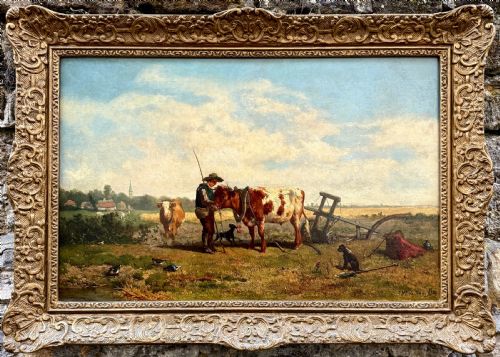

Framed Cow Art
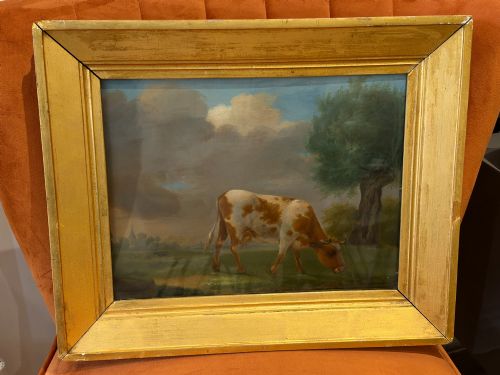
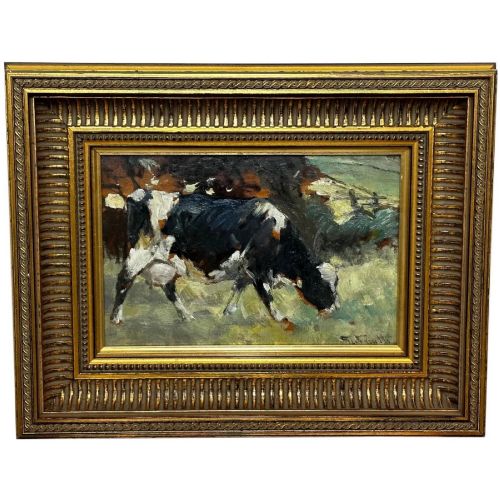
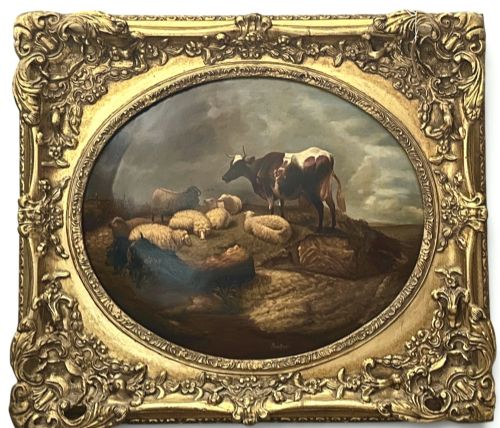
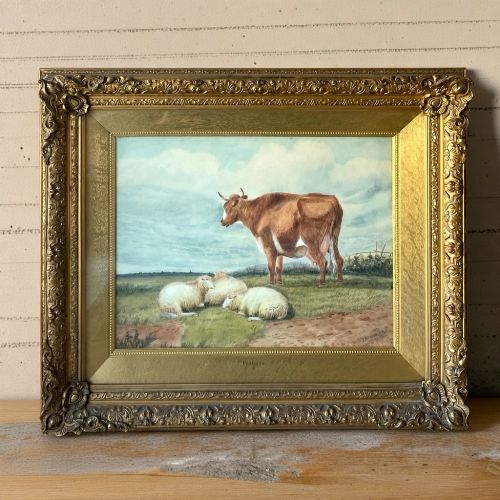
Framed cow art captures pastoral life through nineteenth and early twentieth-century oil paintings and watercolours.
Framed Cow Art
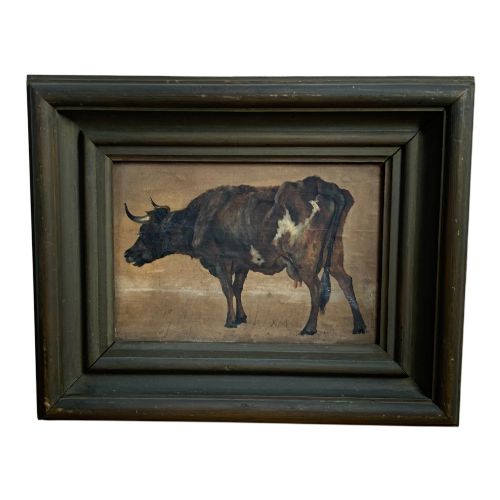
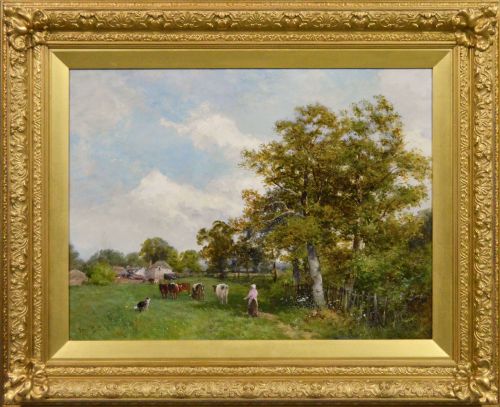
Framed cow art brings rural subjects into domestic spaces through oils on canvas and watercolours. These works span the nineteenth century into the Edwardian era, capturing pastoral scenes, farmyards and highland landscapes.
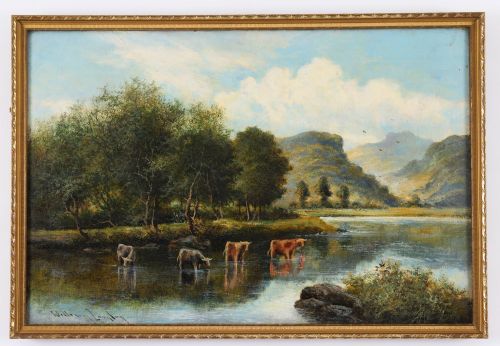
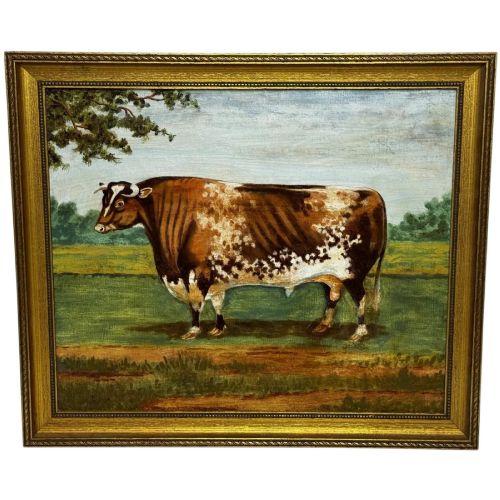
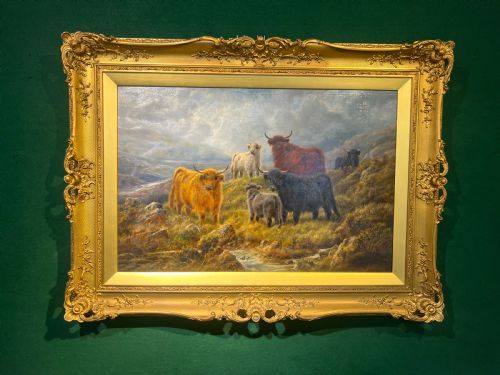
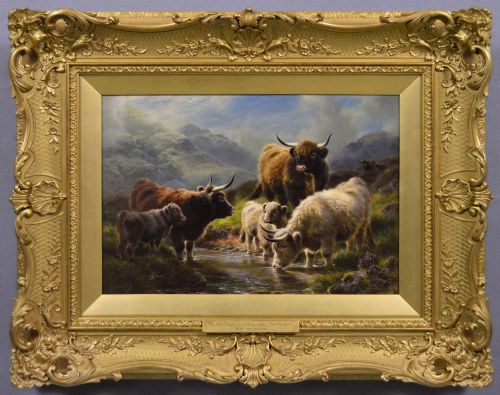
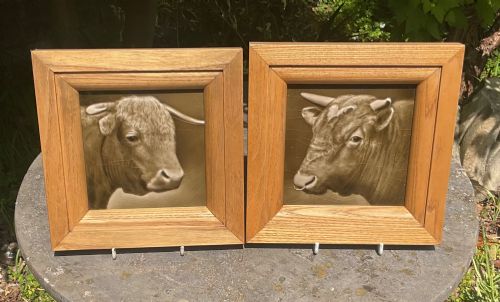
The pieces on this page mostly take the form of framed oil paintings and watercolours depicting cattle, shorthorns and highland herds in natural settings. British schools dominate, ranging from naive portrayals to detailed naturalism and impressionism.
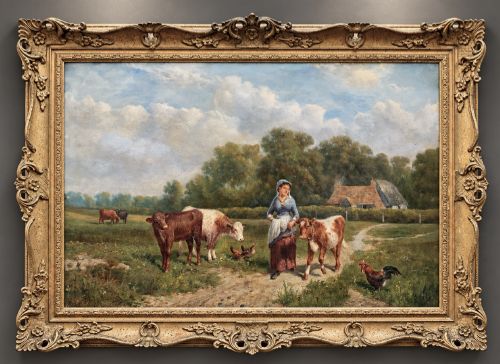
Subject matter divides between quiet riverbank grazing scenes and expansive Scottish landscapes featuring cattle near lochs. Painters focus heavily on the daily rhythm of rural life, mixing farm animals with figures, herders and working dogs.
How they were made
Painters relied on oil paint applied to stretched canvas or watercolour pigments on paper to build their subjects. Canvases are secured inside wooden supports, frequently complemented by ornate giltwood and gesso frames.
Moulded gesso adds relief detail to wooden frames, finished with thin applications of gold leaf or dark polishing. Glass covers and protects watercolours, while oil paintings remain open to the air within their protective borders.
Framed Cow Art Retail Price Guide 2026
Typical asking prices for framed cow art among the pieces listed under this phrase on Sellingantiques today, from the lower quarter to the upper quarter. They describe what is for sale here now, not the wider market.
Prized shorthorn bulls and highland cows command the canvas with surprising dignity, watching over centuries of quiet pasture.
What varies in quality
Quality rests in the handling of light across the landscape and the anatomical precision of the cattle. Master painters capture muscle structure, wet muzzles and atmospheric weather with confidence, whereas lesser hands produce stiff figures and flat grass.
The integrity of the frame matches the painting. Original giltwood and gesso frames carry period character that enhances the canvas, while later replacements alter the historical balance of the piece.
William Langley·Samuel Joseph Clark·David Bates·William Watson Jnr·Sherwin and Cotton·Johannes de Haas·A M Gauci·Henry Robinson Hall·Thomas Sidney Cooper·Thomas Hunn·Robert Watson·Robert Thorne Waite·Ernest Higgins Rigg·Basil Bradley·George Turner·John W Morris·Joseph Kirkpatrick·W A Clark·Gustave De Brianski·John R K Duff·Henry Cheadle·Frederick William Jackson·William Sidney Cooper·Sir Ernest Albert Waterlow·Joshua Anderson Hague
The Framed Cow Art Glossary
- Giltwood
- Wood carved and coated in gold leaf or gold paint. This finish creates a reflective border that frames the canvas.
- Gesso
- A plaster mix applied to wood frames before gilding. It provides a smooth base for intricate moulded decoration.
- Pastoral
- A style of art concerning rural life and domestic farm animals. These scenes romanticise countryside routines and landscapes.
- Watercolour
- Paint using water-soluble pigments applied to paper. This medium creates translucent washes suited to river scenes and softer light.
- Canvas
- Woven fabric stretched across a wooden frame to hold oil paint. It provides a durable textured surface for layered brushwork.
Framed Cow Art: Frequently Asked Questions
Where should I hang framed cow art?
These works suit dining rooms, studies or hallways where traditional pastoral subjects complement wooden furniture and neutral walls. Placing them away from direct sunlight protects oil pigments and watercolours from fading.
Matching the scale of the frame to the wall space ensures the artwork commands the room properly. Smaller watercolours benefit from intimate viewing spots, while larger oils anchor wider wall expanses.
How do I care for antique oil paintings?
Dust the canvas and frame gently using a soft, dry brush without applying pressure to the paint surface. Avoid using water or chemical cleaners on the paint or giltwood.
Keep the art away from damp walls and sudden temperature shifts to prevent the canvas from sagging or the wood from cracking. Professional conservators should handle deep cleaning or canvas tightening.
What is the difference between oil and watercolour?
Oil paintings use thick pigments suspended in drying oils on canvas, offering rich textures and deep colour blending. Watercolours use water-based pigments on paper, presenting lighter and more translucent atmospheric effects.
Oils generally sit within heavy giltwood frames without glass protection. Watercolours require framing behind glass to shield the paper from moisture and dust.
How do I identify a Victorian pastoral painting?
Victorian pastoral works typically feature naturalistic depictions of farm animals, rolling countryside and overcast skies. Artists from this era focused on accurate livestock portrayal combined with sentimental rural labour.
Signatures, framing styles and canvas stamps often point toward nineteenth-century origins. Subject matter prioritising domestic agriculture over grand history reflects the period's taste for countryside calm.