




Framed Countryside Watercolour
These framed countryside watercolour pieces capture rural life and scenery on paper, offering buyers a window into historic pastoral views.
Framed Countryside Watercolour
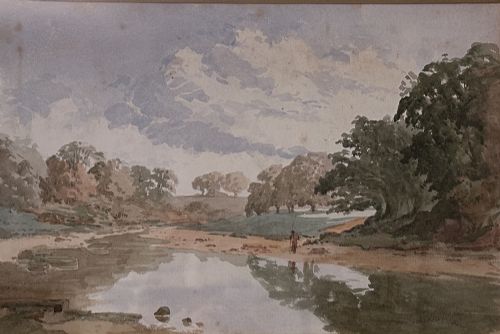
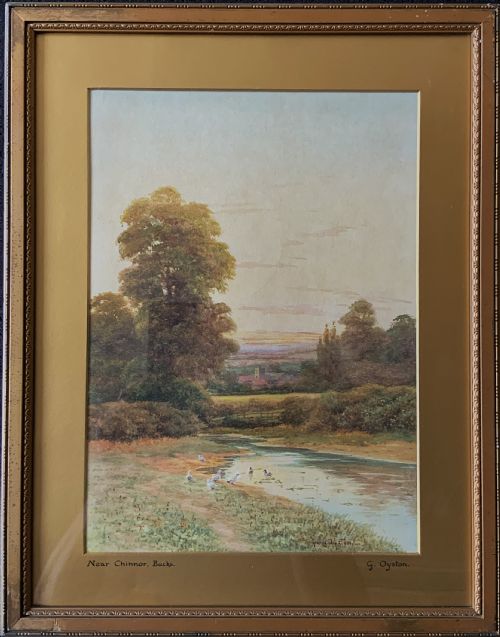
A framed countryside watercolour presents rural scenes, riversides, and agricultural views rendered on paper by artists working across the nineteenth and twentieth centuries. These paintings often depict specific regional locations, from Yorkshire valleys to Sussex downs, capturing local topography and rural architecture.
Most examples found in this selection date from the Victorian and Edwardian eras through to the mid-twentieth century, reflecting traditional British landscape painting methods. They generally arrive in period wooden frames, occasionally retaining their original glass and backing materials.
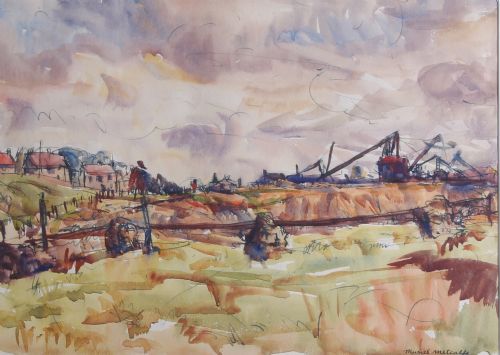
The subjects range from quiet riverbanks and harvested fields to cottages and country lanes, executed by both named professional artists and accomplished regional painters. Buyers encounter works spanning Victorian pastoral styles and early twentieth-century British impressionism.
How they were made
Artists painted these works using water-based pigments applied to absorbent paper sheets, often building up translucent washes to create atmospheric light and shadow. Detail was then refined with finer brushwork or sometimes ink highlights.
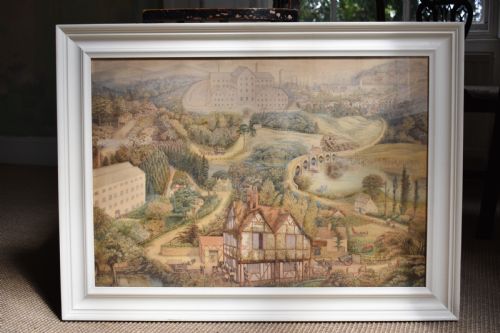
Framing typically involved timber mouldings, frequently finished with gilt or gold leaf accents, designed to protect the delicate paper surface from moisture and physical damage behind glass.
Framed Countryside Watercolour Retail Price Guide 2026
Typical asking prices for framed countryside watercolour among the pieces listed under this phrase on Sellingantiques today, from the lower quarter to the upper quarter. They describe what is for sale here now, not the wider market.
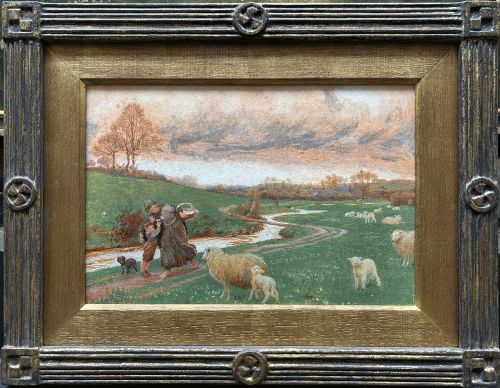
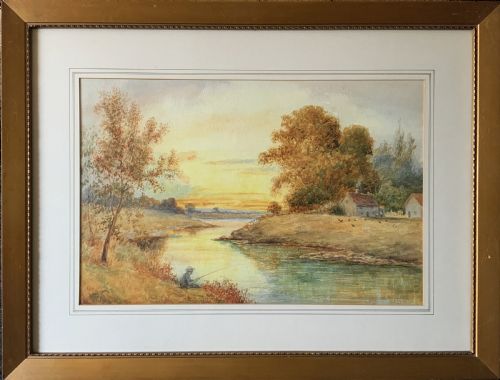
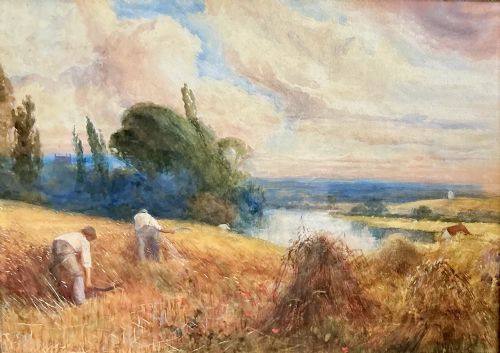
The subjects recorded on these sheets span rural cottages, livestock by rivers, harvested fields, and coastal harbours across Britain.
What varies in quality
The strength of the composition and the artist's ability to capture natural light and atmospheric depth separate finer watercolours from standard regional sketches. Superior examples demonstrate confident brushwork and a balanced palette that brings the rural scene to life.
The preservation of the paper and pigment intensity significantly influences the overall merit of a piece, as exposure to light over decades can alter delicate washes. Additionally, the presence of a period-appropriate or original frame adds historical integrity to the work.
William Joseph Boyes·Muriel Metcalfe·George Oyston·Frederick Hines·Alfred George Morgan·Edgar Woollatt·Charles Gregory·Samuel Timmins·Henry Charles Fox·Fred Lawson·Cuthbert Crossley·George Graham·Arthur Tucker·James William Booth·Frederick Septimus Lewis·William Hoggatt·Thomas Hunn·Stanley Orchart·James Orrock·Robert Thorne Waite·Robert Winchester Fraser·George Arthur Fripp·Sidney James Beer·John Edward Bale·Harry Sylvester Stannard
The Framed Countryside Watercolour Glossary
- Watercolour pigment
- Finely ground colour particles mixed with a water-soluble binder, applied in translucent layers to paper. This medium allows artists to create luminous effects by letting the white of the paper shine through.
- Gilt
- A thin layer of gold leaf or gold-coloured paint applied to wooden frames. It adds a decorative sheen that complements the warm tones within the painted landscape.
- Victorian pastoral
- An artistic style celebrating rural life, agriculture, and untamed countryside views during the nineteenth century. These scenes often romanticise farming practices and village routines.
- British Impressionism
- A movement where artists focused on capturing light, weather, and transient moments in the British landscape using looser brushstrokes. It marked a shift away from rigid academic detail towards atmospheric representation.
Framed Countryside Watercolour: Frequently Asked Questions
What is a framed countryside watercolour?
It is an original painting executed with water-based pigments on paper, depicting rural views, fields, and village life, secured behind glass within a decorative frame.
These artworks serve as historical records of British topography and rural traditions from past centuries.
How should I care for an antique watercolour?
Keep the painting away from direct sunlight to prevent the watercolour pigments from fading and the paper from yellowing over time.
Ensure it hangs in a stable environment away from excessive humidity to protect both the paper support and the wooden frame.
How can I tell the period of a landscape painting?
Examine the style of the clothing worn by any figures, the architectural details of cottages or mills, and the framing materials used.
Signatures, dates inscribed on the reverse, and artist records also help pinpoint the exact era of creation.
Where were these rural scenes usually painted?
Artists often set up their easels outdoors across British regions such as Yorkshire, Sussex, Dorset, and various Welsh valleys.
They sought out picturesque spots including riverbanks, farms, coastal harbours, and roadside gypsy encampments.