



Framed Cat Artwork
When you search for framed cat artwork, you encounter centuries of feline depiction in oil, etching, and print.
Framed Cat Artwork
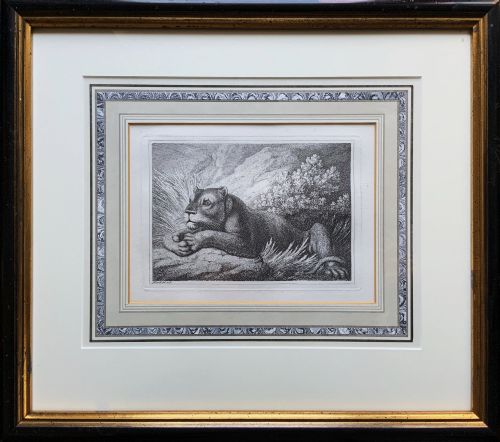
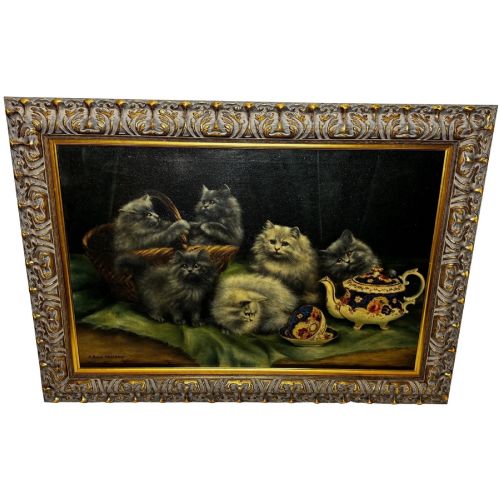
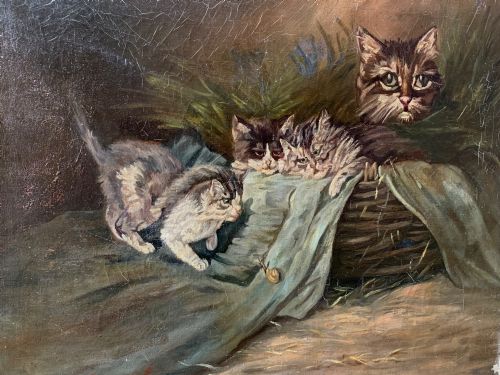
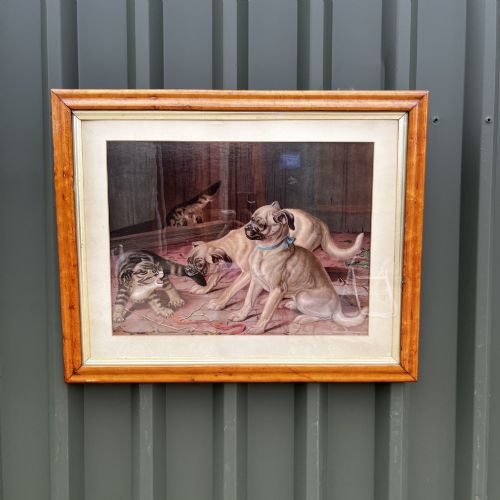
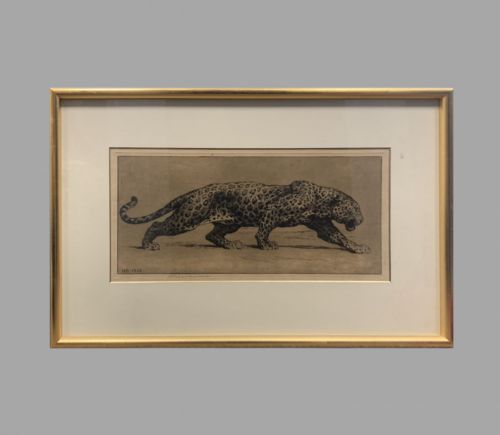
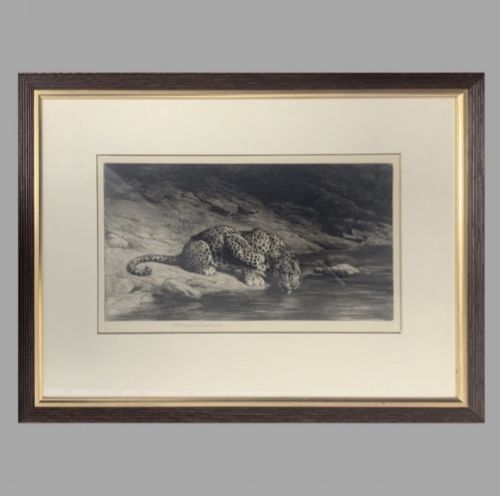
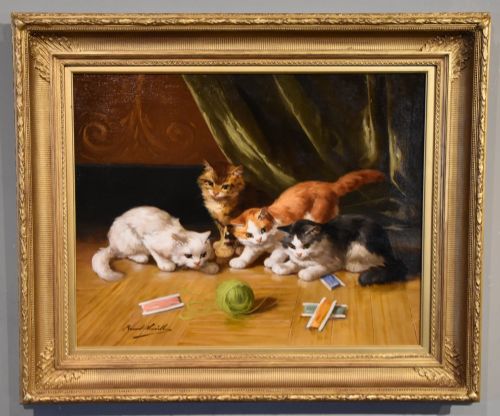
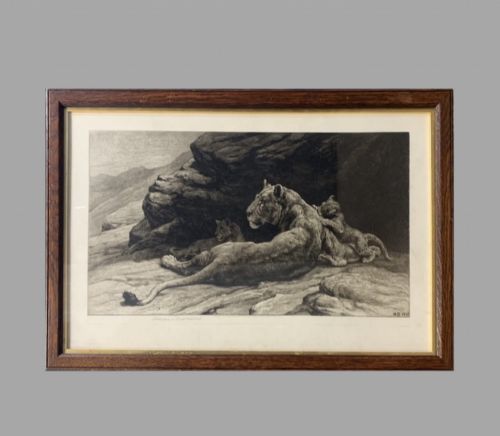
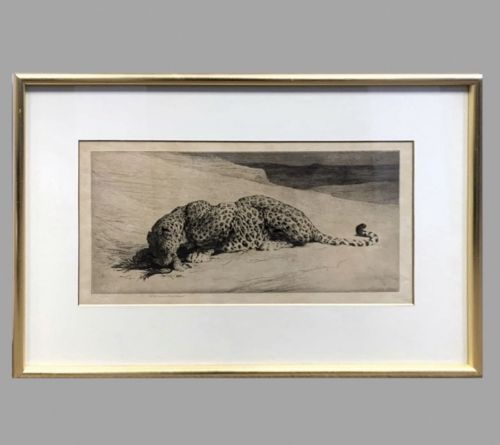
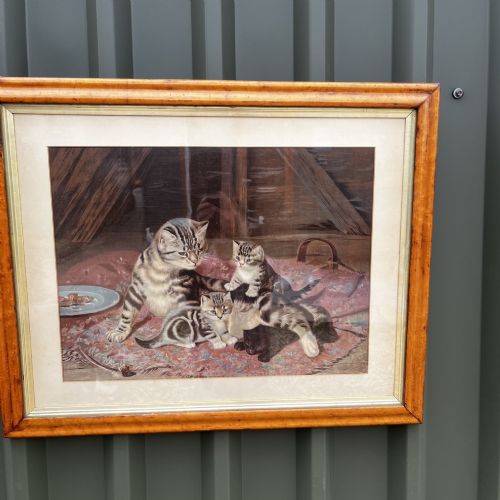
Framed cat artwork encompasses oil paintings, etchings, chromolithographs, and drawings spanning from the eighteenth century to the mid-twentieth century. Buyers seeking framed cat artwork will find domestic pets, maternal cat families, and large wild felines represented across various periods.
The most common pieces on this page are nineteenth-century oil paintings and early twentieth-century prints, particularly depicting kittens at play or domestic cats in interior settings. Victorian animalier works and modernist interpretations also appear frequently among the listings.
Originating from British, French, Chinese, and Japanese traditions, these works showcase different cultural approaches to depicting felines. From traditional realism to art deco engravings, the diversity of styles reflects changing artistic perspectives on cats across decades.
Materials and Techniques
Artists utilised oil paint on canvas, panel, board, and paper, alongside pen and ink, pastel, and watercolour. Many pieces incorporate original framing materials such as wood and gilt wood paired with protective glass.
Printmakers employed etching on paper and vellum, chromolithography, and engraving to produce limited editions and artist proofs. Specialised techniques such as reverse painting on glass also appear in the historical selection.
Framed Cat Artwork Retail Price Guide 2026
Typical asking prices for framed cat artwork among the pieces listed under this phrase on Sellingantiques today, from the lower quarter to the upper quarter. They describe what is for sale here now, not the wider market.
The listings span from the eighteenth century to the mid-twentieth century, featuring paper, wood, glass, and canvas supports.
Determining Quality
Quality rests upon the precision of line and the fidelity of the feline anatomy, separating skilled observation from generic rendering. Masterful handling of fur texture, light, and posture elevates a piece from simple illustration to fine art.
The integrity of the medium and the preservation of the original paper, canvas, or panel dictate the enduring worth of the work. Superior pieces retain their original framing context and bear clear signatures or attribution to established artists.
Agnes Augusta Talboys·Samuel Howitt·Herbert Dicksee·Alfred Arthur Brunel de Neuville·Horatio Henry Couldrey·Louis Wain·Charles Burton Barber·Takabatake Kasho·Fred Yates·Cuthbert Edmund Swan·Raymond Arthur Roadnight·Albert Terry·John Macallan Swan·Geza Vastagh·Bessie Bamber·Deidre Borlase
The Framed Cat Artwork Glossary
- Etching
- A printmaking technique where lines are bitten into a metal plate with acid before ink is applied to paper or vellum. This method allows for fine, precise detail in hair and whiskers.
- Chromolithography
- A planographic colour printing process using multiple limestone blocks to build up rich hues. It became popular for reproducing vibrant illustrations in the nineteenth century.
- Animalier
- Art focusing on the realistic portrayal of animals, particularly prominent during the Victorian period. Artists in this tradition studied anatomy closely.
- Artist Proof
- A trial impression print pulled for the creator to check quality before the main edition is run. These carry higher desirability among collectors.
- Reverse Painting on Glass
- An intricate technique where the image is painted directly onto the back of a glass pane to be viewed from the front. It yields a glossy, reflective surface.
Framed Cat Artwork: Frequently Asked Questions
How do I date an old cat painting?
Dating relies on stylistic clues, framing methods, and the type of canvas or paper support utilised by the artist. Victorian and Edwardian works often display specific techniques in brushwork and subject matter that distinguish them from later twentieth-century pieces.
Signatures, inscriptions, and artist records provide further confirmation of a piece's era. Comparing the aesthetic to known periods helps narrow down the decade of creation.
What is an animalier cat painting?
An animalier painting focuses primarily on the realistic study of animals behaving naturally, whether domestic cats playing or wild felines resting. This genre gained immense popularity in the nineteenth century among collectors who prized anatomical accuracy.
Artists in this tradition observed their subjects intently to capture movement, muscle tone, and expression without human sentimentality.
Are antique prints considered original art?
Antique prints such as etchings and engravings are considered original works if they were pulled from the plate by the artist or under their supervision during the period. Limited edition signed proofs hold distinct status among collectors for this reason.
Chromolithographs and vintage reproductions, conversely, function as period copies rather than unique hand-drawn pieces, though they remain collected for their decorative charm.
How should I care for antique paper art?
Antique paper, etchings, and drawings require protection from direct sunlight to prevent fading of the ink and discolouration of the page. Acid-free mounting and UV-filtering glass help preserve the integrity of delicate works over time.
Maintaining stable humidity levels in the room prevents warping of the paper and protects both the artwork and its historical frame from deterioration.