
Framed Canvas Artwork Pair
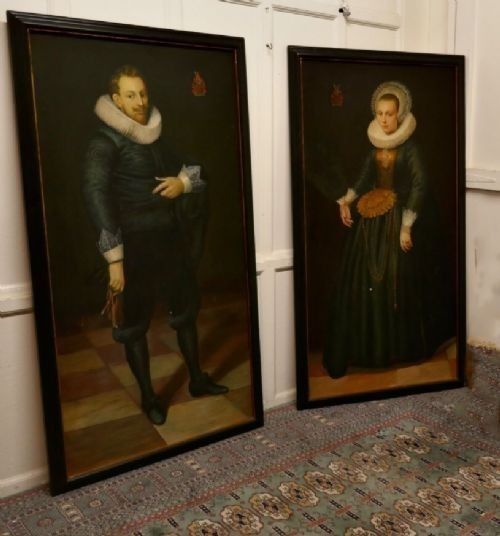
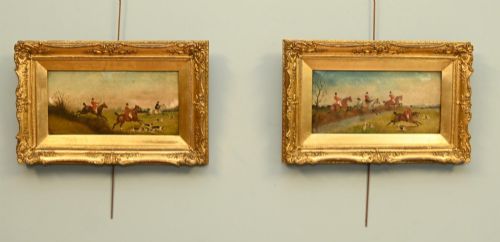
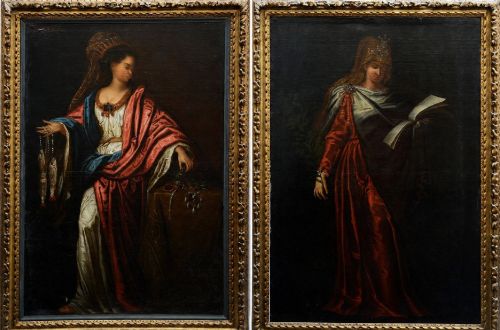
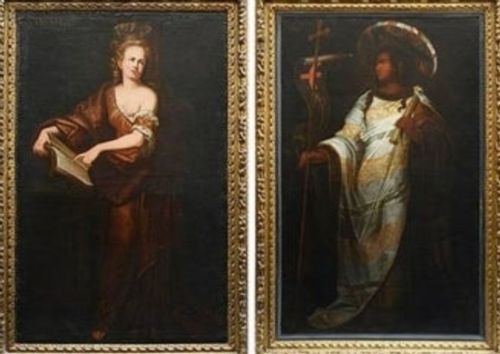
When choosing a framed canvas artwork pair, buyers select matching oil paintings mounted in period timber and gesso mouldings to hang symmetrically.
Framed Canvas Artwork Pair
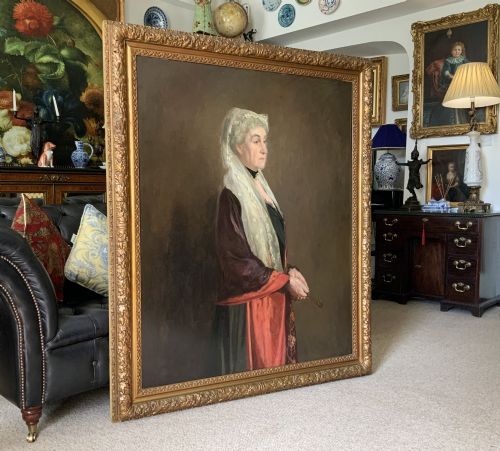
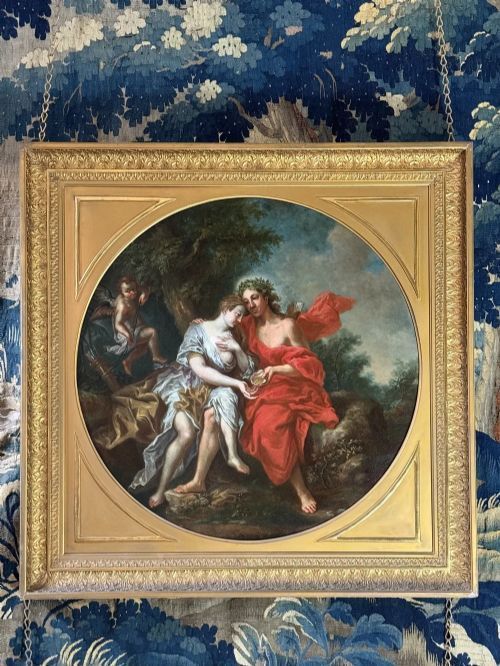
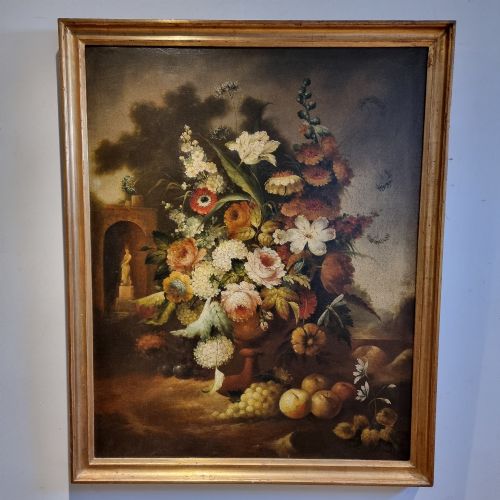
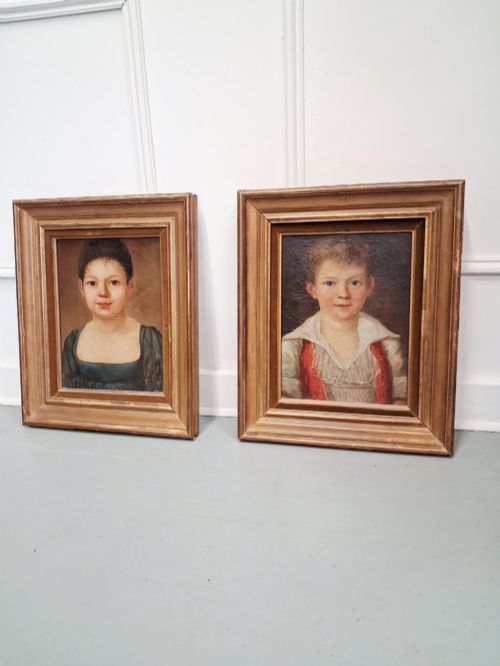
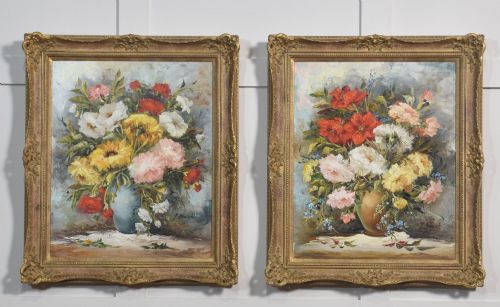
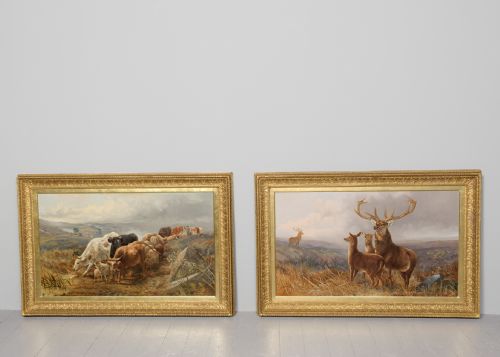
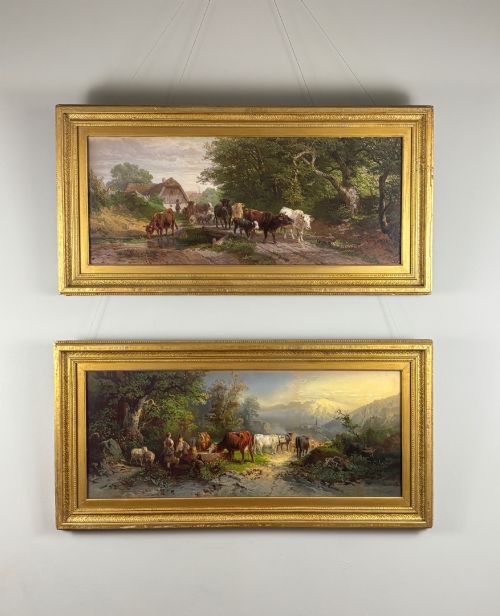
A framed canvas artwork pair consists of two matching oil paintings created to hang together as a balanced decorative set. Buyers searching for a framed canvas artwork pair encounter works spanning the eighteenth, nineteenth and early twentieth centuries, encompassing portraits, coastal scenes, and pastoral landscapes.
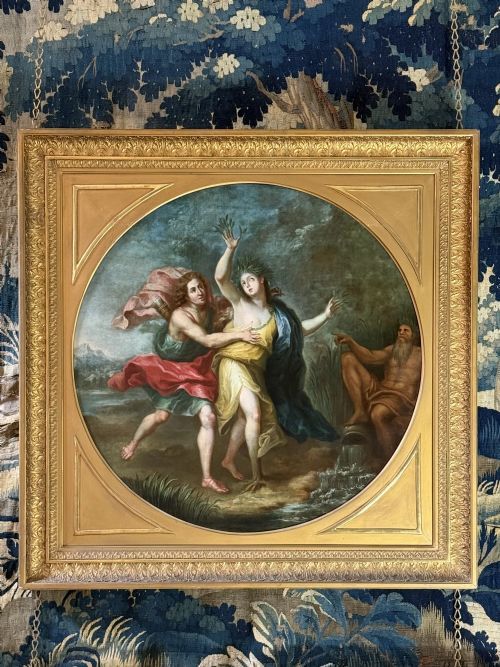
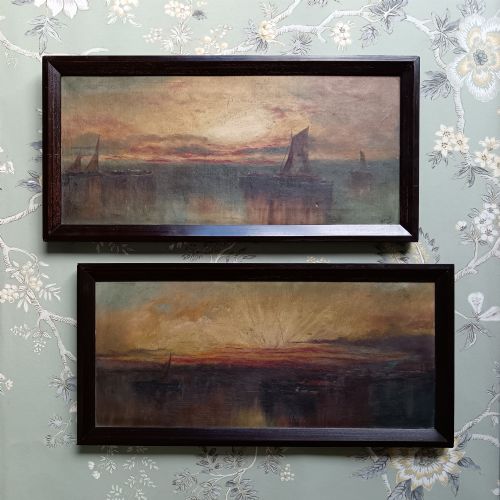
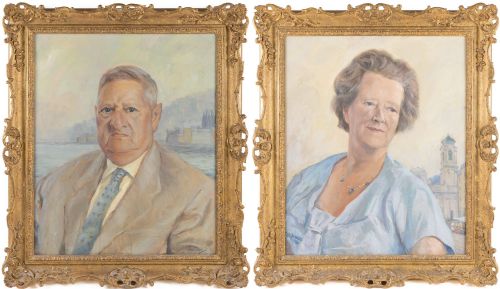
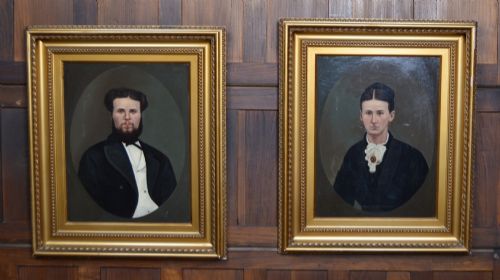
The selections on this page originate from British, French, and Italian schools, executed in styles ranging from Victorian marine art to eighteenth-century classical compositions. These dual works frequently depict complementary subjects such as sunrise and sunset, or portraits of gentlemen and ladies.
How they were made
Artists painted these works using oil paint applied to woven canvas stretched over timber frames. The resulting surfaces display the distinct texture of brushwork and pigment built up over time.
Surrounding the canvas, the frames combine carved wood with gesso mouldings, frequently finished in gold leaf or giltwood. Certain pieces utilise swept frames characteristic of specific decorative periods.
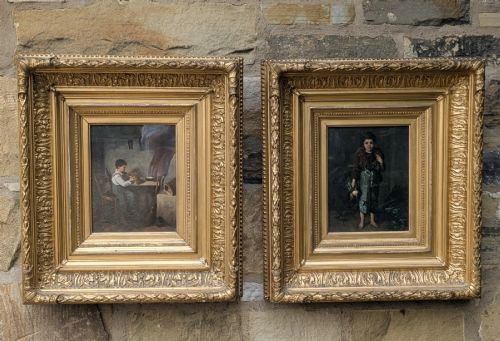
Several pairings depict farmyard animals including chickens and geese observing their painted surroundings with quiet indifference.
What varies in quality
Quality in these matched sets depends upon the precision of the brushwork and the anatomical or perspective accuracy achieved by the artist. Master painters handle light, shadow, and texture with a fluidity that elevates the dual compositions far beyond standard decorative workshop output.
The framing contributes substantially to the overall standard of the pieces. Hand-carved giltwood and gesso mouldings that retain their original gilding and match the exact period of the canvases represent superior craftsmanship compared to later replacement mounts.
CHARLES ANTOINE COYPEL·JOHANN FRIEDRICH VOLTZ·ABRAHAM HULK I·GUSTAVE DE BREANSKI·CLARENCE HENRY ROE
The Framed Canvas Artwork Pair Glossary
- Giltwood
- Wood carved and coated with gold leaf or gold paint. This finish creates a reflective surface around the canvas.
- Gesso
- A plaster-like mixture applied to wooden frames to form a smooth base for moulding and gilding. Artisans carve intricate relief patterns into this layer.
- Swept frame
- A decorative frame style featuring curved, scrolling mouldings that sweep outward from the central picture window. This form is frequently seen on nineteenth and twentieth-century portraits.
- Classical oil paintings
- Works depicting traditional mythology, history, or ancient architectural scenes rendered in oil on canvas. These compositions often follow formal academic rules of proportion and composition.
- Provenance
- The documented history of a painting's ownership and origin. A clear record helps verify the attribution to a specific artist or school.
Framed Canvas Artwork Pair: Frequently Asked Questions
How were matched pairs originally displayed?
Matched pairs were traditionally hung symmetrically on either side of a architectural feature such as a fireplace, doorway, or window. This balanced arrangement reflected the formal interior design principles of large period homes.
Owners selected complementary subjects so the two artworks conversed visually across the room. Sunrise and sunset or male and female portraits were common pairings for reception spaces.
Are original frames important for value?
Original frames that match the age and style of the canvases are integral to the integrity of the piece. They ensure the artwork retains its historical context and visual harmony.
Frames specifically designed for a pair complement the scale and tonal qualities of both oil paintings. Replacing a frame alters the overall aesthetic balance intended by the maker.
How do I identify eighteenth-century works?
Eighteenth-century canvases often feature classical, mythological, or formal portrait subjects executed with restrained palettes and sophisticated glazing techniques. The canvas texture and underlying stretcher construction also provide clues to the age of the support.
Examining the reverse of the canvas and the style of the gesso framing helps confirm the period. Experts look at the specific preparation layers beneath the oil paint to date the creation accurately.