


Framed British Artwork Watercolour
Framed british artwork watercolour pieces span Victorian scenes, Edwardian landscapes and mid-century subjects, offering buyers authentic periods and traditional water-based pigment on paper.
Framed British Artwork Watercolour
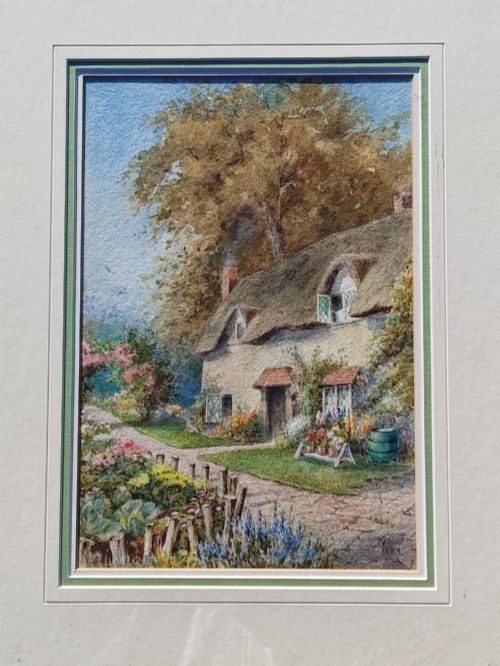
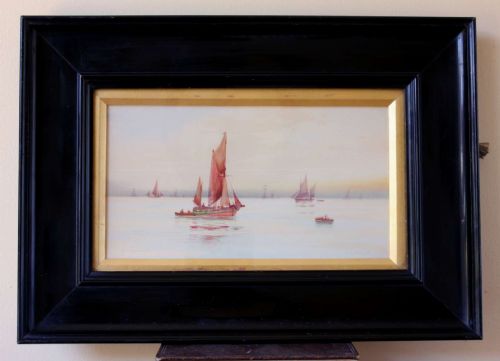
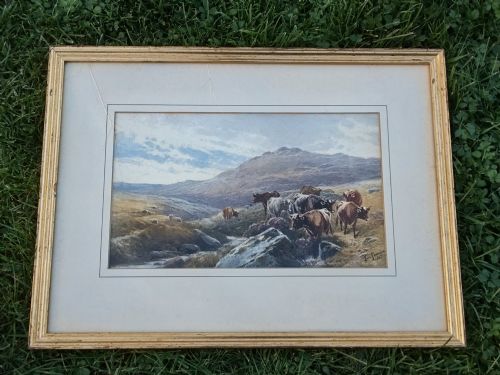
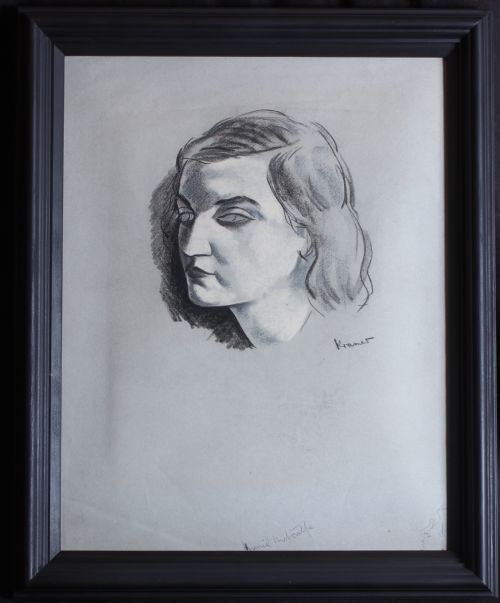
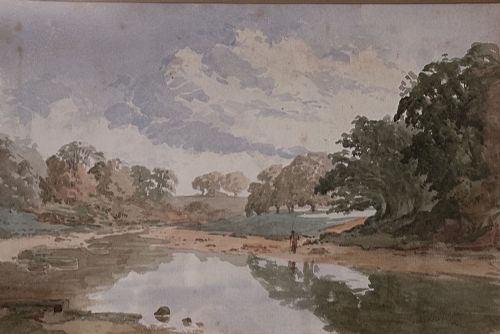
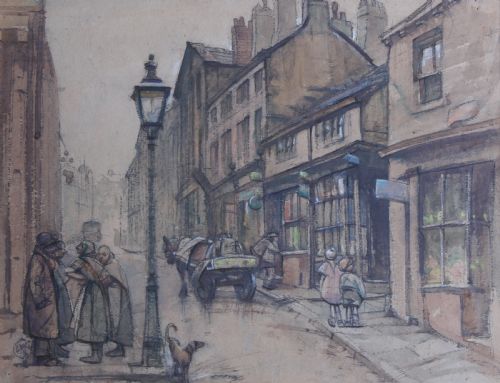
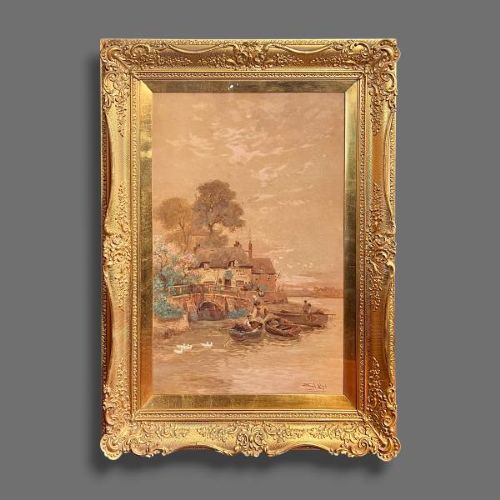
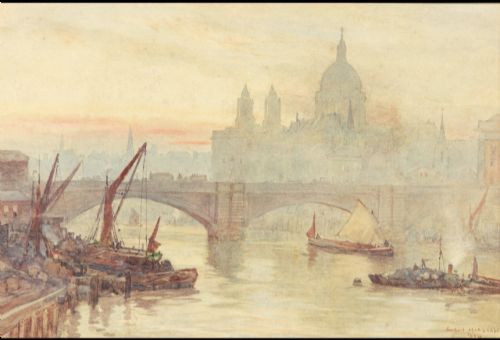
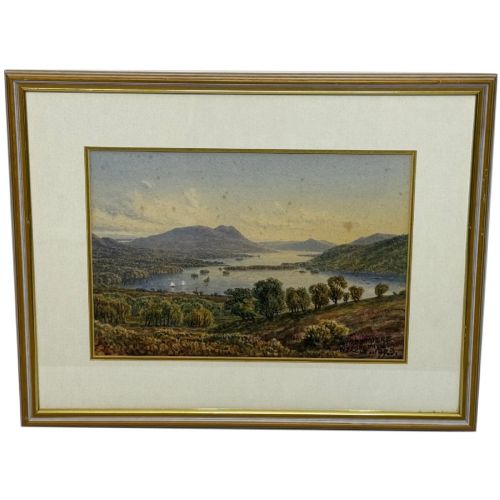
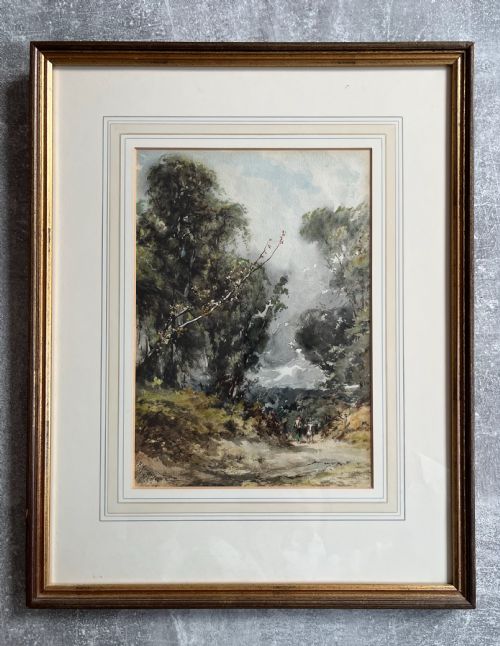
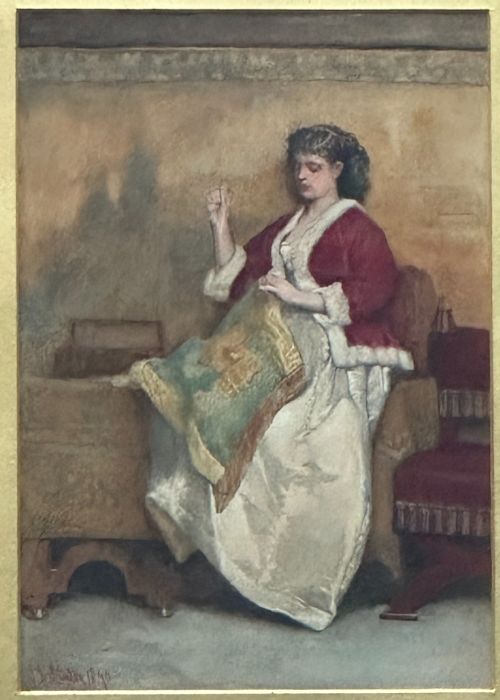
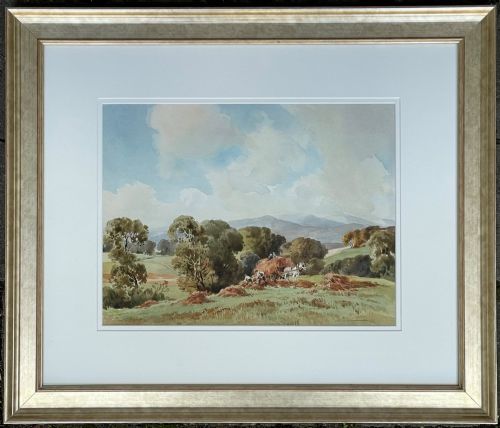
When searching for framed british artwork watercolour, buyers encounter works executed on paper using watercolour pigment, often enhanced with ink or wash. These pieces range from 19th century maritime views and Victorian landscapes to early 20th century coastal scenes and 1940s regional depictions.
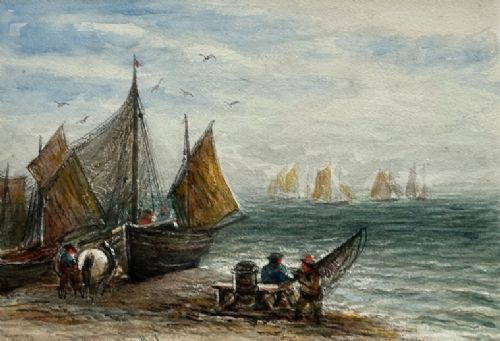
The most common forms on this page include signed original landscape waterpaintings, architectural street scenes, coastal harbours from locations such as St Ives or Whitby, and portrait miniatures. Artists from the British School and Royal Academy created these works across the Victorian, Edwardian, and mid-century eras.
Subjects stretch from Welsh valleys and Lake District lakes to Venetian markets and military portraits, captured by named hands and anonymous provincial makers alike. Each painting survives behind glass within protective wooden or giltwood framing.
Materials and Technique
Makers applied watercolour pigment onto paper sheets, occasionally combining ink and wash to define details in architectural and military subjects. Pigments were brushed onto paper surfaces to achieve transparency and tonal depth across skies and water.
Finished sheets received protection beneath glass housed within wooden frames, which frequently utilise gilt or giltwood finishes. These surrounds shield delicate paper supports from atmospheric degradation while preserving the original presentation.
One determined pigeon won the Royal George V Silver Jubilee race, preserved forever in its own dedicated watercolour.
Judging Quality
Quality rests upon the handling of light and atmosphere by the artist, distinguishing skilled observation from mechanical reproduction. Stronger examples display confident brushwork in complex compositions like coastal harbours or bustling markets.
Preservation of the paper support and the vibrancy of the pigment determine the long-term integrity of a work. Original framing and clear signatures by known 19th or 20th century practitioners elevate the standing of a piece.
George Fotherly Hargitt·James Orrock·Sir James Dromgole Linton·Percy Lancaster·John McDougal·Robert Leslie Howey·Charles Edward Dixon·William Banks Fortescue·William Joseph Boyes·Henry Silkstone Hopwood·Fred Lawson·Frank William Scargrough·Robert Thorne Waite·George Oyston·Frederick James Kerr·Henry Martin Pope·John Sherrin
The Framed British Artwork Watercolour Glossary
- Watercolour
- A paint consisting of a pigment suspended in a water-soluble vehicle, applied to paper supports. It allows for transparent washes and fine linear details.
- Giltwood
- Wood carved and covered with a thin layer of gold leaf or metallic gilt finish. It frequently frames Victorian and Edwardian fine art paintings.
- British Impressionism
- A painting style reflecting the influence of French plein air movements adapted by British artists. Works focus on natural light and everyday landscapes.
- Portrait Miniature
- A small, highly detailed painting depicting a person, often executed on paper or vellum. Examples include military officers and historical figures from the nineteenth century.
Framed British Artwork Watercolour: Frequently Asked Questions
What periods do these watercolours cover?
The selection spans from the 19th century and Victorian eras through the Edwardian period into the 1940s and 1960s. Artists worked across these decades recording changing British landscapes and society.
Different stylistic movements such as British Impressionism and the 19th Century British School appear throughout the collection.
How were these artworks originally displayed?
Makers placed these works on paper behind glass within protective wooden or giltwood frames. This housing defended the delicate water-based pigments from dust and moisture.
Many retain their original period surrounds, preserving the historical context of their presentation.
How do I care for a watercolour painting?
Keep the artwork away from direct sunlight to prevent the watercolour pigments and paper support from fading. Maintaining stable indoor humidity protects the paper and the wooden frame.
Ensure the protective glass remains sealed to block airborne pollutants and moisture.
Are these watercolours signed by artists?
Many examples feature artist signatures, dates, or inscriptions identifying specific locations such as St Ives, Whitby, or Venice. Signed works often link directly to Royal Academy exhibitors or regional painters.
Unsigned pieces are frequently attributed to the British School of their respective era based on technique and subject matter.