



Framed Boat Watercolour
A framed boat watercolour captures maritime life on paper, offering a window into coastal harbours and bustling ports from past centuries.
Framed Boat Watercolour
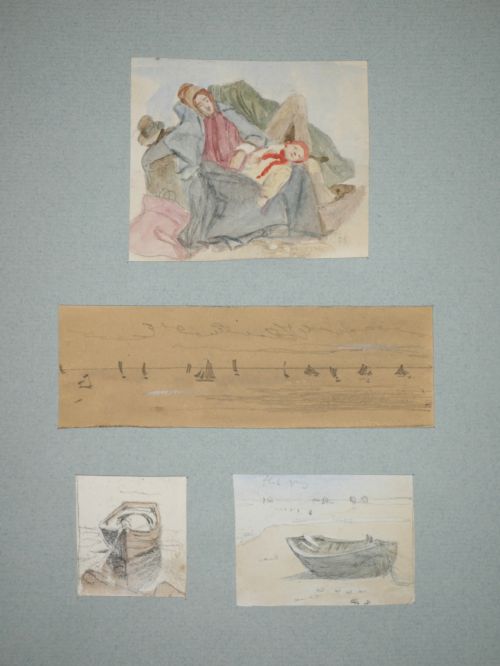
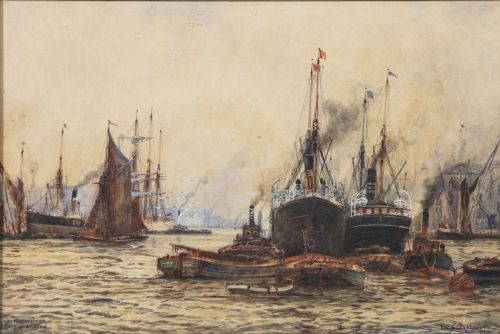
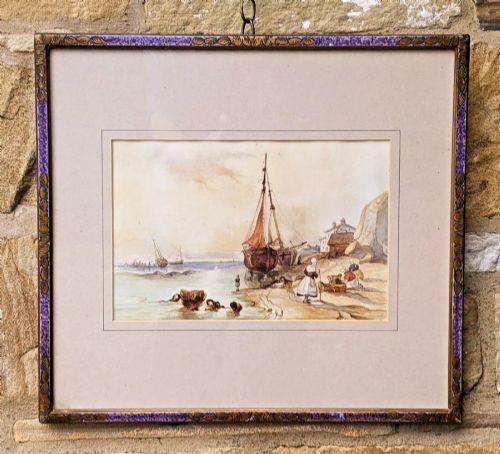
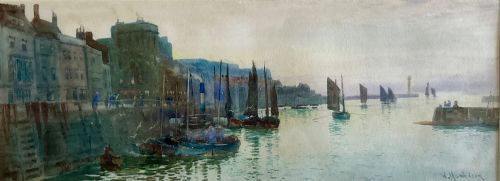
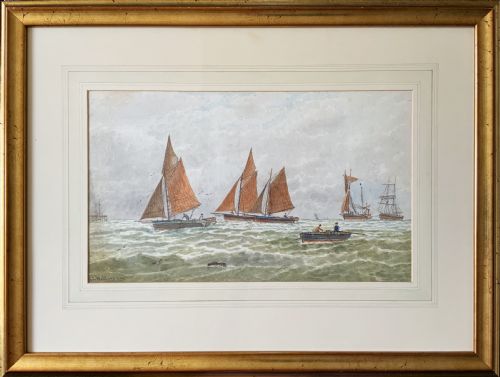
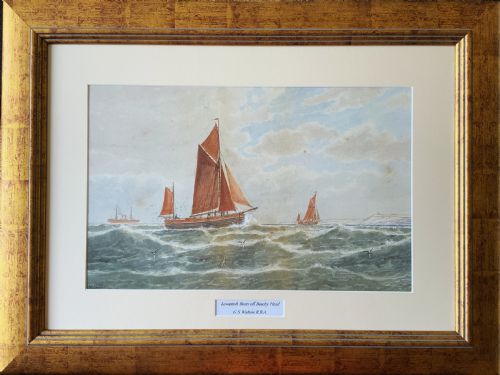
A framed boat watercolour depicts maritime scenes, coastal inlets, and working vessels rendered in water-based pigments upon paper. These works capture specific locations ranging from British fishing ports to Venetian canals and foreign rivers.
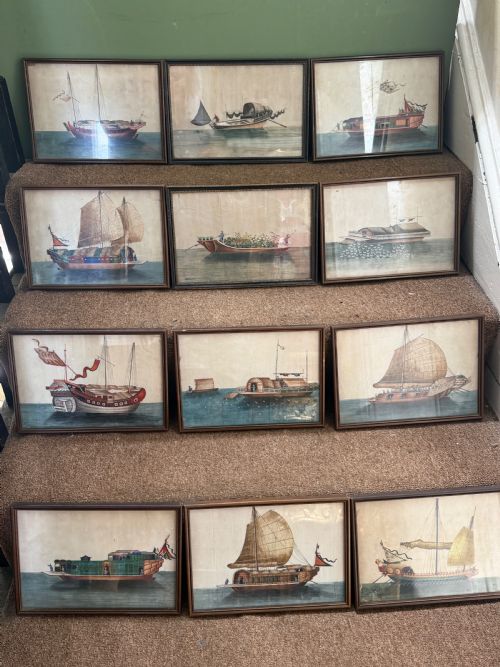
The pieces appearing most frequently originate from the Victorian and Edwardian eras, extending into the early decades of the twentieth century. Common forms include single marine paintings, pairs of coastal views, and occasionally sets of Chinese export works depicting junks.
Subjects centre upon sailing yachts, fishing boats, masted ships in choppy seas, and harbour departures. Artists record these nautical themes with varying degrees of impressionistic freedom or topographical detail.
Materials and technique
Artists applied watercolour pigments and occasional gouache directly onto prepared paper supports to build up transparent washes and opaque highlights. These works were then protected beneath glass and housed within wooden frames, frequently finished in gilt or ebonised surfaces.
The structural presentation relies on the combination of the paper painting, a protective glass glaze, and the framing timber. Period mouldings enclose the fragile works on paper to safeguard the delicate pigments from atmospheric moisture.
The listings span the Victorian, Edwardian, and post-war periods, utilising paper, watercolour pigments, glass, and gilt wood.
Markers of quality
Quality rests upon the artist's ability to command the medium, controlling the fluidity of watercolour pigment to convey the movement of water and the atmosphere of the sky. Superior works display confident brushwork and precise topographical or nautical observation rather than stiff imitation.
The condition of the paper surface and the preservation of the original pigments determine desirability, as fading alters the intended tonal balance. Additionally, the presence of period-appropriate gilt wood or ebonised frames enhances the integrity of the piece.
James Orrock·James Smetham·Frank William Scarbrough·William Matthison·George Stanfield Walters·Paul Delvaux·William Lee Hankey·Thomas Bush Hardy·William Tuck·Fred Waugh·Frederick William Hattersley·Ernest F. Hill·Frank Wasley·Thomas Clavering Alder·Walter Sweet·Ebenezer Wake Cook·Lennard Lewis·Robert Anderson·Frank Rousse·Frances E Nesbitt·Frederick William Booty·GM de L'Aubiniere·Carleton Grant
The Framed Boat Watercolour Glossary
- Watercolour pigment
- Finely ground colour suspended in a water-soluble binder, applied in thin washes to paper.
- Gilt wood
- Timber framing coated with a thin layer of gold leaf or metallic gilt, typical of Victorian presentation.
- Gouache
- An opaque water-based paint utilised alongside watercolour to add solid highlights and dense colour.
- Ebonised frame
- Wood stained or treated to imitate the dark, dense appearance of ebony, often seen on period marine works.
Framed Boat Watercolour: Frequently Asked Questions
What subjects appear in these paintings?
The compositions focus primarily on maritime life, showing fishing boats, sailing yachts, and bustling harbours. Scenes range from British coastal towns like Whitby and Mousehole to foreign waters in Venice and Holland.
Artists also recorded industrial shipping and quiet river landscapes, reflecting the diverse maritime commerce and leisure of the nineteenth and early twentieth centuries.
How should I hang a watercolour?
Watercolours require careful placement away from direct sunlight to prevent the pigments from fading over time. Maintaining a stable indoor environment protects both the fragile paper support and the antique wooden frame.
Glass fronts shield the paintings from dust and atmospheric moisture, ensuring the delicate washes remain undisturbed for decades to come.
Are these works signed by the artists?
Many examples bear the signature or initials of the painter, either written directly within the image or noted on accompanying documentation. Signatures help attribute the work to specific late nineteenth or early twentieth-century practitioners.
Unsigned pieces still offer stylistic clues through their handling of pigment, subject matter, and framing materials characteristic of particular periods.
How do I identify the period of a piece?
Dating relies heavily on the stylistic traits of the painting, the clothing or vessel types depicted, and the construction of the frame. Victorian and Edwardian works often feature specific framing styles, such as heavy gilt wood or ebonised mouldings.
Written inscriptions on the reverse or paper labels from original exhibitions also provide clear chronological anchors for when the artwork was produced.