
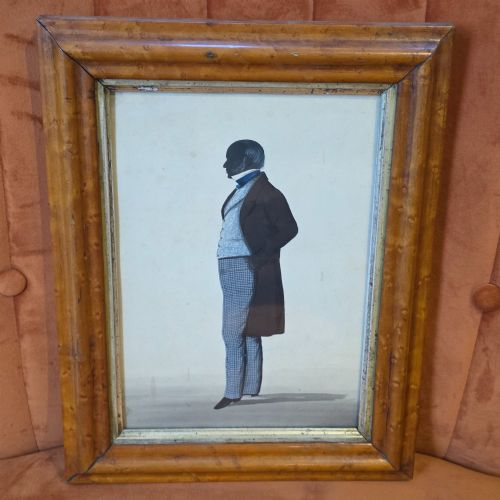
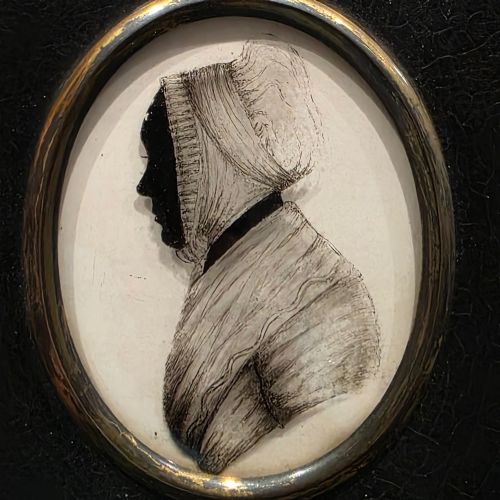

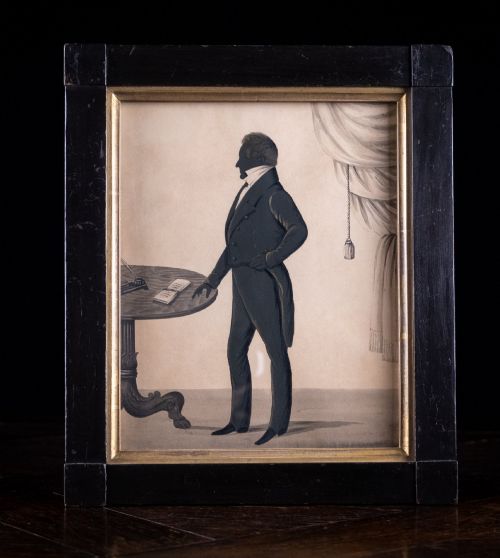
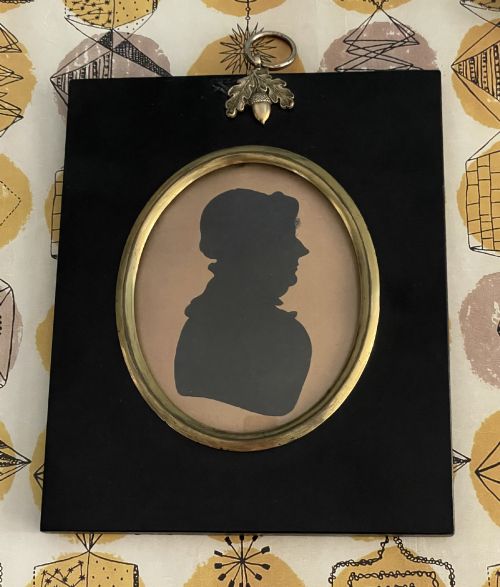


Framed Black Silhouette Portrait
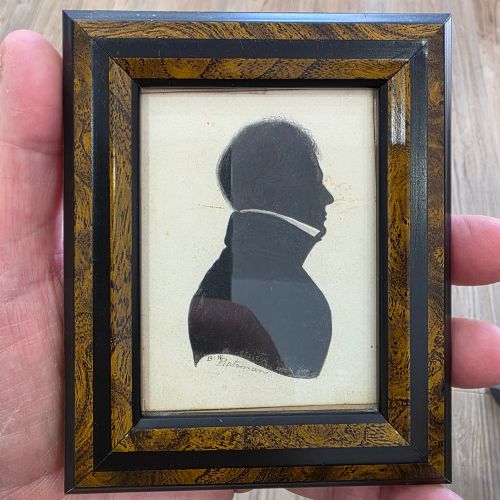
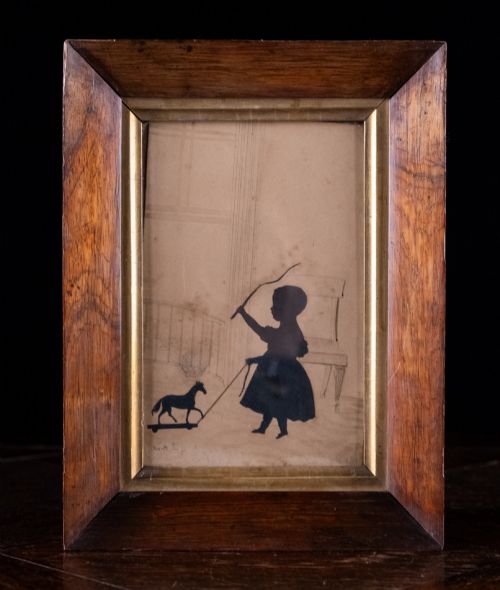
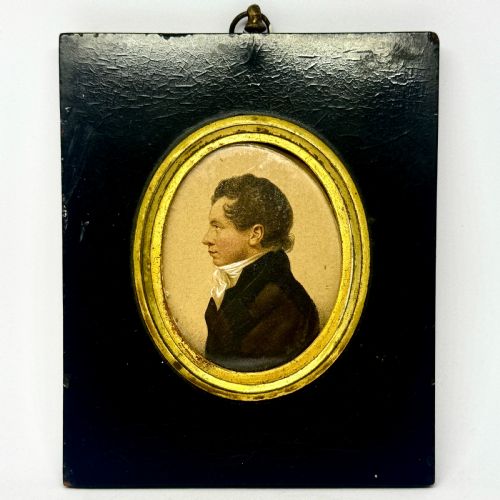
A framed black silhouette portrait captures the distinct profile of a sitter in striking monochrome, offering an intimate glimpse into Georgian and Victorian likenesses.
Framed Black Silhouette Portrait
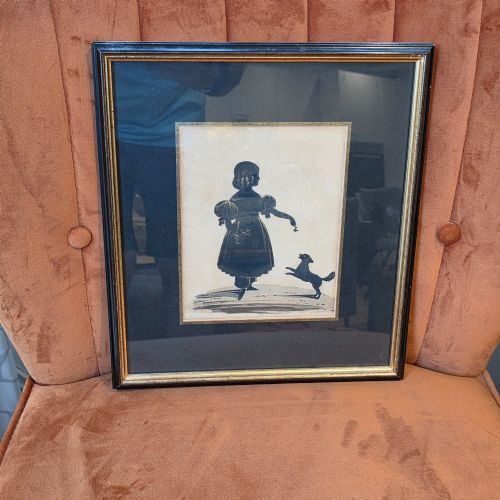
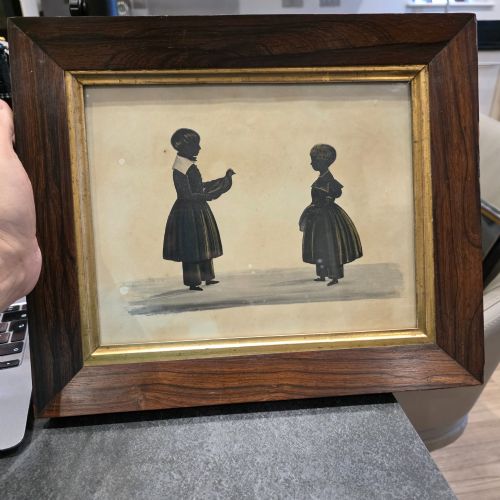
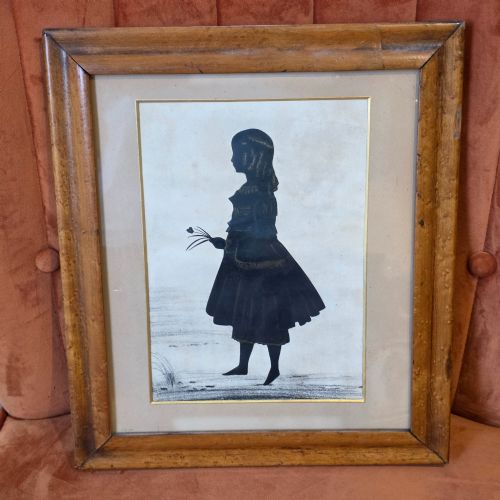
When you search for a framed black silhouette portrait, you encounter profile likenesses produced across the eighteenth and nineteenth centuries. These works range from humble cut paper mementos to elaborate conversation pieces depicting families, children, and animals.
The versions most common on this page date from the Georgian and Regency eras through the Victorian period. They appear in formats such as wall art, miniature portraits, and even jewellery.
Subjects include gentlemen in high collars, ladies in turban caps, children with pets, and full-length standing figures. Many examples preserve the identity of the sitter alongside the hand of the artist.
How they were made
Artists created these profile portraits using cut paper, ink, or pigment applied directly to glass, plaster, or card. Many pieces combine meticulous paper-cutting with delicate watercolour highlights and gold leaf detailing.
Frames play a crucial role in the construction, utilising ebonised wood, rosewood, brass, and papier-mâché to protect the delicate media within. Reverse painting on glass places the dark profile and fine brushwork behind a protective glazed surface.
Listings feature works spanning the eighteenth century through the Victorian era, utilising paper, glass, wood, brass, and papier-mâché.
What varies in quality
Quality rests upon the precision of the cutting or the sureness of the brushwork in capturing the exact contours of the sitter's facial profile. Finer examples display meticulous attention to eyelashes, hair strands, and costume details enhanced by gold leaf.
The integrity of the original housing distinguishes superior specimens, particularly those retaining contemporary ebonised frames, convex glass, and authentic trade labels on the reverse.
Bateman·William James Hubard·John Miers·Augustin Edouart·J. Deacon
The Framed Black Silhouette Portrait Glossary
- Silhouette
- A profile portrait filled in with a solid dark colour, typically black, originating from the practice of shadow tracing. The technique gained immense popularity before the widespread adoption of photography.
- Reverse painting on glass
- An artistic method where the image is applied directly to the rear side of a glass panel so that the finished portrait is viewed through the front. This technique protects the pigment from dust and environmental degradation.
- Ebonised wood
- Timber treated with a finish to imitate the dense, dark appearance of ebony. It provides a stark, contrasting border that accentuates the pale background and dark profile of the portrait.
- Hollow cut
- A method where the silhouette is excised from a piece of paper, leaving the surrounding sheet to serve as the mount against a darker backing fabric. This technique allowed artists to produce uniform likenesses efficiently.
Framed Black Silhouette Portrait: Frequently Asked Questions
How are these silhouettes dated?
Dating relies heavily on the style of clothing, hair, and headwear depicted in the portrait. Regency turbans, Georgian cravats, and Victorian bonnets provide reliable chronological markers.
Additionally, framing materials, backing papers, and old handwritten inscriptions or trade labels on the reverse help narrow the period of creation.
What materials protect the paper?
Glazing is essential for shielding fragile cut paper and watercolour from dust, moisture, and physical damage. Convex glass is frequently utilised to keep the glazing from touching the delicate paper surface.
Original brass bezels and sealed backing boards further safeguard the fragile interior components from atmospheric changes.
Where were they displayed?
These portraits were traditionally hung in parlours, hallways, and private bedchambers as intimate records of family members and friends. Smaller miniature formats were often carried in pockets or worn as jewellery.
Groups of framed profiles were frequently arranged in clusters on walls to display an entire family lineage.
How do I identify a painted version?
Painted examples show brushstrokes under magnification and utilise dense black ink, pigment, or metallic gold leaf. They frequently appear on plaster, ivory, card, or directly on the reverse of glass.
Cut paper profiles, by contrast, display crisp edges and rely on scissors or knives rather than liquid media to define the silhouette.