



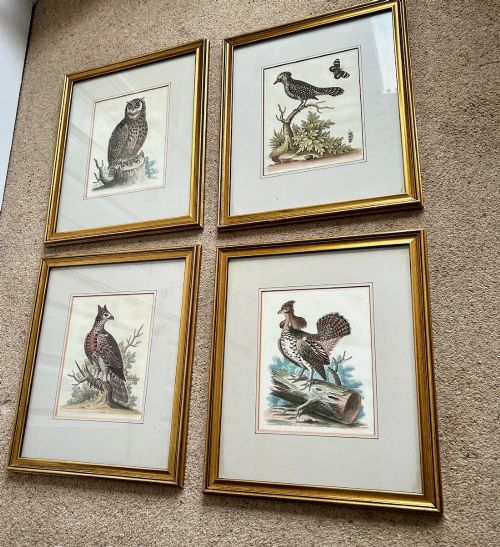


Framed Bird Engravings
Framed bird engravings bring the quiet observation of the natural world indoors, offering finely worked historical studies for your walls.
Framed Bird Engravings
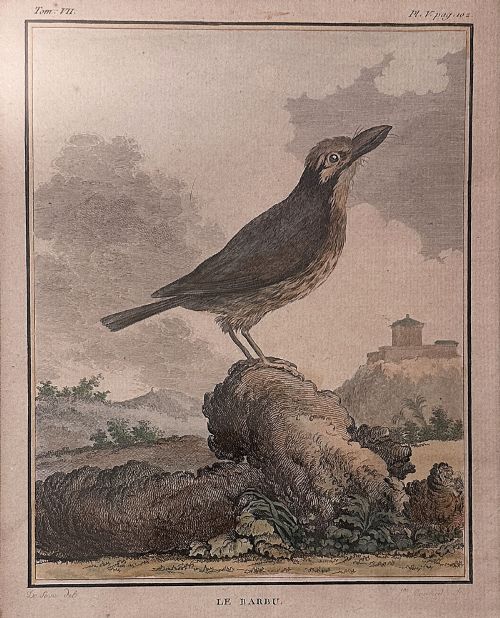
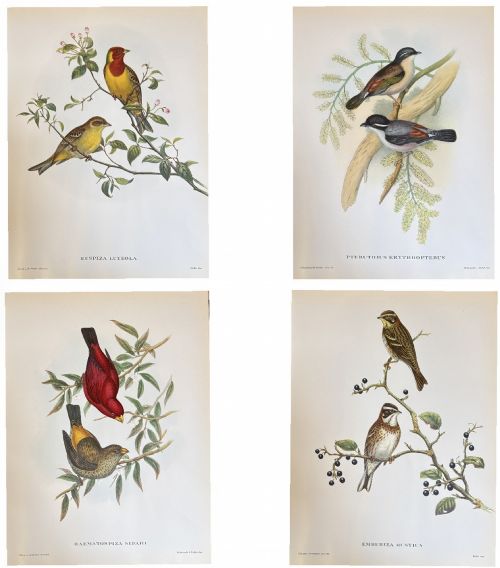
Framed bird engravings capture historical ornithological study through printed plates, often coloured by hand after printing. When searching for framed bird engravings, you encounter works spanning the Georgian and Victorian eras, alongside Regency and mid-twentieth-century examples.
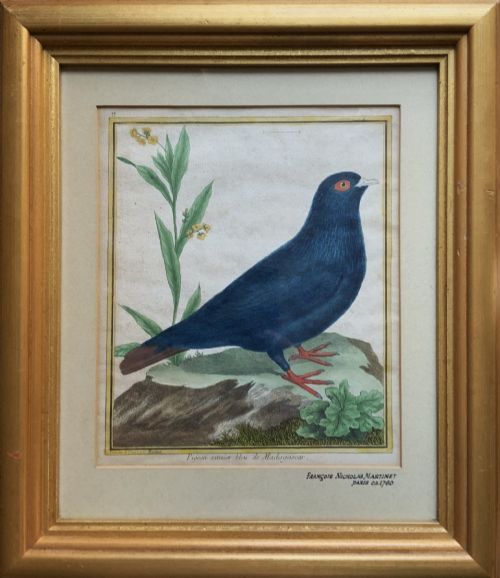
The subjects range from solitary anatomical studies of ducks and pigeons to sets of tropical species created by notable natural history illustrators. These works combine scientific record with decorative appeal, housed behind glass in period wood frames.
How they were made
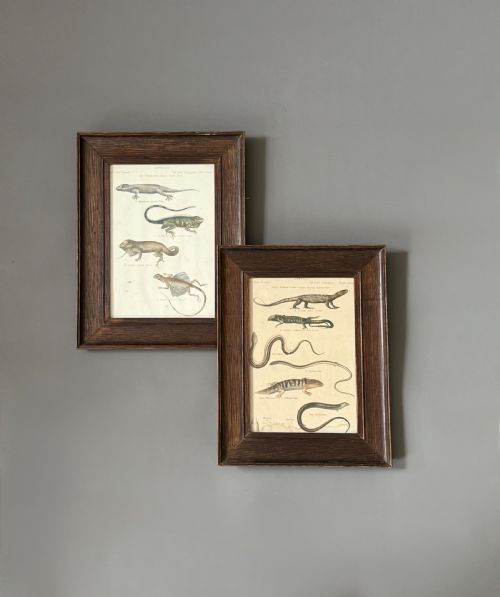
These works rely on inked lines pressed from engraved plates onto paper, followed by the careful application of watercolour by hand. Artisans often utilised gilt wood, maple, and simple timber mouldings to house the prints under glass.
Gold leaf gilding and protective paper backings complete the construction, binding the visual art to its period framing technique.
Framed Bird Engravings Retail Price Guide 2026
Typical asking prices for framed bird engravings among the pieces listed under this phrase on Sellingantiques today, from the lower quarter to the upper quarter. They describe what is for sale here now, not the wider market.
The listings feature paper, glass, wood, gilt, gold leaf, ink, and watercolour across Georgian and Victorian periods.
What varies in quality
The standard of an engraving rests upon the precision of the initial ink impression and the subtlety of the subsequent hand colouring. Crisp line work and well-preserved pigments distinguish the finer plates from simpler prints.
Frame selection and preservation also dictate the overall character, as period gilt wood and maple settings complement the paper artwork more effectively than later replacements.
François Nicolas Martinet·George Edwards·William Swainson·Edward Lear
The Framed Bird Engravings Glossary
- Engraving
- A printmaking technique where an image is incised onto a metal plate, which is then inked and pressed onto paper. This method produces fine, precise lines essential for detailed feathers.
- Hand coloured
- The application of watercolour tints by hand onto a monochrome printed base. This process added realism to scientific ornithological plates.
- Lithograph
- A planographic printmaking method based on the repulsion of oil and water on a limestone surface. It allowed for softer tonal gradations than traditional metal plate engraving.
- Mezzotint
- A tonal printmaking process that achieves rich darks and subtle gradients without line work. It creates atmospheric backgrounds common in Regency domestic scenes.
- Ornithological
- Pertaining to the scientific study and depiction of birds. These plates prioritise anatomical accuracy alongside decorative harmony.
Framed Bird Engravings: Frequently Asked Questions
How do I date an old bird engraving?
Dating relies on the paper type, plate marks, and stylistic clues within the engraving technique used by the workshop.
Typography, margins, and accompanying publication text also help place the print within Georgian or Victorian production periods.
Are these prints hand coloured?
Many historical ornithological plates feature watercolour applied by hand after the initial ink transfer. Examining the pigment under magnification reveals the brushwork distinct from printed colour.
Subtle variations between identical plates indicate individual hand application by studio colourists.
How should I hang framed engravings?
Keep these framed works away from direct sunlight to prevent the watercolour pigments and paper from fading over time. Stable indoor humidity levels protect the paper and wooden frames from warping.
Grouping sets of prints together works well on walls with indirect ambient light.
What is the difference between an engraving and a lithograph?
An engraving uses incised lines on a metal plate to hold ink, resulting in sharp and precise contours. A lithograph relies on chemical drawing on stone to create painterly tones.
Both methods served to reproduce natural history illustrations for collectors.