
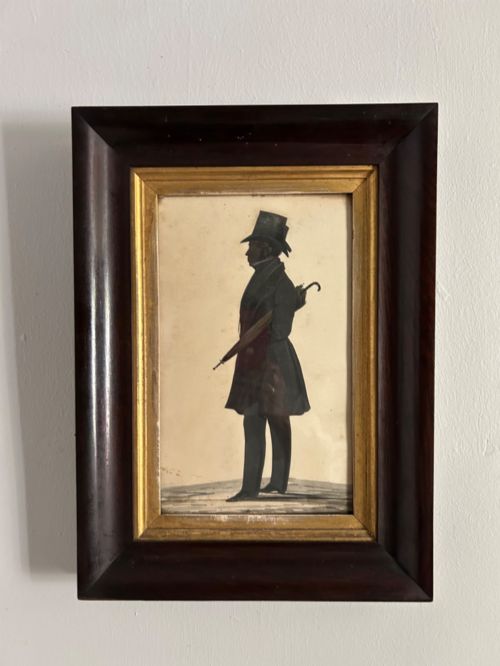


Framed Silhouette Cut
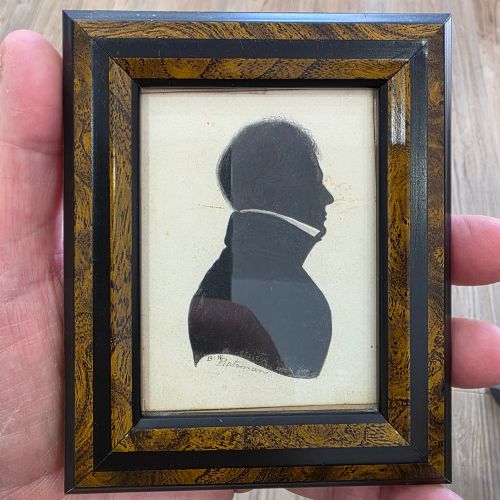
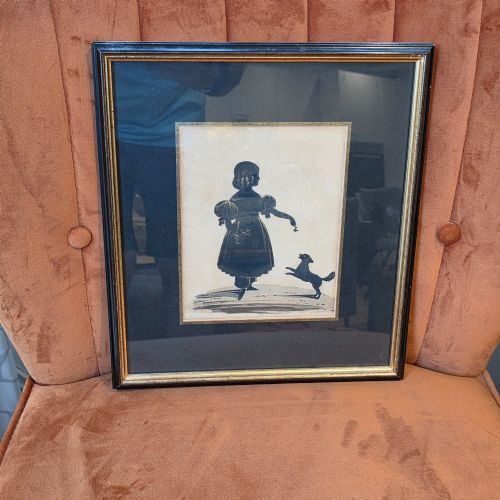
These framed antique silhouette cut pieces capture likenesses in monochrome paper and ink, offering intimate glimpses into historical lives through delicate portraiture.
Framed Silhouette Cut
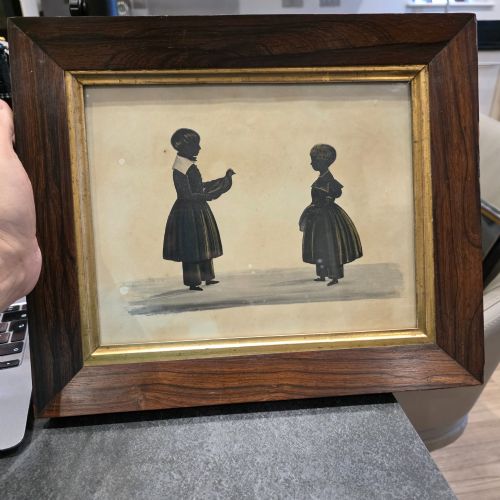
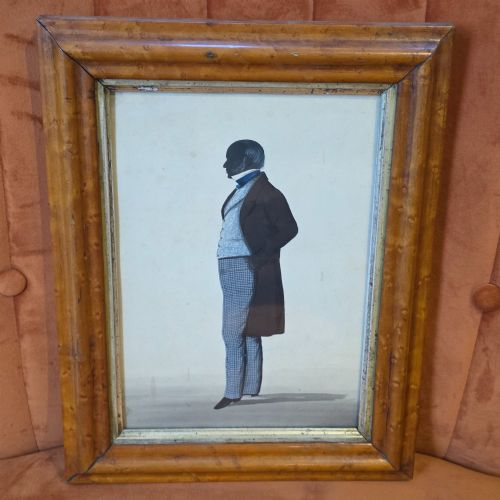
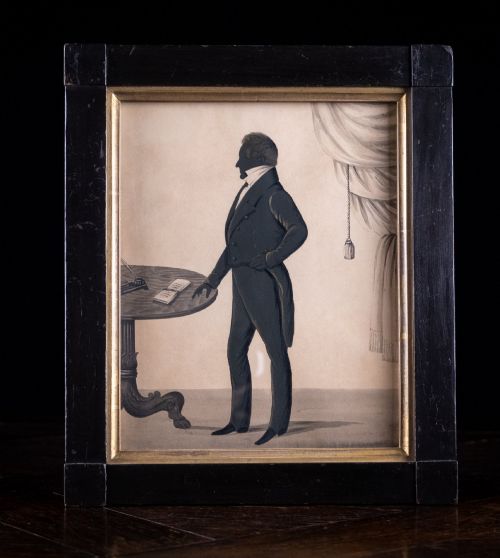
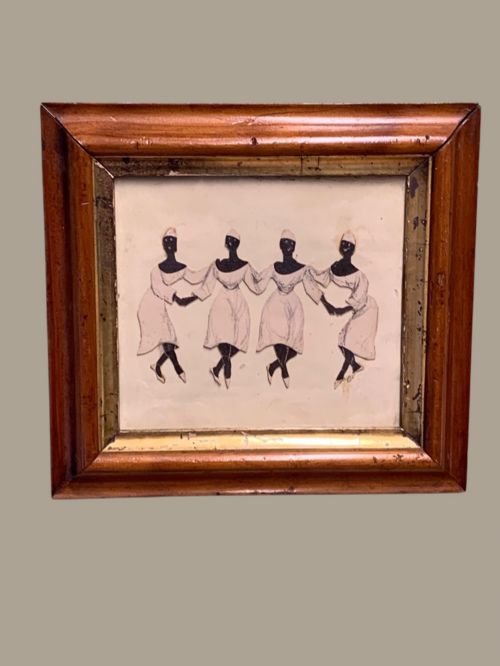
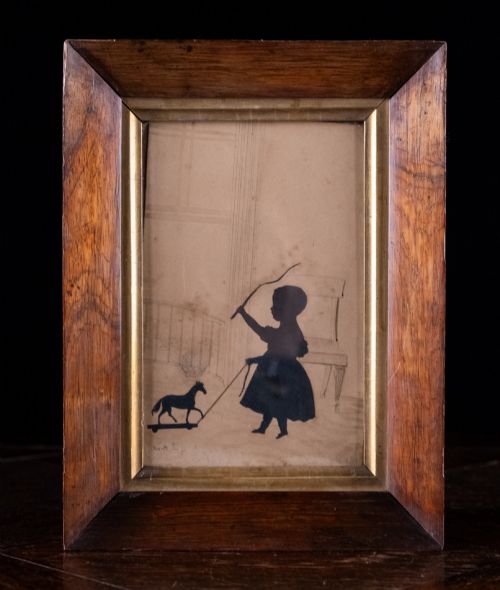
When you search for framed antique silhouette cut, you encounter profile portraits and conversation pieces spanning the Georgian, Regency, and Victorian periods. These works capture subjects ranging from single gentlemen and ladies to children with animals and multi-figure family groups.
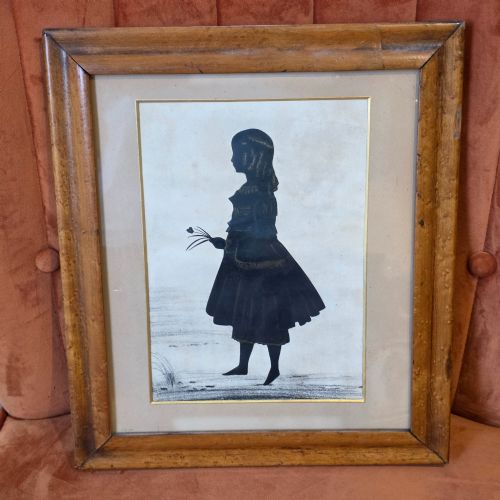
The versions most frequently met on this page include nineteenth-century hand-cut paper profiles mounted in timber frames such as rosewood and maple. Many examples combine cut paper with delicate watercolour additions or gilding to delineate clothing and facial details.
Makers and studios like the Hubard Gallery and artists such as Augustin Edouart appear among the selection alongside folk art and British School pieces. Subjects extend beyond simple head portraits to full-length studies and narrative scenes.
Materials and technique
The primary medium involves precision cutting of black or dark paper to form profile likenesses, occasionally augmented with ink, watercolour, or pastel. Artists applied these cut profiles onto pale grounds or combined them with collage elements.
Frames utilise woods like rosewood, maple, and ebony, frequently protected behind glass and enhanced with brass fittings or gold leaf accents. Gilded highlights and reverse painting on glass distinguish the more elaborate decorative treatments.
Represented periods span the Georgian, Regency, Victorian, and early twentieth-century eras.
Distinctions in quality
Quality rests upon the dexterity of the cutting and the precision with which fine details such as lace, hair, and facial expressions are rendered. Hand-cut works by identified artists or established galleries display superior sharpness compared to anonymous folk art productions.
The sophistication of the composition elevates certain pieces, particularly full-length figures, conversation pieces involving multiple subjects, and works incorporating watercolour or gold leaf embellishment. Original framing, especially in matching rosewood or maple housings, preserves the integrity of the object.
William James Hubard·Augustin Edouart·Frederick Frith·Alfred Darbyshire·Nathaniel Bermingham
The Framed Silhouette Cut Glossary
- Silhouette
- A portrait represented as a solid shape of a single colour, usually black, matching the outline of the subject's profile. This form of imagery gained immense popularity before the widespread adoption of photography.
- Conversation piece
- An informal group portrait, often depicting family members or friends engaged in a common activity. In silhouette work, these complex compositions include multiple figures, animals, and domestic settings.
- Gilt
- Covered thinly with gold leaf or gold paint. This technique highlights edges, frames, or specific elements within the cut paper composition.
- Regency
- The period in British history from 1811 to 1820, characterised by distinct elegance in art and portraiture. Pieces from this era often feature refined cutting and classical attire such as turban caps.
- Folk art
- Art produced by an untrained or self-taught artist working within a traditional community aesthetic. These silhouette pieces display charming directness rather than academic precision.
Framed Silhouette Cut: Frequently Asked Questions
What periods do these silhouettes date from?
The listings span the late eighteenth century through the nineteenth century, encompassing Georgian, Regency, and Victorian eras. Later examples extend into the early twentieth century.
Most pieces originate from the nineteenth century, reflecting the peak of popularity for hollow-cut and solid-cut profile portraits before photography replaced them.
What frames house these artworks?
Original housings frequently include rosewood, maple, or ebony timber frames fitted with glass to protect the delicate paper work. Brass hangers and beaded bezels often accompany these traditional surrounds.
Many retain their early backboards and paper seals, which help indicate the period and origin of the framing.
Who are the notable silhouette artists?
Recognised practitioners include Augustin Edouart, whose dynamic full-length cutouts recorded countless sitters, and William James Hubard of the Hubard Gallery. Other documented makers include Frederick Frith and Nathaniel Bermingham.
Many surviving pieces remain anonymous or belong to regional British School traditions without attribution to a specific hand.