

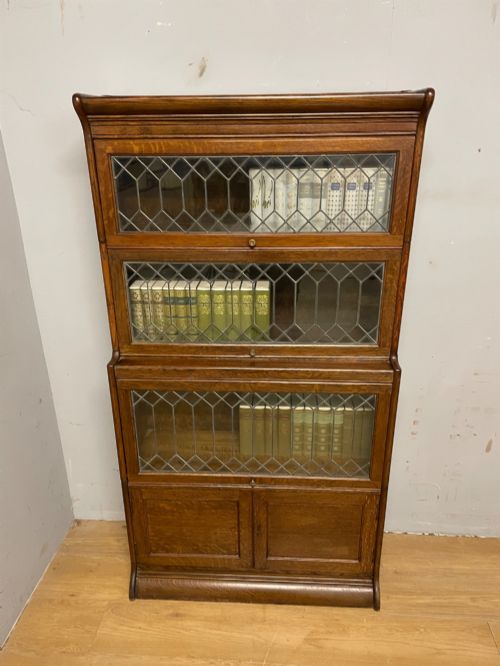
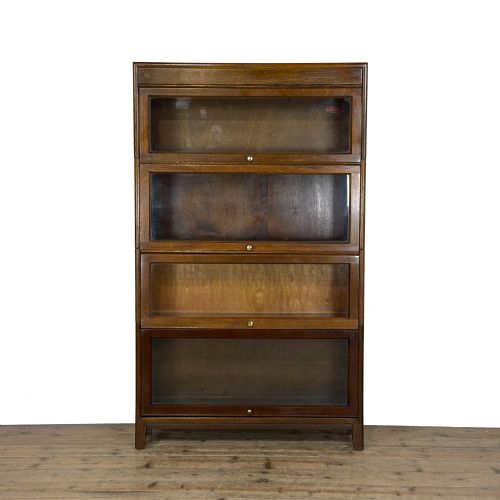
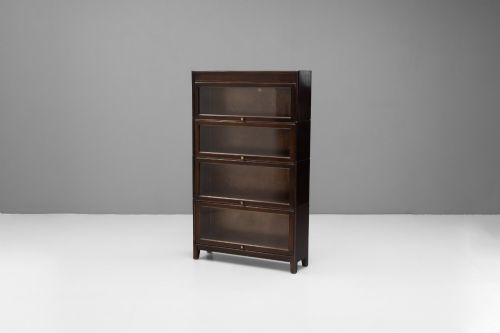
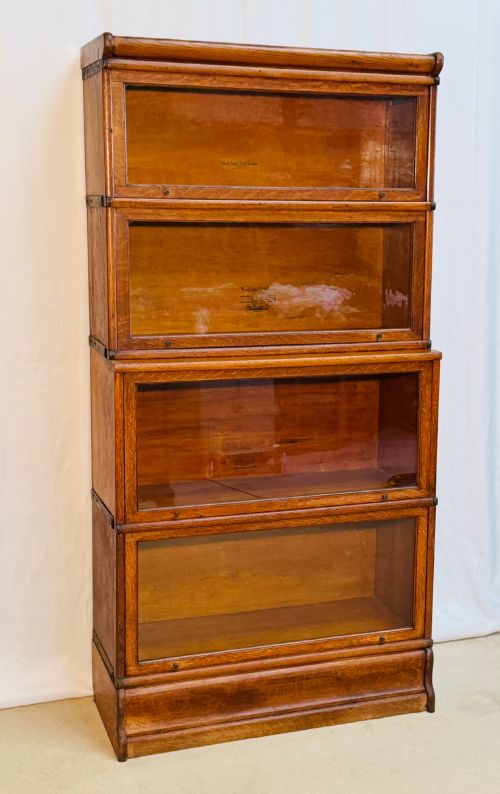
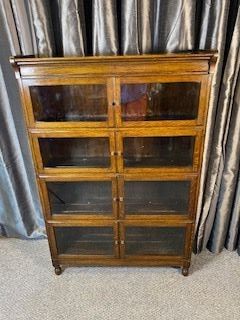
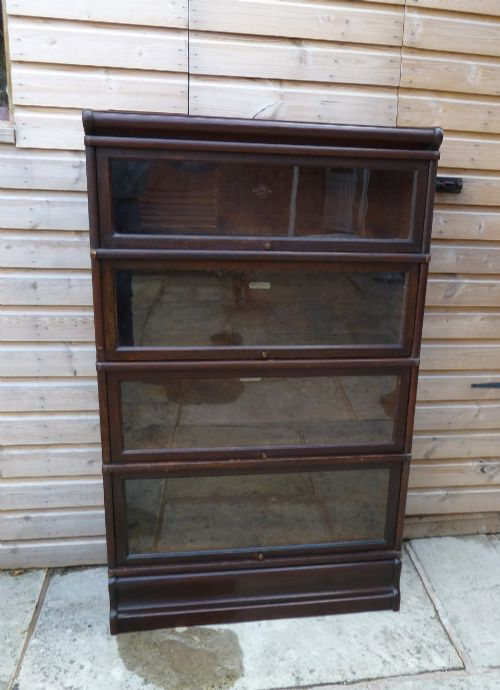
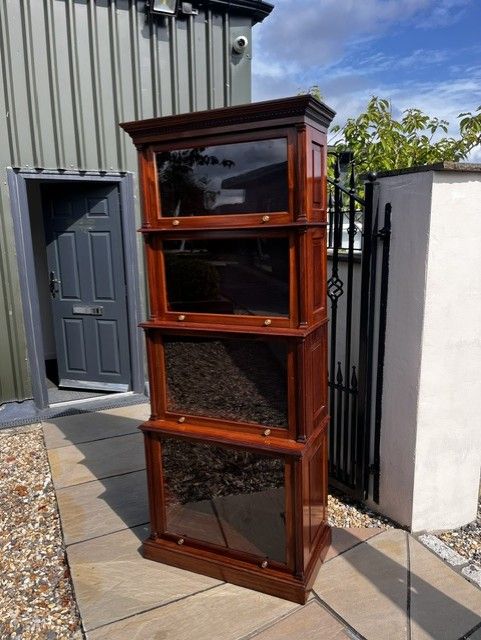

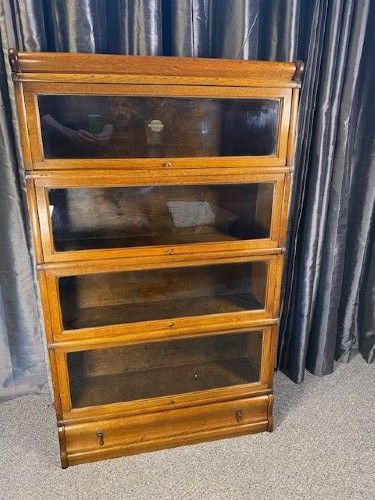


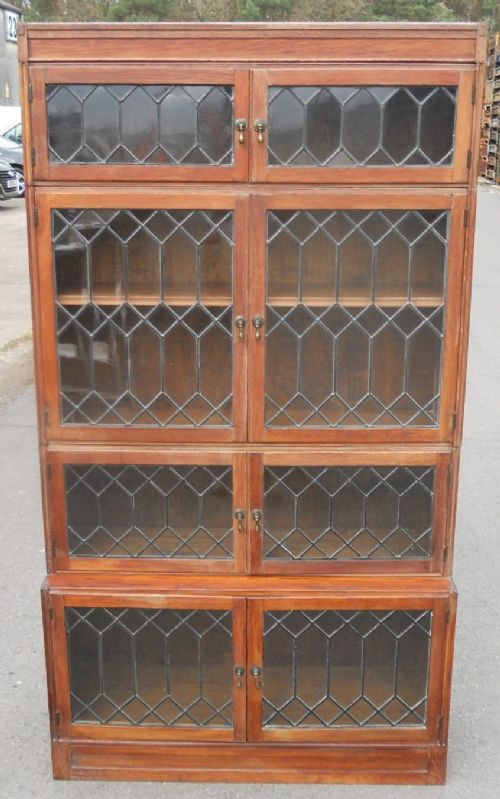


Four Tier Glazed Cabinet
A four tier glazed cabinet organises your volumes behind protective glass frames, bringing modular timber construction into the study.
Four Tier Glazed Cabinet
A four tier glazed cabinet appears primarily as a stacking or sectional bookcase from the Edwardian era through to the nineteen twenties. These pieces divide into four distinct horizontal compartments, each fronted by its own glazed lifting door.
The format originates in modular office furniture designed to protect growing libraries from dust while remaining easy to move and rearrange. Oak and mahogany dominate the forms recorded on this page, with solid mahogany and golden oak appearing frequently.
Most examples follow the stacking barrister design associated with makers such as Globe Wernicke, Lebus, and Gunn. These modular units allow the sections to separate individually, resting one upon another beneath a distinct top cornice and above a base plinth.
Materials and Construction
Makers construct these sectional bookcases using oak, solid mahogany, and golden oak timber, paired with clear glass panels held within wooden frames. Brass hardware, metal mechanisms, and lead components frequently assist the smooth lifting action of the glazed doors.
The modular engineering relies on interlocking sections that stack securely without permanent fixings, permitting each tier to operate independently. Original finishes survive on many examples, showing the natural grain of the oak and mahogany beneath polished surfaces.
Four Tier Glazed Cabinet Retail Price Guide 2026
Typical asking prices for four tier glazed cabinet among the pieces listed under this phrase on Sellingantiques today, from the lower quarter to the upper quarter. They describe what is for sale here now, not the wider market.
Every four tier glazed cabinet listed here dates from the Edwardian era up to nineteen twenty, constructed in oak or mahogany.
Distinctions in Quality
Quality rests upon the selection of timber figures, such as the rich grain visible in golden oak and solid mahogany variants. Maker attribution also elevates certain pieces, with branded examples by Globe Wernicke, Lebus, or Gunn commanding particular attention.
The sophistication of the stacking mechanism and the integrity of the original brass or metal hardware distinguish standard production from finer workshop output. Original condition and unaltered glazed doors further separate standard utility pieces from high quality cabinet work.
Globe Wernicke·Lebus·Gunn
The Four Tier Glazed Cabinet Glossary
- Sectional bookcase
- A modular piece of furniture built from separate stacking tiers that can be taken apart individually. This design allows for flexible arrangement and easy transport of large libraries.
- Barrister bookcase
- A specific type of stacking bookcase featuring glazed doors that lift and slide inward above the books. The term derives from the portable nature of the cabinets used by travelling lawyers.
- Cornice
- The decorative moulded projection that crowns the uppermost section of the cabinet. It provides a finished architectural cap to the stacked tiers below.
- Plinth
- The solid base block upon which the lowest tier of the cabinet rests. This component elevates the shelving off the floor and distributes the weight evenly.
- Golden oak
- A bright, warm shade of oak finish popular during the Edwardian period and the early twentieth century. It highlights the natural medullary rays within the timber.
Four Tier Glazed Cabinet: Frequently Asked Questions
How do the glass doors open?
The glazed doors lift upward on internal metal or brass arms and slide smoothly into the cabinet cavity above the books. This mechanism allows you to retrieve volumes quickly without swinging doors out into the room.
Each tier operates independently, meaning only the specific shelf you are accessing needs to remain open while you browse.
Can the four tiers be separated?
Yes, the modular construction is deliberately designed to let the four sections lift apart from the base and top cornice. This makes moving the heavy oak or mahogany bookcase much easier.
When reassembled, the interlocking edges keep the tiers stable and aligned vertically without requiring permanent fixings.
What wood types are used?
The listings show predominantly oak, golden oak, and solid mahogany as the primary construction timbers. These hardwoods were chosen for their structural strength and attractive grain patterns.
Metal, brass, and lead components are integrated into the hardware and door frames to support the stacking and lifting mechanisms.
How do I date these cabinets?
Dating relies on the stylistic markers of the Edwardian period and the early decades of the twentieth century, specifically around nineteen hundred to nineteen twenty. The hardware style and construction methods align closely with this era.
Maker stamps or labels from firms such as Globe Wernicke or Lebus often provide a reliable indication of the production decade.