

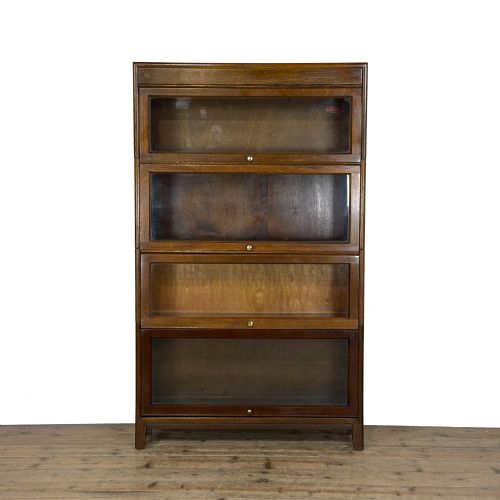
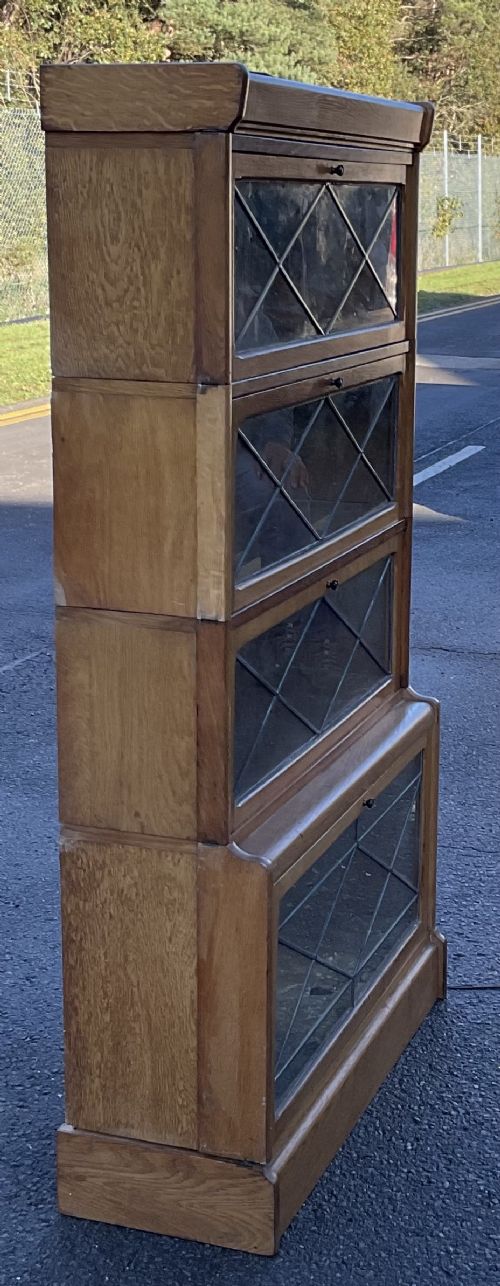
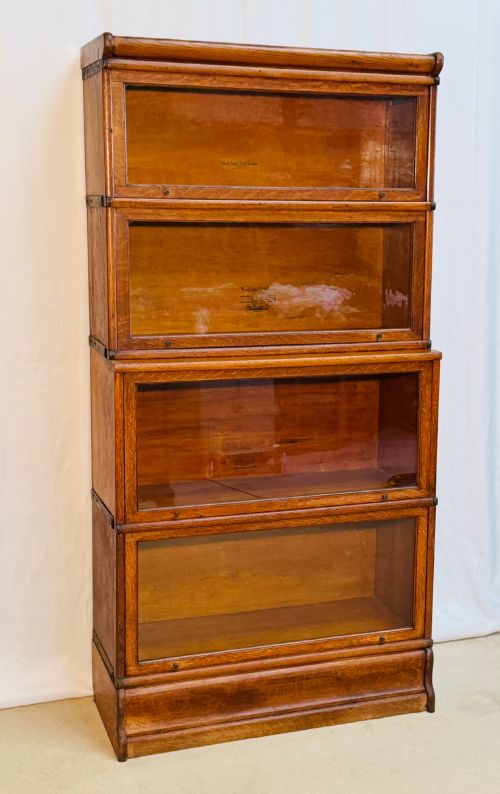
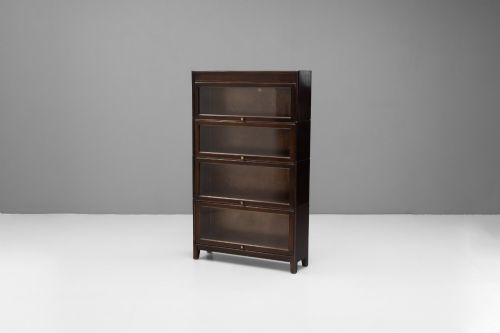
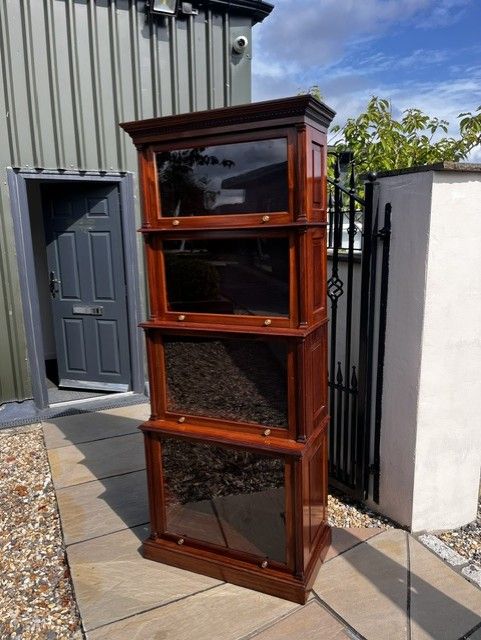
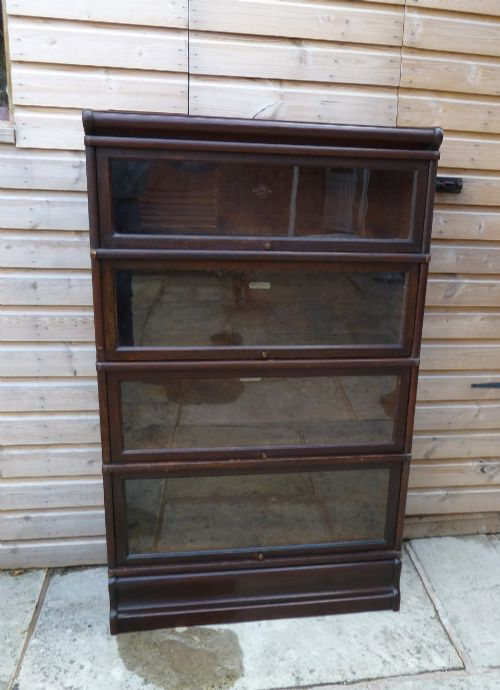
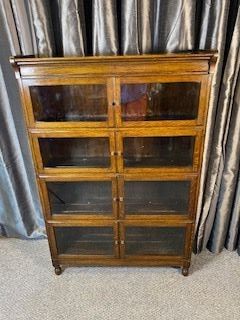
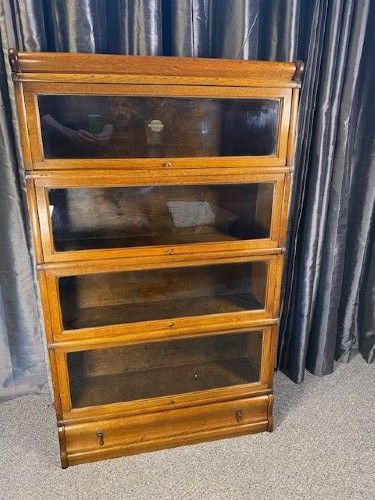

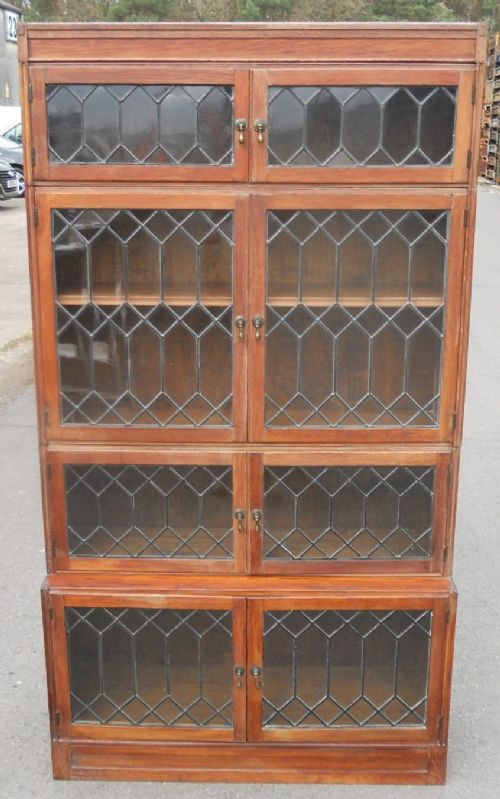


Four Stack Bookcase
These four stack bookcase designs are modular sectional pieces created to keep volumes clean and organised.
Four Stack Bookcase
A four stack bookcase consists of multiple modular sections designed to interlock vertically to form a taller shelving unit. These pieces emerge primarily from the Edwardian period and the decades around nineteen twenty, taking the form of barrister or elastic bookcases.
The version most commonly met on this page is the four tier or four section modular stacking bookcase. These units often carry makers' names such as Globe Wernicke, Gunn, or Lebus, reflecting their origin as functional office and library furniture.
Makers constructed these cabinets with glazed doors that lift and slide inward to protect the books stored within. The vertical arrangement allows owners to expand their library simply by adding another section to the stack.
Materials and construction
Craftsmen built these bookcases using oak and solid mahogany, often finishing the wood to highlight the natural grain. Golden oak variants appear frequently among the listings, showcasing the timber popular in early twentieth century workshops.
Glass panels are fitted into wooden doors, accompanied by brass or metal hardware that operates the lifting mechanism. Lead also appears in the materials, utilised in the construction or detailing of the glazed sections.
Four Stack Bookcase Retail Price Guide 2026
Typical asking prices for four stack bookcase among the pieces listed under this phrase on Sellingantiques today, from the lower quarter to the upper quarter. They describe what is for sale here now, not the wider market.
These clever modular stacks let cautious lawyers keep their heavy law books locked behind sliding glass.
Variations in quality
Quality in a four stack bookcase rests upon the integrity of the modular mechanism and the selection of timber. Pieces produced by established makers demonstrate precise joinery that allows each tier to align correctly with its neighbours.
The choice between solid mahogany and oak alters the visual weight and character of the piece. Superior examples retain their original glass and operational hardware, maintaining the precise action intended by the manufacturer.
Gunn Furniture·Wernicke System·Globe Wernicke·Lebus
The Four Stack Bookcase Glossary
- Sectional bookcase
- A modular shelving unit built in separate tiers that stack vertically. This design allows the furniture to be easily disassembled and moved.
- Barrister bookcase
- A specialised cabinet featuring glass fronted shelves designed to protect law books. The doors lift and slide into the cabinet above the books.
- Elastic bookcase
- An alternative term for a modular stacking system that expands by adding sections. The system stretches to accommodate a growing library.
- Glazed
- Fitted with glass panes to enclose the shelving space. This keeps dust away from the volumes stored inside.
Four Stack Bookcase: Frequently Asked Questions
What is a four stack bookcase?
A four stack bookcase is a modular shelving unit made from four distinct sections that sit one upon another. These pieces were designed to protect books behind glass doors while allowing the library to grow vertically.
Such furniture became popular in offices and studies during the Edwardian era and the nineteen twenties. Each tier functions independently yet locks into the adjacent sections for stability.
How do the doors open?
The glass fronted doors utilise an elastic or sliding mechanism that allows them to lift upward and push back into the recess above the shelf. This action lets you access the books without swinging a door outward into the room.
When closed, the glass shields the volumes from dust and moisture. The mechanism requires smooth interaction between the metal hardware and the wooden frame.
Can the sections be separated?
Yes, the modular design means the tiers lift apart from one another once the top cornice and base are removed. This construction made transportation straightforward for early owners.
Arranging or moving the cabinet involves lifting each section individually rather than shifting a single heavy frame. The interlocking edges keep the stack aligned when assembled.
Which woods are most common?
Oak is the primary timber found in these sectional bookcases, frequently appearing in a golden finish. Mahogany and solid mahogany variants also feature prominently among the pieces.
The choice of wood reflects the manufacturing standards of the early twentieth century, where durable timbers were selected to support heavy rows of books.