


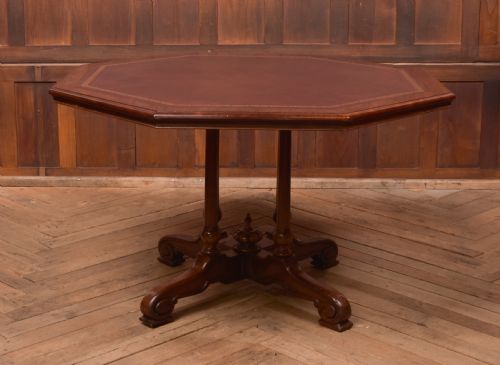

Four Pedestal Dining Table
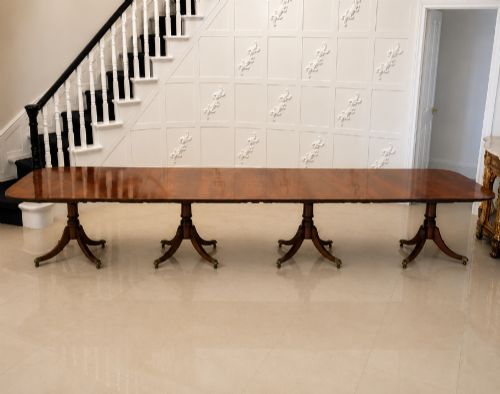
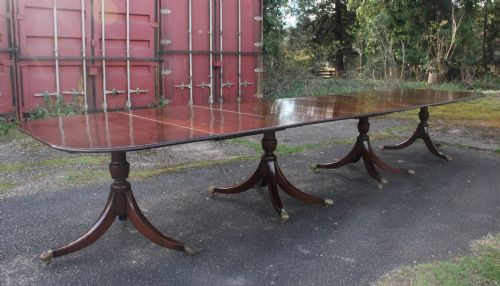
A four pedestal dining table is a grand, multi-column timber dining table designed for large gatherings, prized for its scale and formal presence.
Four Pedestal Dining Table
When you search for a four pedestal dining table, you encounter substantial dining furniture designed to seat large numbers of guests, often accommodating up to twenty-four or twenty-six people using multiple leaves. The pieces meeting this description span several notable periods, notably the Regency era and the wider nineteenth century, alongside later revivals from the early twentieth century.
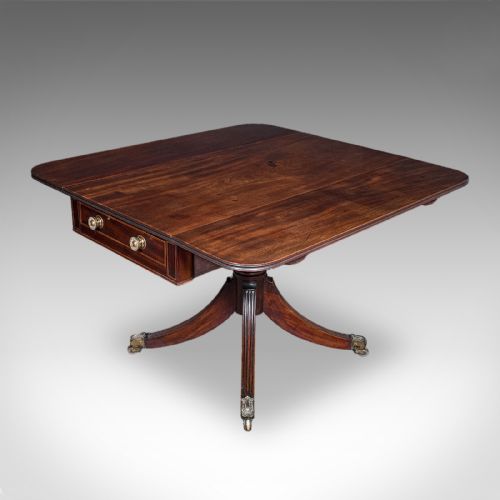
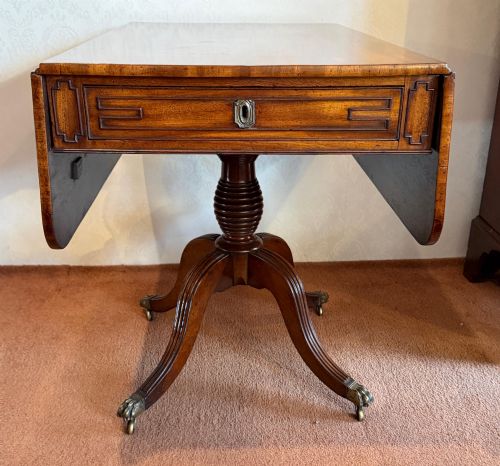
The primary forms on this page include large banquet tables supported by four separate pedestals, alongside smaller breakfast tables, centre tables, and tilt-top tables that share similar pedestal construction methods. These surfaces vary from rectangular formats with removable leaves to circular and oval tops suited to different room proportions and dining capacities.
How they were made
Timbers such as mahogany and walnut form the primary structure of these tables, frequently selected for their rich grain patterns and durability during the eighteenth, nineteenth, and early twentieth centuries. Cabinet makers also utilised materials like cherry wood, satinwood, and burr walnut for specific surfaces and decorative highlights.
Support systems rely heavily on turned columns or pedestals standing on splayed legs, often fitted with brass castors to allow movement of these heavy items. Inlaid details using ebony, along with carved elements, complete the construction techniques recorded across the pieces.
Listings span multiple eras including Regency, Georgian, Victorian, and the 1920s, constructed from mahogany, walnut, brass, and cherry wood.
What varies in quality
The distinction between standard examples and top-tier pieces rests on the choice of timber and the ambition of the design, such as monumental proportions that seat twenty-six diners with multiple original leaves. Superior items exhibit refined cabinet work, sophisticated timber selection, and harmonious proportions across all four pedestals and the connecting leaves.
Execution of details like brass castors, turned columns, and inlaid work separates fine workshop production from simpler utilitarian furniture. The presence of documented periods, such as Regency or George III origins, alongside well-preserved table leaves, further defines the standing of an individual table.
The Four Pedestal Dining Table Glossary
- Pedestal
- A central column support resting on splayed legs, which holds the weight of the table top. This method allows greater legroom for diners seated around the perimeter.
- Banquet table
- A very large dining table designed for hosting feasts and large dinner parties. These pieces often incorporate multiple leaves to extend their length significantly.
- Tilt top
- A table mechanism allowing the wooden top to pivot into a vertical position when not in use. This clever design saved valuable floor space in historic interiors.
- Breakfast table
- A smaller pedestal table historically used for informal morning meals or light dining. They frequently feature round or oval tops supported by a single turned column.
- Castor
- A small wheel fitted to the base of table legs to ease movement across flooring. Many period examples utilise brass for these functional components.
Four Pedestal Dining Table: Frequently Asked Questions
How many people does a four pedestal table seat?
These large banquet tables typically seat twenty-four to twenty--six guests when fully extended with multiple leaves.
Smaller breakfast or centre tables associated with pedestal designs accommodate four people for more intimate dining.
What periods do these pedestal tables come from?
The listings include examples originating from the Georgian, Regency, and Victorian eras, alongside later Edwardian and 1920s revival pieces.
Stylistic influences span from strict Regency designs to grand Georgian proportions and nineteenth-century craftsmanship.
How do I use a tilt top table?
A tilt top mechanism allows the surface to pivot ninety degrees so the furniture can stand flat against a wall when not in use.
This historic space-saving feature appears frequently on breakfast and occasional tables from the Regency and Victorian periods.
What woods were used for these tables?
Mahogany is the predominant timber found across these dining and breakfast tables, valued for its rich colour and strength.
Other materials include walnut, burr walnut, cherry wood, and satinwood, occasionally accented with brass and ebony inlay.