





Footed Silver Tea Tray
A footed silver tea tray anchors the afternoon service with substance and presence, elevating the ritual through raised form and polished metal.
Footed Silver Tea Tray
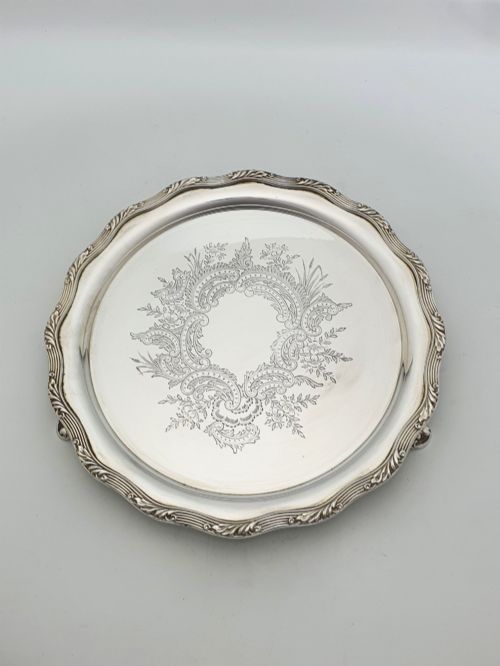
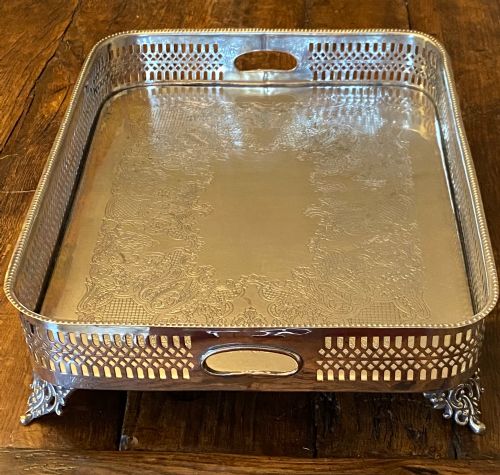
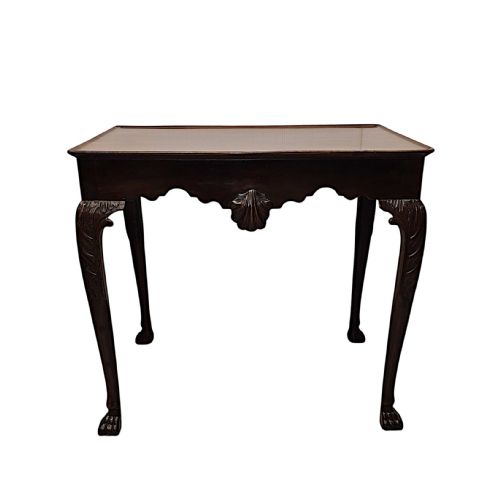
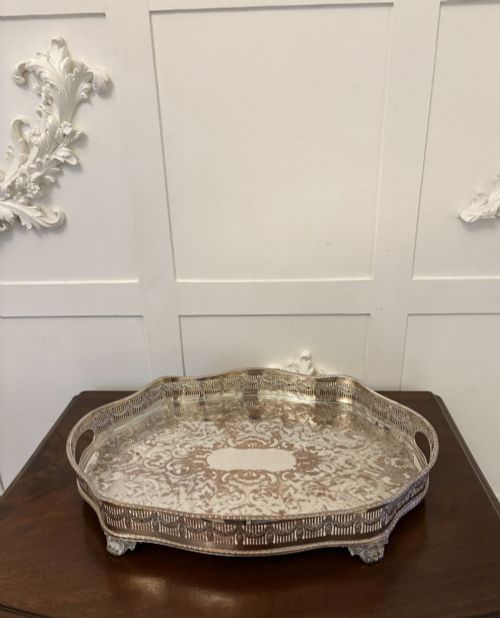
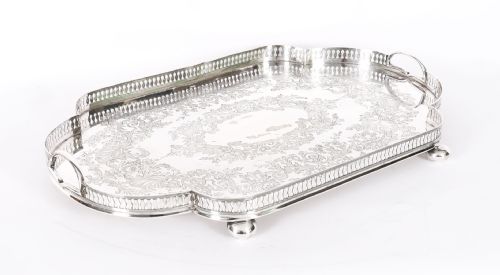
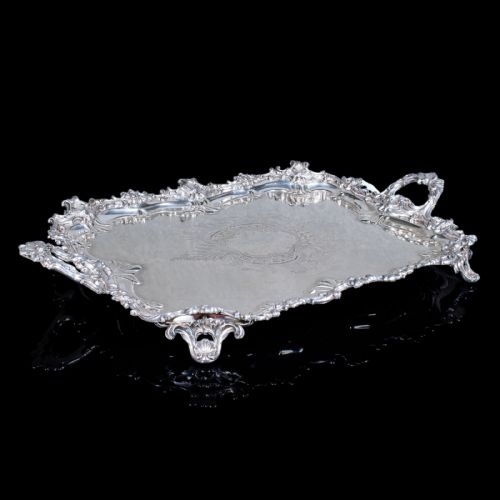
A footed silver tea tray brings together serving vessels and display surfaces from the Georgian, Victorian, and Edwardian periods, appearing in forms such as gallery trays, salvers, and silver tables.
The pieces on this page span the eighteenth century to the early twentieth century, encompassing English, Irish, and European manufacture alongside revivalist expressions.
Buyers encounter solid silver examples alongside plated alternatives, ranging from intimate teapot stands to large presentation pieces designed for formal entertaining.
Distinctions in standard
Quality rests in the weight of the metal and the crispness of chased or engraved decoration, where deeper hand-work separates superior examples from lighter production.
The structural integrity of applied feet and raised galleries dictates durability, while the proportion of the rim to the field defines the visual balance of the piece.
Footed Silver Tea Tray Retail Price Guide 2026
Typical asking prices for footed silver tea tray among the pieces listed under this phrase on Sellingantiques today, from the lower quarter to the upper quarter. They describe what is for sale here now, not the wider market.
Periods represented range from the eighteenth-century Georgian era through to the early twentieth century.
James Deakin·John Harrison·Peters Hamburg·Fenton Russel·Paul Storr
The Footed Silver Tea Tray Glossary
- Gallery tray
- A tray featuring a pierced or solid upright rim, often pierced around the edge to secure vessels during service. This architectural border prevents items from sliding.
- Salver
- A flat serving vessel raised on feet, historically used for presenting letters, glasses, or cups. It serves as a close cousin to the tea tray.
- Silver table
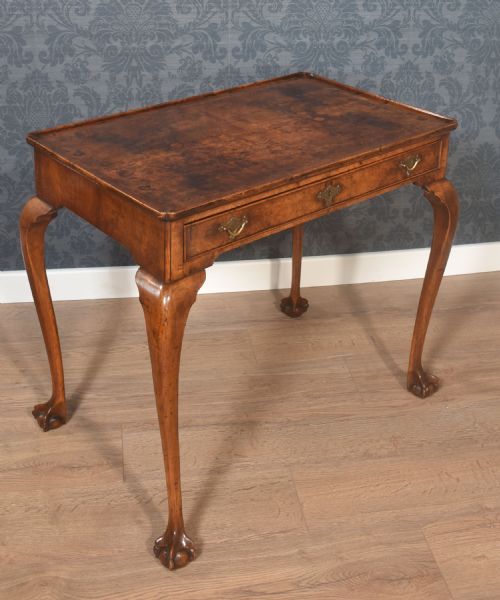
- A specialised eighteenth-century furniture form designed to hold tea equipment atop a wooden frame. These tables often incorporate tray tops or raised edges.
- Silver plate
- A thin layer of silver bonded to a base metal such as copper or nickel silver. This technique allowed makers to produce accessible heavy serving wares.
- Teapot stand
- A small elevated platform designed to protect surfaces from hot vessels. These compact pieces mirror the decorative motifs of larger trays.
Footed Silver Tea Tray: Frequently Asked Questions
How do I clean an antique silver tray?
Clean the surface using a dedicated silver cloth and mild soapy water, avoiding harsh abrasive dips that strip the patina. Gentle maintenance preserves the crispness of the engraved details.
Store the tray in a dry environment wrapped in acid-free tissue to minimise tarnishing between uses.
What is the difference between a salver and a tray?
A salver typically refers to a smaller, rigid serving plate raised on feet, historically used for presenting drinks or documents rather than carrying full tea services.
Trays encompass larger formats, including gallery and serving designs built to hold teapots, creamers, and sugar basins simultaneously.
Can these trays hold hot teapots?
Most solid silver and heavy plated trays handle heated vessels without issue, provided the feet remain secure and stable on the table surface.
Wooden tray top tables require caution with moisture and extreme heat, benefiting from protective mats beneath boiling kettles.
How do I identify a Georgian piece?
Georgian items display the characteristic proportions and ornament of the eighteenth century, often showing hand-forged construction marks and restrained neoclassical or rococo engraving.
Examination of the hallmarks or maker marks, where present, confirms the exact decade of production within the Georgian era.