





Footed Serving Tray
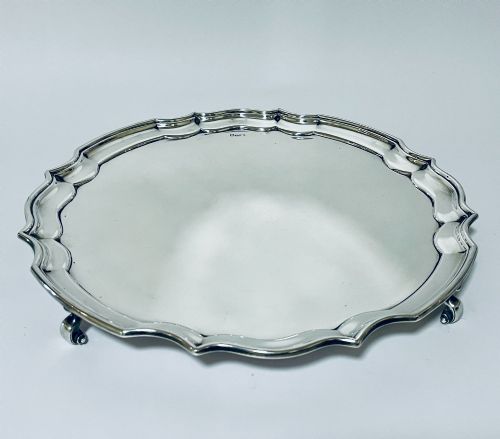
These footed serving tray pieces are elevated presentation pieces built to anchor a formal tea service or hold decanters.
Footed Serving Tray
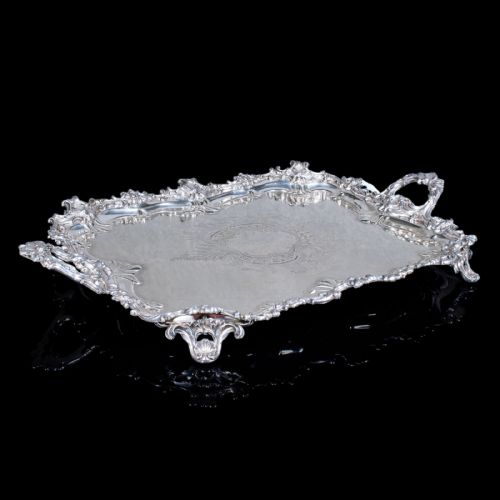
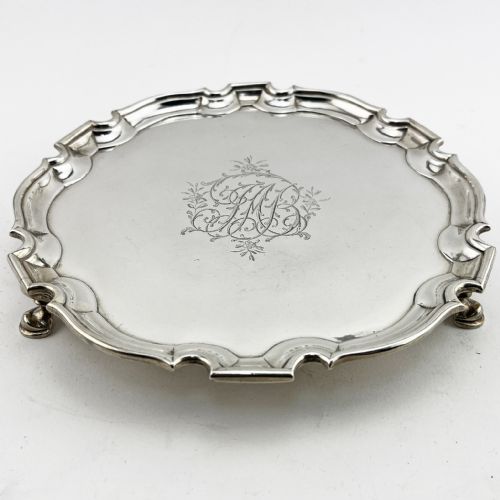
A footed serving tray combines a flat or engraved surface with raised feet or a detailed rim to lift the metal or ceramic clear of the table. You will frequently find these in silver plate, sterling silver, and bone china across Victorian, Edwardian, and Georgian periods.
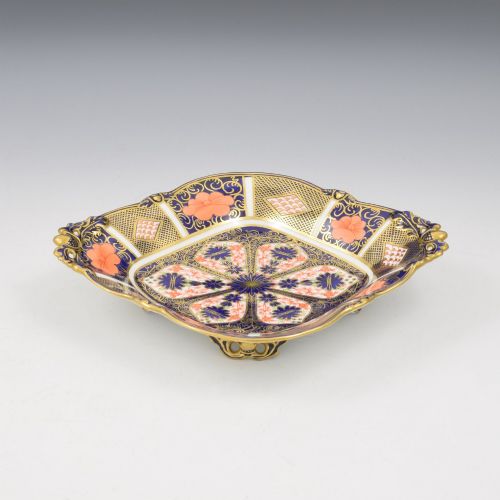
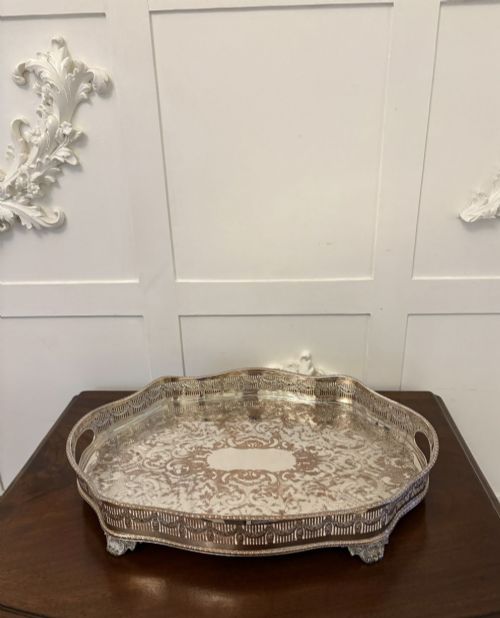
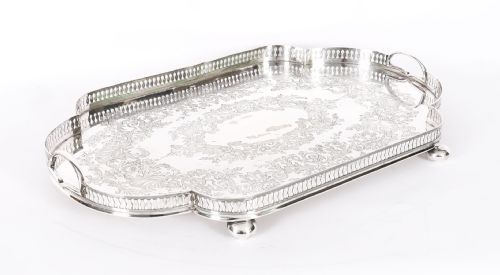
The objects span formal salvers with scrolled borders, gallery trays with openwork brass or silver railings, and porcelain dishes finished in patterns such as English Imari. Most examples you meet on this page lean towards the heavy silver plated and sterling serving platters produced in the nineteenth century.
Makers utilised various forms, ranging from round warming dishes to large oval presentation platters, ensuring each piece served a distinct domestic purpose in formal dining.
Materials and Construction
Silversmiths constructed sterling silver and silver plated pieces using heavy base metals fused with silver sheets or hammered from solid bullion, adding applied cast feet and chased borders by hand. Sheffield plating techniques bonded silver to copper sheets, visible in older examples.
Porcelain variants utilised bone china bodies painted with underglaze cobalt and iron red, frequently accented with gold leaf before high-temperature kiln firing.
Footed Serving Tray Retail Price Guide 2026
Typical asking prices for footed serving tray among the pieces listed under this phrase on Sellingantiques today, from the lower quarter to the upper quarter. They describe what is for sale here now, not the wider market.
Several warming dishes include concealed compartments originally meant for boiling water to keep the meat warm through long Victorian dinners.
Judgements of Quality
Quality rests on the crispness of the hand-engraved surface work and the weight of the metal relative to the size of the tray. Superior pieces display substantial gauge silver and securely soldered feet that bear the weight without flexing.
The refinement of cast rim details and the depth of pierced galleries separate standard production items from workshop pieces bearing maker marks.
James Deakin·John Harrison·Padley Parkin·Paul Storr·Louis Pierre Malpass
The Footed Serving Tray Glossary
- Salver
- A flat plate or tray, typically made of silver or silver plate, used to serve glasses or letters and raised on small feet. These form a large portion of the early silver items.
- Gallery tray
- A tray featuring a pierced openwork metal railing or gallery running around the raised perimeter. This design prevented items from sliding off during movement.
- Sheffield plate
- An early form of plated silver created by fusing a sheet of sterling silver to a thicker copper base. It is identified by subtle traces of copper showing through wear points.
- English Imari
- A decorative ceramic style inspired by Japanese export porcelain, utilising a distinct palette of cobalt blue, iron red, and gilt. It appears on porcelain serving dishes from this selection.
- Chasing
- A metalworking technique where the artisan pushes the metal from the front using hammers and punches to create raised surface decoration. This method creates the detailed foliage found on Victorian trays.
Footed Serving Tray: Frequently Asked Questions
How do I clean an antique silver plated tray?
Use a soft cloth and a gentle, non-abrasive silver polish formulated specifically for plated items to preserve the thin silver layer over the base metal.
Avoid harsh dips or excessive scrubbing, which can strip the remaining silver plate from raised engraving and high points.
Were these trays used for tea?
Many large metal trays and gallery designs were designed to hold heavy silver teapots, cream jugs, and sugar bowls during formal afternoon service.
Smaller salvers served primarily to carry individual glasses, calling cards, or wine decanters between rooms.
How can I tell sterling silver from silver plate?
Look closely for hallmarks stamped into the metal surface, which indicate solid sterling silver standards regulated by assay offices.
Silver plated items generally lack these official hallmarks and instead display maker marks or simple trade stamps.
What is Old Sheffield plate?
Old Sheffield plate is a specific historic material made by melting a thin layer of silver onto a copper ingot before rolling them together into sheets.
This technique predates modern electroplating and produces a distinct warm tone where the underlying copper occasionally telegraphs through.