


Folk Art Wooden Toy
These pieces of folk art wooden toy bring the rustic hand of past makers straight into a modern room.
Folk Art Wooden Toy
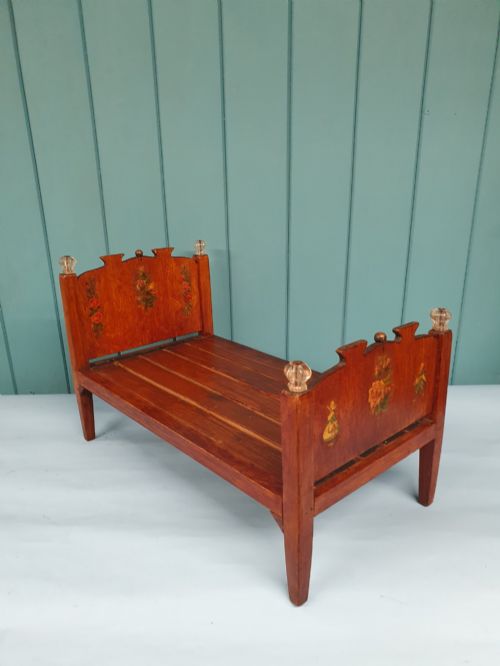
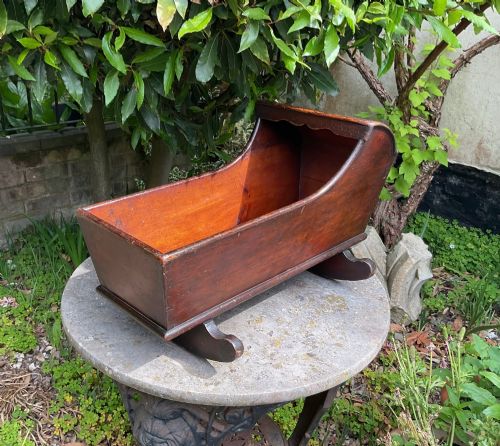
A folk art wooden toy comprises handmade playthings and decorative figures shaped by anonymous hands across the eighteenth, nineteenth, and early twentieth centuries. These objects reflect domestic skill rather than factory standardisation, often taking the form of rocking horses, whirligigs, dolls beds, and carved animals.
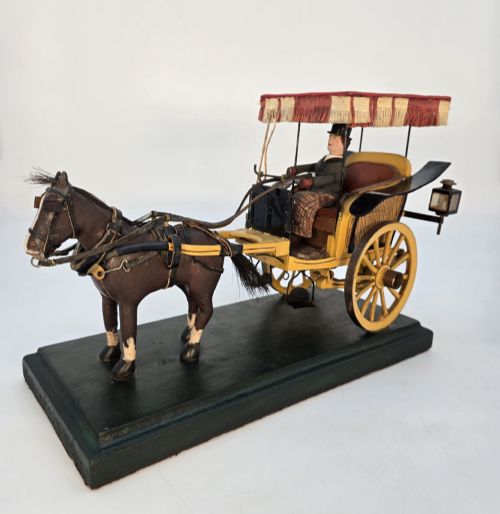
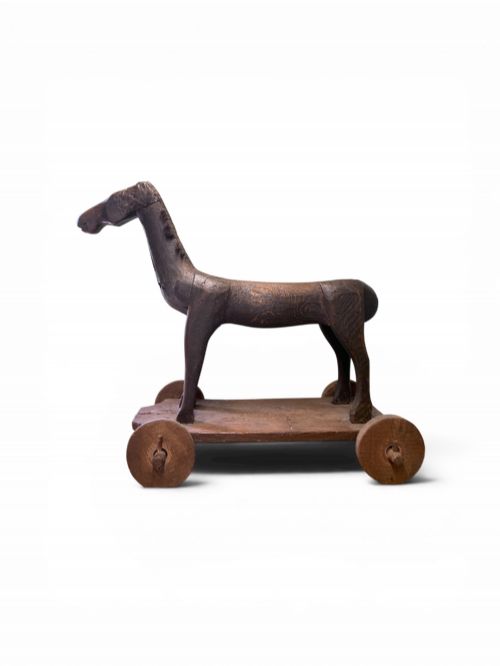
The versions most commonly met on this page include nineteenth-century rocking horses and carved wooden horse sculptures alongside early twentieth-century jigger dolls and whirligigs. Buyers encounter items ranging from simple painted pine horses to detailed models like carriages and Noah's ark sets.
Origins stretch across English, American, and Spanish traditions, showing distinct regional tastes in carving and paint application. The materials reflect everyday resources available to rural makers, resulting in robust items meant for play that survived into collector hands.
How they were made
Makers shaped these objects primarily from pine and various hardwoods using basic hand tools such as drawknives, chisels, and saws. Construction methods relied on simple joinery, pegged joints, and metal fastenings where extra strength was required for items subject to movement.
Surface decoration frequently involved layers of oil-based paint, sometimes applied over gesso or directly to the bare timber. Iron, metal, and leather elements added functional details, while horsehair provided manes and tails for larger rocking horses.
Many surfaces retain original paint showing age-related craquelure, patination, and wear from handling by children. The combination of carved wood and surface pigment defines the tactile quality of these surviving objects.
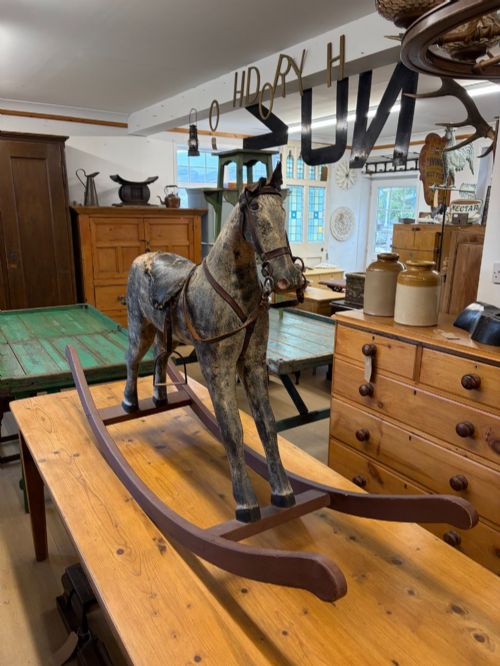
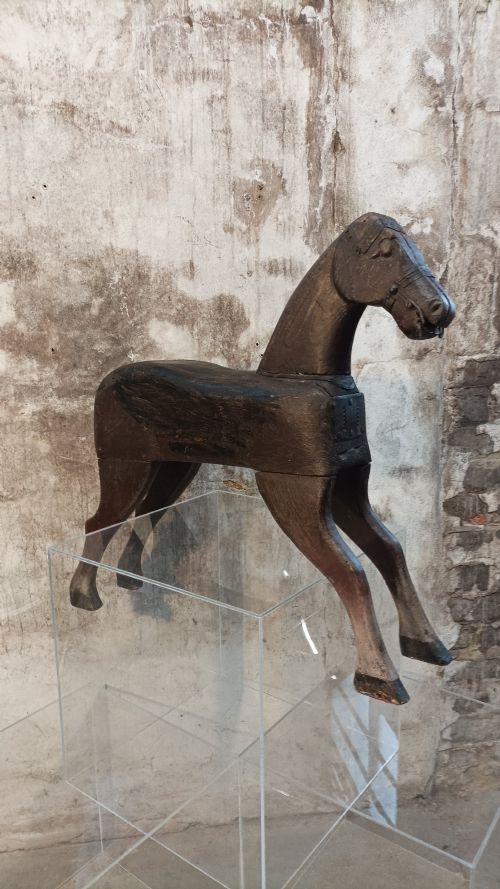
A nineteenth-century rocking horse stands ready to gallop across the floorboards without ever moving an inch.
What varies in quality
The distinction between ordinary and exceptional pieces rests on the vigour of the carving and the personality captured in the form. Naive proportions can possess immense charm, but pieces with confident, expressive lines command greater appreciation among collectors.
Surface preservation plays a major role, with original undisturbed paint finishes holding higher regard than later overpainting or stripped timber. The survival of working elements, such as articulated limbs on jigger dolls or intact mechanisms on whirligigs, determines the integrity of the piece.
The Folk Art Wooden Toy Glossary
- Folk art
- Objects created by self-taught or traditional makers outside the formal academic traditions of design. These pieces prioritise utility, expression, and local material over refined academic rules.
- Treen
- Small handmade wooden household objects and playthings. This term covers items ranging from cups and rattles to small games.
- Whirligig
- A wind-driven mechanical toy that motion-activates figures through the force of air currents. Sailors, soldiers, and animals often feature in these kinetic sculptures.
- Jigger doll
- An articulated dancing figure connected to a board that moves and dances when the base is tapped or vibrated. They represent a lively form of nineteenth and early twentieth-century entertainment.
- Bilboquet
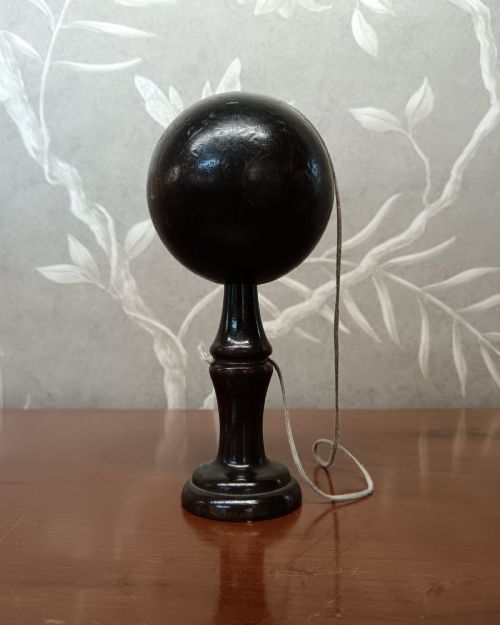
- A traditional skill toy consisting of a ball attached to a cup or spike by a string. Players attempt to catch the ball in the cup or on the point.
- Primitive
- A descriptive term for work showing simple, unpolished construction methods and direct execution. Such pieces often display bold simplification of form.
Folk Art Wooden Toy: Frequently Asked Questions
How old are these wooden toys?
The pieces span from the eighteenth century through to the early decades of the twentieth century. Most examples date from the Victorian period and the nineteenth century.
Dates are determined by construction methods, nail types, and the composition of the paint layers. Earlier items show distinct hand-tool marks and older pine patination.
Are these toys safe for children?
These items are historical collector objects and antiques rather than modern playthings. They often feature fragile construction, historic iron components, and aged surface paints that may not meet current safety standards.
Displaying them securely away from active play ensures their preservation. Collectors treat them as sculpture and social history.
What is a jigger doll?
A jigger doll is an articulated wooden figure designed to dance when placed on a vibrating surface or paddle. Pulling strings or tapping the board makes the limbs move in a jigging motion.
English and American makers produced these folk toys in the early twentieth century. They often depicted figures in top hats and tailcoats.
How should I care for antique wooden toys?
Keep wooden toys away from direct sunlight, radiators, and damp environments to prevent the timber from warping or splitting. Stable room temperatures protect the aged paint layers.
Dusting gently with a dry, soft cloth is sufficient for maintenance. Avoid using commercial polishes or water on historic painted surfaces.