



Folk Art Wooden Spoon
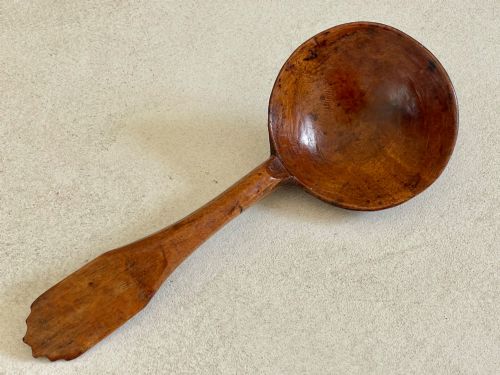
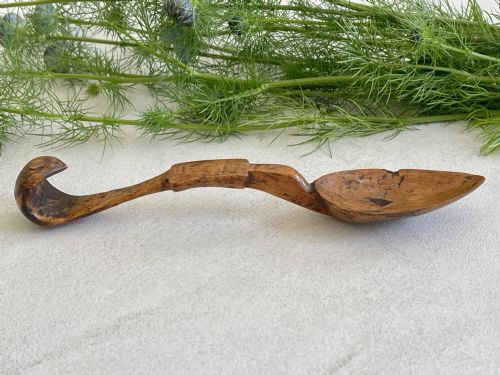
These folk art wooden spoon examples span domestic treen and carved lovespoons from the eighteenth and nineteenth centuries, offering tactile vernacular history for your wall or shelf.
Folk Art Wooden Spoon
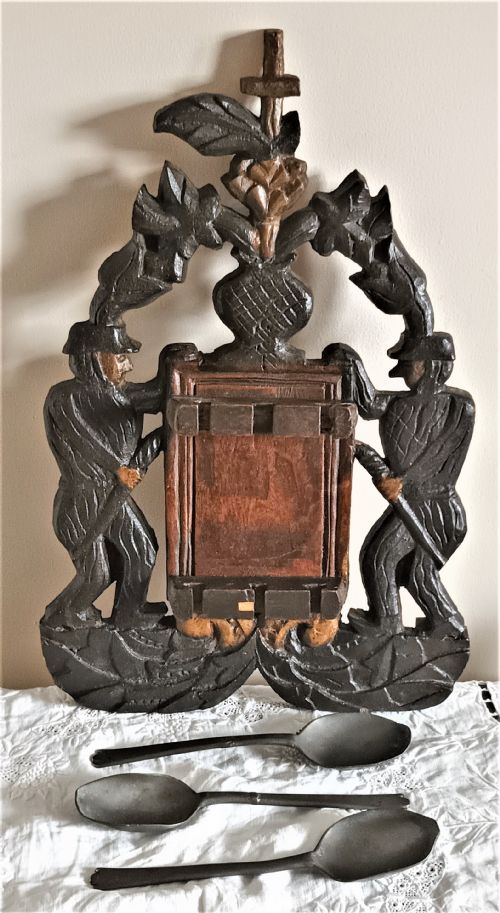
The material selection leans heavily toward local hardwoods such as oak, fruitwood, sycamore, and yew, shaped entirely by hand before the twentieth century. These pieces often arrive with integrated hooks, mounted on spoon racks, or accompanied by pewter trefid spoons.
Dating ranges primarily across the eighteenth and nineteenth centuries, with occasional examples extending into the early twentieth century around 1910. The regional diversity shows distinct decorative paths, from the polychrome wax-decorated Welsh lovespoons to engraved Scandinavian designs.
Materials and construction
Makers utilised available timbers including dense fruitwood, oak, sycamore, and yew, working the wood with basic hand tools to achieve smooth contours and functional forms. The natural grain of the timber forms the primary visual base of each piece.
Decoration involved carving, engraving, and surface applications such as polychrome wax to highlight initials, dates, and botanical motifs like vine leaves. Some examples integrate pewter components, combining mixed media within domestic treen.
Folk Art Wooden Spoon Retail Price Guide 2026
Typical asking prices for folk art wooden spoon among the pieces listed under this phrase on Sellingantiques today, from the lower quarter to the upper quarter. They describe what is for sale here now, not the wider market.
One lovespoon includes sugar tongs carved entirely from wood as part of its intricate commemorative design.
Assessing quality in vernacular carving
Quality rests in the crispness of the hand-carved detail, the integrity of the timber, and the depth of the natural patina accumulated through age and handling. Superior examples display confident tool marks and well-preserved decorative elements like engraved patterns or wax highlights.
The complexity of the form also dictates standing, moving from simple utilitarian condiment spoons to elaborate lovespoons featuring pierced work and detailed initialling. Provenance rooted in specific regional folk art traditions further defines the character of each piece.
The Folk Art Wooden Spoon Glossary
- Treen
- Small handmade wooden domestic objects and utensils. This term covers items produced before the widespread adoption of factory manufacturing.
- Lovespoon
- A traditionally carved wooden spoon given as a token of romantic affection. These pieces often feature elaborate symbols, initials, and dates.
- Trefid spoon
- An early form of spoon featuring a notched, three-lobed terminal handle. They frequently appear paired with eighteenth-century oak spoon racks.
- Sycamore
- A light-coloured hardwood commonly utilised by vernacular makers. Its fine grain made it suitable for detailed carving on domestic items.
- Patina
- The surface sheen and colour developed through years of handling and exposure. A good patina indicates genuine age and regular use.
Folk Art Wooden Spoon: Frequently Asked Questions
How are spoon racks used?
Spoon racks are wall-mounted wooden fixtures designed to display spoons safely in a domestic interior.
Many examples on this page include pewter trefid spoons held securely within eighteenth-century oak or painted Dutch rack frames.
How do I care for old treen?
Old treen requires stable indoor humidity away from direct sunlight and sudden temperature changes to prevent the timber from splitting.
Occasional light application of appropriate wax helps maintain the surface without harming the historical patina.
How can I tell the region of origin?
Regional origin appears through distinct carving styles, specific decorative techniques like polychrome wax work, and the choice of timber.
Welsh pieces frequently take the form of detailed lovespoons, whereas Scandinavian examples often showcase precise engraved patterns.