

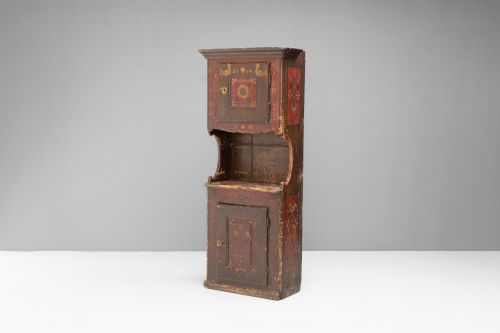


Folk Art Wooden Cabinet
A folk art wooden cabinet brings rural character and hand-painted charm into a room.
Folk Art Wooden Cabinet
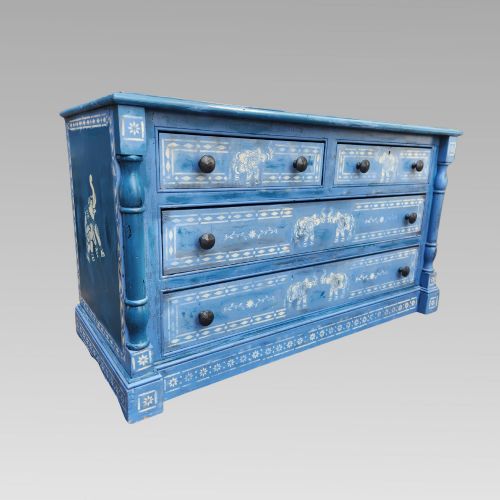
When you search for a folk art wooden cabinet, you encounter storage furniture created in provincial workshops rather than urban centres. These pieces span the eighteenth and nineteenth centuries, taking the form of wall cupboards, marriage armoires, larder cupboards and small chests of drawers.
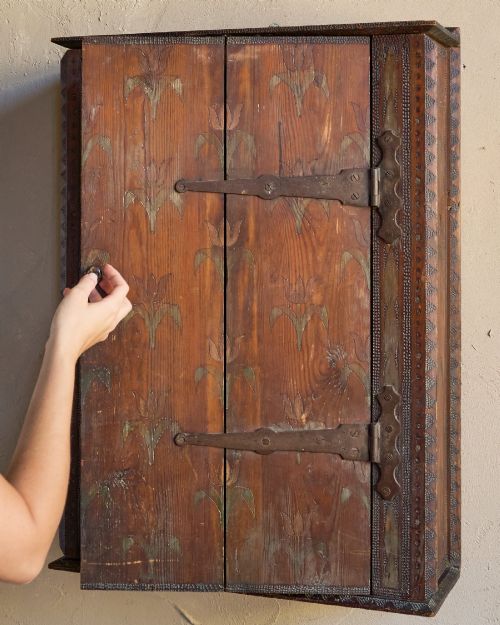
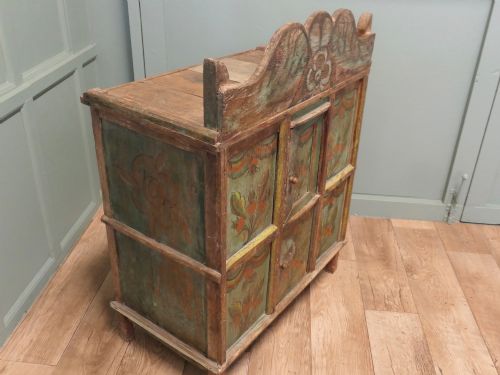
The version you are most likely to meet on this page is a pine cupboard bearing its original painted decoration. Regional styles range from Scandinavian and Baltic pieces to French, Italian and Austro-Hungarian examples.
Makers utilised simple carcases and applied paint finishes that reflect local domestic traditions. Many pieces combine utility with decorative motifs such as chequered patterns or polychrome detailing.
What varies in quality
The distinction between ordinary and exceptional pieces lies in the survival of the original painted surface. Untouched polychrome decoration or distinct regional motifs elevate a piece significantly.
Proportions and the integration of decorative elements such as carved details or chequered patterns determine visual balance. Pieces retaining their original iron or brass fittings hold greater integrity.
Folk Art Wooden Cabinet Retail Price Guide 2026
Typical asking prices for folk art wooden cabinet among the pieces listed under this phrase on Sellingantiques today, from the lower quarter to the upper quarter. They describe what is for sale here now, not the wider market.
Pine and painted wood dominate the materials seen, with pieces originating from Scandinavian, Hungarian, French and Italian provincial traditions.
The Folk Art Wooden Cabinet Glossary
- Polychromed
- Decorated in multiple colours. This term describes painted surfaces featuring a range of hues applied to wood.
- Ragwork
- A decorative paint technique created by manipulating paint with rags. It produces mottled or textured patterns on the surface of furniture.
- Armoire
- A large wardrobe or cupboard used for storing clothes. These tall storage pieces often featured single or double doors.
- Larder cupboard
- A tall storage unit designed for food provisions. They frequently incorporate shelving and internal compartments.
- Tramp art
- A style of woodworking involving chip-carving layers of scrap wood. Pieces in this style display geometric relief patterns.
Folk Art Wooden Cabinet: Frequently Asked Questions
What is a folk art wooden cabinet?
A folk art wooden cabinet is a storage piece made in a regional or rural style, typically featuring hand-painted decoration.
These cabinets include wall cupboards, armoires and chests produced during the eighteenth and nineteenth centuries.
How do I date a painted cupboard?
Dating relies on construction methods, timber type and the characteristics of the paint layer. Eighteenth-century pieces differ in carcass assembly from later nineteenth-century examples.
Paint analysis and regional style traits also help determine the period of origin.
Where were these cabinets made?
These cabinets originate from various European regions, including Scandinavia, Hungary, France, Italy and Spain. Each area developed distinct painting traditions and cabinet forms.
Local workshops adapted urban furniture styles to suit rural domestic needs.
How should I clean a painted finish?
Cleaning requires gentle dusting with a dry or slightly damp cloth. Avoid harsh chemical cleaners that can strip or damage historic paint layers.
Preserving the original surface is essential for maintaining the character of the piece.