

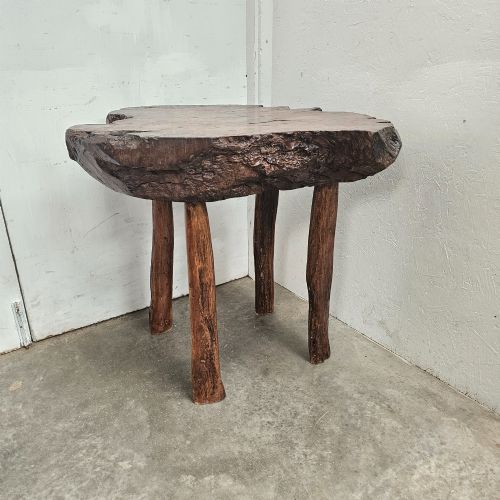


Folk Art Timber Table
These folk art timber tables bring individual character into a room through honest construction and regional domestic styles.
Folk Art Timber Table
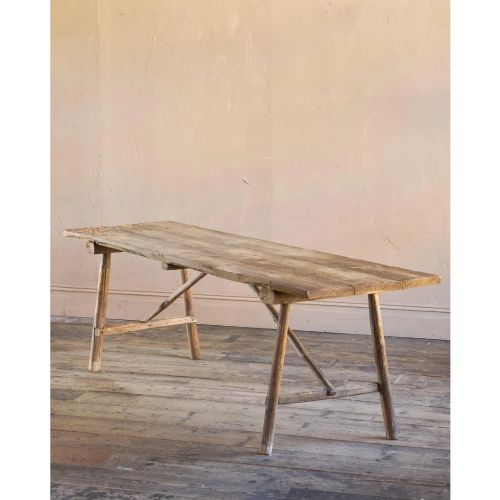
A folk art timber table is a piece of domestic furniture shaped by regional craft traditions and individual maker choices rather than factory standards. When you search for a folk art timber table, you encounter domestic dining tables, compact occasional tables, and occasional rustic pieces made without formal academic blueprints.
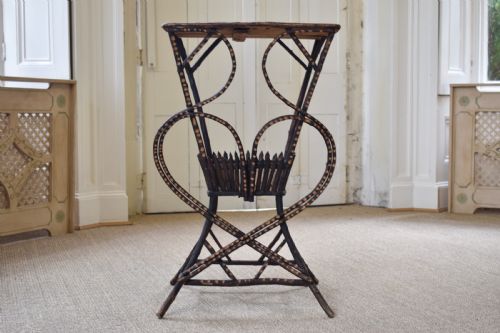
The versions most commonly met on this page span the nineteenth century through the early twentieth century, showing influences from British provincial workshops, Alpine regions, and Scandinavian traditions. These items range from simple softwood assemblies to elaborate carved forms incorporating natural materials like twigs and bark.
Makers working in these idioms often utilised whatever timber came to hand, resulting in utilitarian dining surfaces alongside decorative occasional items. Each piece reflects the specific domestic requirements and material availability of its geographic origin.
Materials and construction
These tables rely on a combination of native softwoods, dense hardwoods, and characterful weathered timber chosen for local availability and utility. Workshops often utilised whole branches, bark, and irregular burls alongside standard sawn planks to build sturdy domestic surfaces.
Construction techniques prioritise functional strength over polished cabinet-making, frequently employing pegged joints, exposed fixings, and unadorned structural frames. Surfaces gain their distinct appearance from natural grain patterns, applied patinas, and occasional hand-carved decorative elements.
Folk Art Timber Table Retail Price Guide 2026
Typical asking prices for folk art timber table among the pieces listed under this phrase on Sellingantiques today, from the lower quarter to the upper quarter. They describe what is for sale here now, not the wider market.
The inventory records regional styles including Swiss Black Forest, Swedish folk traditions, and primitive country forms.
Assessing quality in rustic furniture
Quality in these domestic pieces depends upon the integrity of the original construction and how successfully the maker integrated natural irregularities into the design. A well-made example balances robust structural stability with expressive regional character rather than attempting refined perfection.
The depth of the accumulated surface patina and the honesty of the materials dictate the visual standing of each piece. Superior items retain their original unblemished timber surfaces and straightforward joinery without modern intervention.
Bergen and Co
The Folk Art Timber Table Glossary
- Primitive
- A descriptive term for domestic items made outside mainstream urban workshops, often displaying direct and unpretentious construction methods.
- Patina
- The surface sheen and colour acquired by wood through decades of handling, exposure, and natural ageing.
- Softwood
- Timber derived from conifers, frequently utilised in regional and country furniture for its accessibility and ease of working.
- Hardwood
- Dense timber sourced from broad-leaved trees, chosen for durability and structural resilience in heavy-use items.
- Treen
- Small handmade wooden domestic objects produced prior to the widespread adoption of modern plastics.
Folk Art Timber Table: Frequently Asked Questions
What defines a folk art timber table?
These tables are distinguished by non-standard regional designs, local timber selection, and construction methods rooted in traditional domestic craft rather than industrial manufacturing.
They offer an alternative to formal furniture styles by incorporating natural elements like twigs, bark, and burr wood directly into functional household objects.
How were these tables used originally?
They served as everyday utility furniture in rural homes, farmhouses, and regional cottages for dining, food preparation, and holding household goods.
Their robust construction was intended to withstand the daily demands of domestic labour and active family life without requiring delicate maintenance.
How do I care for weathered timber?
Keep these pieces away from direct heat sources and strong sunlight to prevent the timber from drying out or splitting.
Dust them gently with a dry cloth and avoid applying modern chemical polishes that can alter the natural surface patina.
How do I distinguish regional styles?
Regional differences appear in the choice of native woods, the specific carving motifs, and the structural assembly methods characteristic of different European and British areas.
Examining the underlying constructional quirks often reveals whether a piece originated from Alpine traditions, Scandinavian workshops, or British country makers.