




Folk Art Spoon
These folk art spoon examples are hand-carved rural pieces made from wood, horn, bone, and wax, prized for their local ornament and personal history.
Folk Art Spoon
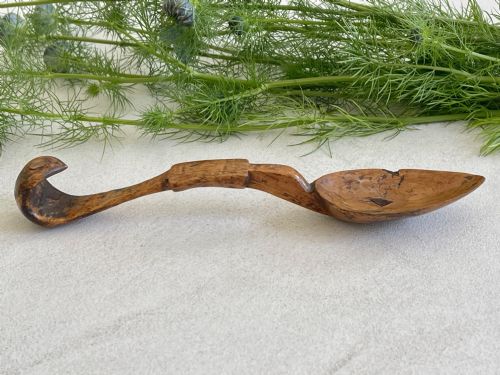
When you examine a folk art spoon selection, you encounter items shaped by rural makers across the eighteenth, nineteenth, and early twentieth centuries. The majority of these objects take the form of lovespoons, treen items, and kitchenalia originating from Welsh, Swiss, Scandinavian, Dutch, and Georgian contexts.
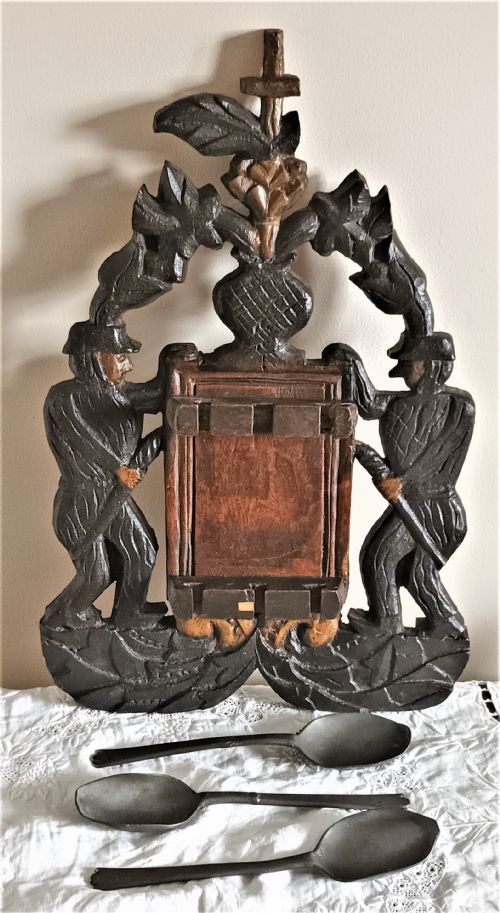
The objects span domestic utensils and token gifts, including wall-hung spoon racks paired with pewter trefid spoons, snuff spoons, and personal grooming accessories like toothpicks and ear spoons. These utilitarian or ceremonial items reflect regional vernacular traditions rather than urban workshop standards.
What varies in quality
The standard of a piece depends upon the crispness of the original hand-carving and the depth of the resulting surface patination. Examples displaying deliberate sculptural ambition, such as detailed foliage or complex pierced stems, demonstrate greater competency than plain utility pieces.
Condition and completeness also distinguish individual items, particularly where original polychrome wax decoration or associated components like matched racks and pewter spoons remain intact. Evidence of period use and honest wear enhances the integrity of the material.
Some makers doubled as early dental technicians, carving delicate bone toothpicks and ear spoons for personal grooming.
The Folk Art Spoon Glossary
- Treen
- Small handmade wooden domestic objects and utensils. This term covers items produced before the widespread adoption of factory plastics and mass metalware.
- Lovespoon
- A carved wooden token traditionally presented as a symbol of affection or courtship. Welsh and Scandinavian examples frequently incorporate intricate symbolic motifs.
- Trefid spoon
- An early form of dining spoon featuring a three-lobed terminal handle. These metal items often appear alongside period wooden racks.
- Patination
- The surface sheen and colour developed by wood, metal, or horn through age and handling. Good examples show deep, natural wear across high points.
- Polychrome
- Decorated in multiple colours using paint or wax. Surviving coloured details on nineteenth-century pieces require careful preservation.
Folk Art Spoon: Frequently Asked Questions
What is a lovespoon?
A lovespoon is a decorative carved wooden token historically given as a symbol of romance or courtship. Makers integrated symbols like chains, hearts, and vine leaves into the handles.
These pieces were often displayed on walls rather than used for dining. They capture regional carving traditions across Wales, Switzerland, and Scandinavia.
How old are these spoons?
The pieces span the eighteenth century through to the early twentieth century. Many carry specific period indicators like dates, initials, or regional stylistic traits.
Material analysis and construction marks help separate eighteenth-century examples from later nineteenth-century revival work.
What materials were used?
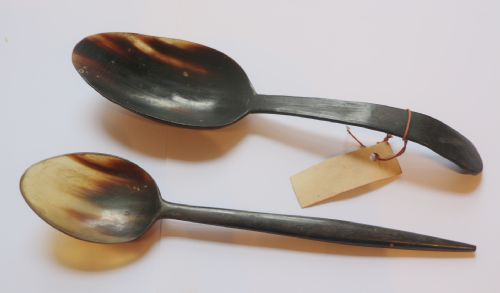
Makers utilised native woods including fruitwood, oak, sycamore, yew, and general hardwoods. Organic materials such as stag horn, bone, pewter, and wax also appear.
The choice of material often depended on local availability and the intended function of the spoon.
How should I display them?
Displaying these objects involves stable indoor environments away from direct sunlight and dramatic humidity changes. Wall-mounted spoon racks provide a traditional method for showing collections of spoons together.
Handling should be minimal to preserve the historic surface patination and fragile carved details.