






Folk Art Sailing Ship
These folk art sailing ship pieces capture maritime history through handmade dioramas and bottle models.
Folk Art Sailing Ship
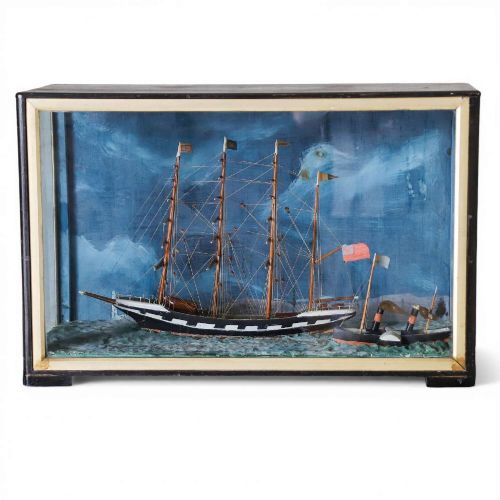
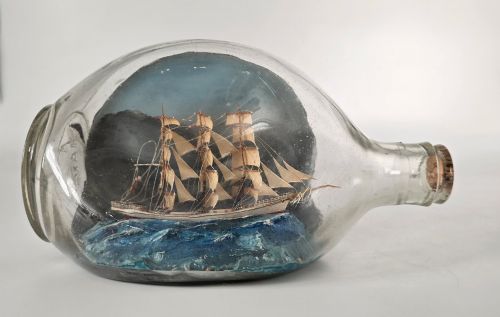
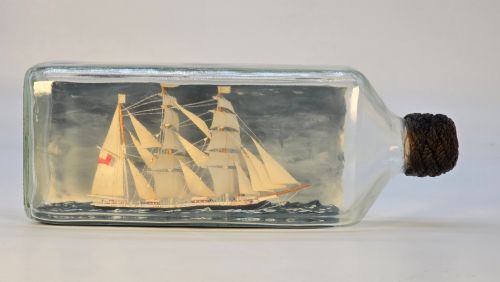
When you search for folk art sailing ship, you find handcrafted maritime models presented in wooden boxes, shadow boxes, and glass bottles. These objects represent the creative work of sailors and local craftsmen who sought to record the vessels of their era.
The pieces on this page mostly span the nineteenth century and the early twentieth century, taking the form of maritime dioramas and ships contained within glass bottles. Makers utilised simple materials to construct detailed representations of four-masted vessels, barques, and racing ships.
Originating from English, Welsh, Cornish, and French sources, these decorative objects reflect regional maritime traditions. Each piece provides a tangible connection to historical seafaring through naive construction and painted seascapes.
How They Were Made
Craftsmen built these models using wood, canvas, thread, and fabric, shaping hulls and rigging by hand. They often incorporated plaster, cork, and painted backdrops to create depth within shadow boxes and maritime dioramas.
Makers constructed ship in a bottle examples by folding masts and rigging to pass them through narrow glass necks, before pulling strings to raise the model inside. They secured the vessels upon wooden plinths and sealed the bottles to protect the delicate interiors.
Folk Art Sailing Ship Retail Price Guide 2026
Typical asking prices for folk art sailing ship among the pieces listed under this phrase on Sellingantiques today, from the lower quarter to the upper quarter. They describe what is for sale here now, not the wider market.
Listings feature 19th-century and early 20th-century pieces, utilising wood, glass, paint, and thread.
What Varies In Quality
The distinction between pieces rests upon the complexity of the rigging, the precision of the scratch-built wooden hull, and the realism of the painted seascapes. Finer examples display meticulous attention to nautical detail and careful proportion.
Materials and presentation also influence the character of each piece, from simple bottled models to large cased dioramas incorporating straw work or multiple vessels racing at sea. The integration of original wooden plinths and display cases enhances the overall coherence of the object.
The Folk Art Sailing Ship Glossary
- Maritime Diorama
- A three-dimensional display depicting ships at sea, often enclosed in a wooden box with a glass front. These scenes utilise painted backdrops and layered materials to create perspective.
- Shadow Box Diorama
- A shallow display case housing a model ship against a painted or decorated background. The enclosed box protects the delicate fabric and thread components from dust.
- Scratch-Built
- A model constructed entirely from raw materials without the aid of commercial kits. Makers shape every wooden component and rig the sails by hand.
- Barque
- A sailing vessel with three or more masts having the fore-and-aft sails set only on the mizzenmast. This rig was common on commercial trade routes during the nineteenth century.
- Turneresque
- A style of painting evocative of J.M.W. Turner, characterised by expressive brushwork and atmospheric treatment of light and sea. It appears in the backgrounds of maritime dioramas.
Folk Art Sailing Ship: Frequently Asked Questions
What is a ship diorama?
A ship diorama is a framed or boxed three-dimensional scene depicting sailing vessels upon the water. These pieces combine carved wooden models with painted backgrounds to simulate movement at sea.
Craftsmen often added elements such as plaster waves and fabric sails to enhance the realism of the maritime setting.
How did they put ships in bottles?
Makers constructed the wooden ship models with hinged masts and flexible rigging that folded flat along the deck. They inserted the collapsed vessel through the narrow neck of a glass bottle and pulled attached threads to raise the components.
Once upright, the rigging was anchored in place and the interior was sealed against moisture and dust.
Where were these maritime pieces made?
These decorative objects originated in coastal communities across Britain and Europe during the nineteenth and early twentieth centuries. English, Welsh, Cornish, and French makers produced them using locally available materials.
Many pieces reflect the specific maritime heritage and trading vessels associated with their regions of origin.
How do I display a shadow box?
Shadow boxes require wall space or stable surface placement away from direct sunlight and excessive humidity. The enclosed wooden frames protect the delicate thread rigging and canvas sails from environmental wear.
Placing the diorama at eye level allows viewers to appreciate the painted seascapes and detailed construction of the model.