




Folk Art Armoire
A folk art armoire brings painted regional character into a room, offering large-scale storage with distinct hand-finished surfaces.
Folk Art Armoire
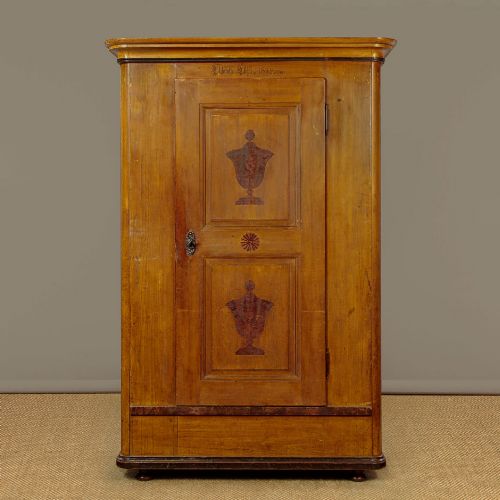
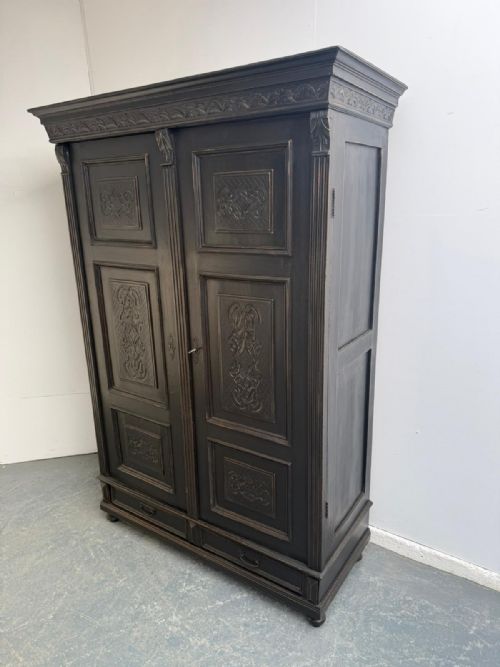
A folk art armoire encompasses large freestanding storage pieces including wardrobes, painted cupboards, and marriage cabinets originating from various European and international regions. Buyers searching this phrase meet substantial timber constructions that double as decorative painted canvases for provincial workshops.
The pieces on this page span the eighteenth and nineteenth centuries, leaning heavily towards nineteenth-century Scandinavian, Alpine, and Eastern European examples. Forms range from tall hall wardrobes and two-door cupboards to specialised linen presses and kitchen cabinets.
Regional variations define the category, taking shapes from French country armoires to Swedish ragwork cupboards and Austro-Hungarian marriage armoires. Pine and oak serve as the primary structural woods, carrying layers of historical paint applied by local hands.
Assessing quality and character
Quality in these painted pieces rests in the integrity of the original surface decoration and the proportion of the timber frame. Pieces retaining their early or primary painted schemes command greater interest than those stripped or heavily reworked.
Construction standards differ between regional vernacular workshops and standard cabinetmakers, showing in the thickness of the pine panels and the robustness of the interior shelving. The handling of the brushwork and the survival of original hardware further distinguish individual pieces.
One clever nineteenth century cabinet maker simply recycled a wooden house bed front into a wall cupboard.
The Folk Art Armoire Glossary
- Armoire
- A large freestanding wardrobe or cupboard used primarily for storing clothes and textiles. Traditional examples often feature double doors opening to reveal shelves or hanging space.
- Marriage cupboard
- A celebratory painted cabinet commissioned or gifted for a wedding, frequently inscribed with dates or initials. These pieces often display vibrant regional folk motifs.
- Ragwork
- A decorative painting technique where rags or cloths are used to apply pigment and create textured patterns on furniture surfaces. This finish appears frequently on nineteenth-century Scandinavian pine pieces.
- Gustavian
- The Swedish neoclassical style spanning the late eighteenth and early nineteenth centuries. It translates French royal tastes into simpler, lighter proportions with pale painted finishes.
Folk Art Armoire: Frequently Asked Questions
What is a folk art armoire?
A folk art armoire is a large painted storage cabinet or wardrobe created in provincial workshops, typically featuring hand-applied decoration and regional artistic traditions.
These pieces combine utilitarian function with expressive surface art, using timber like pine and oak as a canvas for local painting styles.
How were these painted cupboards used?
Historically, large painted cupboards served to store family linens, clothing, and household provisions in domestic interiors. Many functioned as prominent furniture items in main living spaces rather than hidden dressing rooms.
Marriage cupboards specifically held bridal linens and served as central symbolic pieces for newly wedded couples in communities across Europe.
How do I live with a painted armoire?
Living with a large painted piece involves placing it away from direct heat sources and strong sunlight to protect historic surface pigments. Their substantial scale makes them ideal focal points for bedrooms, hallways, or spacious living areas needing character.
Interior configurations often include fixed shelves or hanging spaces that accommodate modern storage needs while retaining historical exteriors.
How do I tell regional styles apart?
Regional styles reveal themselves through distinct colour palettes, brushwork techniques, and cabinet proportions. Scandinavian pieces often feature lighter painted schemes or ragwork, while Alpine and Austro-Hungarian examples may display richer floral motifs or marriage dates.
Examining the construction methods, such as the joining of pine panels and the style of iron hardware, also points toward specific European provincial origins.