


Folk Art Animal Statue
A folk art animal statue brings character to a room through regional vernacular handwork spanning bears, horses, and felines.
Folk Art Animal Statue
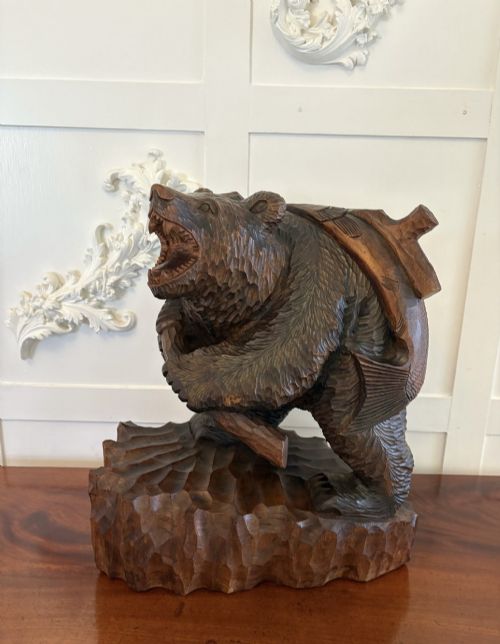
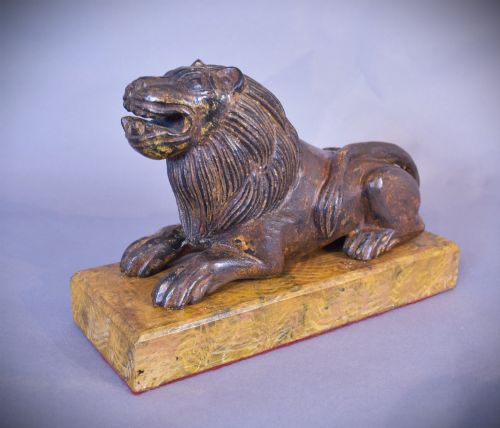
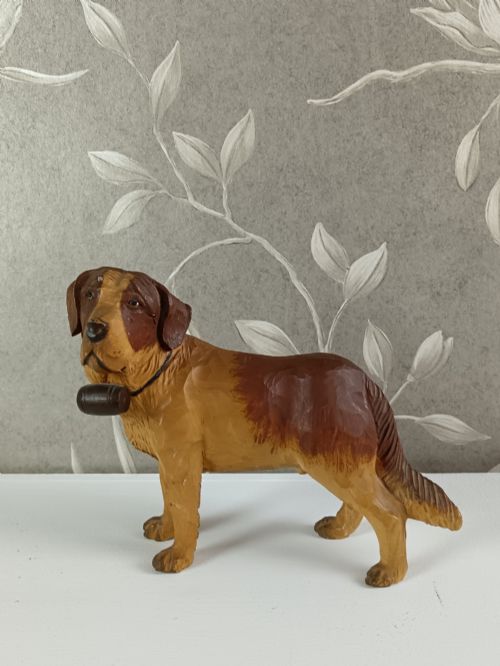
A folk art animal statue represents a diverse group of sculptural objects created across various international traditions, including Japanese, Black Forest, Indian, and French regional origins. These pieces take the form of bears, horses, dogs, fawns, bulls, cats, and goats, ranging from miniature carvings to life-size figures.
The selections on this page span several centuries, with particular concentration in the nineteenth and early twentieth centuries alongside earlier seventeenth-century examples. Forms include free-standing sculptures, decorative figurines, and architectural roof tiles, reflecting both domestic and tribal craft traditions.
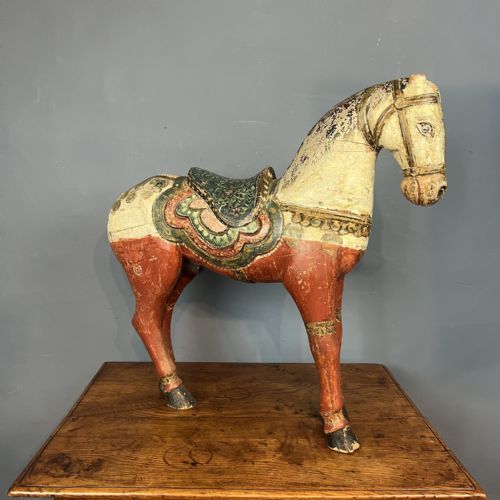
Buyers seeking a folk art animal statue will encounter hand-carved wooden animals, painted horses, and ceramic figures that demonstrate distinct regional aesthetics. Each piece captures the specific stylistic conventions of its maker, whether originating from alpine woodcarvers or distant regional workshops.
Materials and construction methods
Materials utilised across these objects centre predominantly on wood, with specific listings recording carved linden wood, limewood, hardwood, and whalebone. Artisans also employed terracotta, metal, papier-mâché, paint, gilt, and wax to finish and colour their sculptures.
Materials in this selection include paint, wood, carved wood, metal, hardwood, linden wood, gilt, and wax.
Factors that distinguish quality
Quality in these sculptures depends upon the directness of the carving and the preservation of original surface finishes, such as early paint layers or natural patination. Works that retain strong anatomical proportions combined with expressive naive charm stand apart from standard decorative carvings.
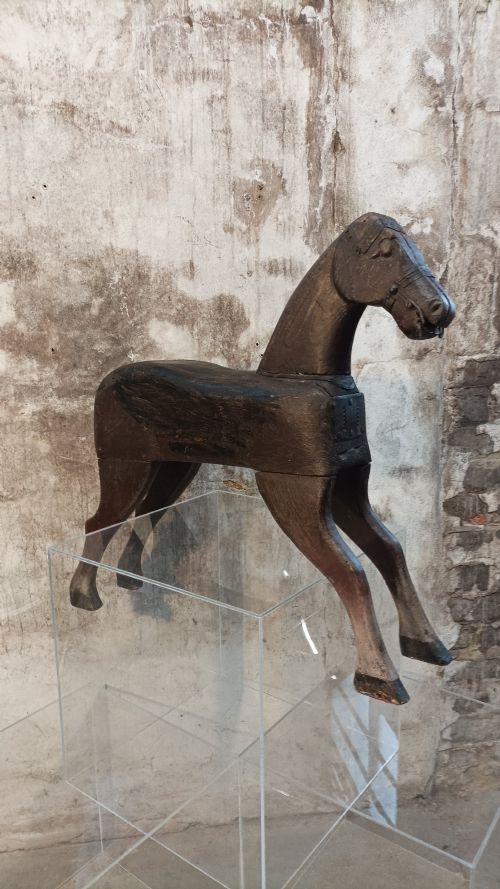
The distinction between tiers rests in the fidelity of regional style, whether the precise incision of Black Forest limewood or the bold vernacular execution of painted Indian and French horses.
The Folk Art Animal Statue Glossary
- Black Forest
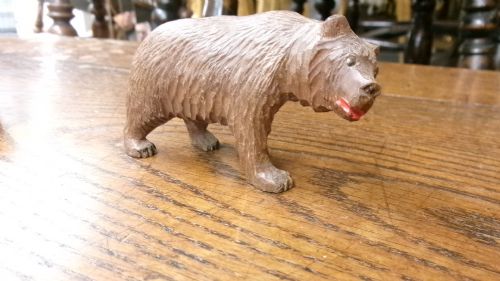
- A style of wood carving originating from the mountainous region of central Europe, famous for lifelike representations of bears and forest animals. Carvings from this tradition often utilise limewood or linden wood.
- Kibori Kuma
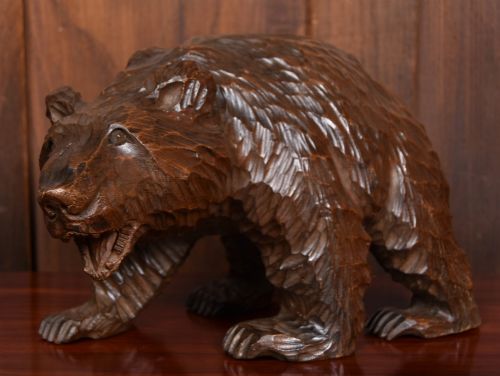
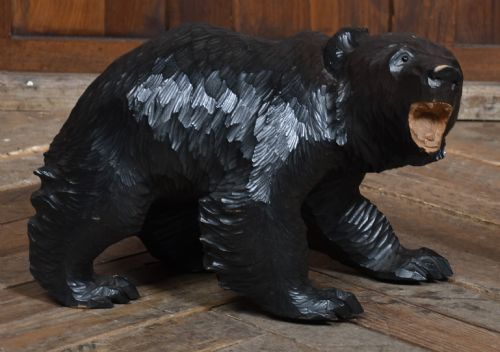
- A traditional style of Japanese wooden carved bear, originating from Hokkaido and often associated with regional folk craft. These figures frequently display distinct textural chisel marks representing fur.
- Limewood
- A soft, pale timber commonly utilised by European carvers for its fine, even grain and suitability for detailed figurative work. It resists splitting and allows for intricate incisions.
Folk Art Animal Statue: Frequently Asked Questions
How do I identify a Black Forest animal carving?
Look for the characteristic use of limewood or linden wood combined with naturalistic animal subjects such as bears, fawns, or dogs. The surface often displays visible chisel work or a warm wax finish.
Many pieces from this tradition originate from the late nineteenth or early twentieth centuries, occasionally featuring glass or stud eyes and realistic anatomical detailing.
What periods do these animal statues come from?
The listings span from the seventeenth century through the nineteenth and twentieth centuries, with a strong representation of nineteenth-century and circa nineteen-hundred pieces.
Earlier works, such as seventeenth-century examples, appear alongside Victorian and Edwardian interpretations, reflecting diverse international folk traditions.
Are these sculptures made entirely of wood?
While wood and carved linden wood are predominant materials, the category also includes terracotta, metal, papier-mâché, and whalebone. Painted surfaces and gilt finishes frequently appear on pieces originating from Indian and European traditions.
Certain items incorporate mixed materials, such as metal stud eyes inserted into wooden carved heads.
Where do regional folk art animal statues originate?
Origins vary widely across the inventory, encompassing Japanese, Swiss, French, Indian, and Inuit traditions. Each geographic area imparts distinct stylistic markers onto the animal forms.
Regional practices dictate the choice of timber and decorative treatment, separating Alpine carvings from East Asian or Himalayan representations.