



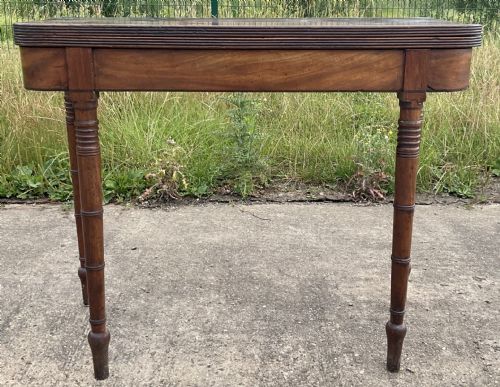
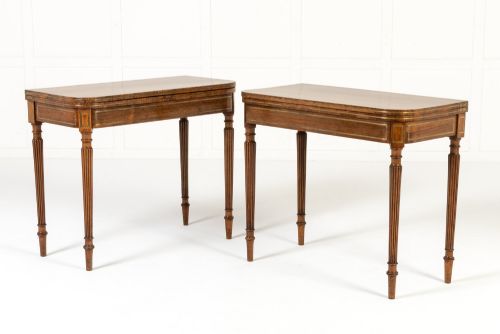
Foldover Gaming Table
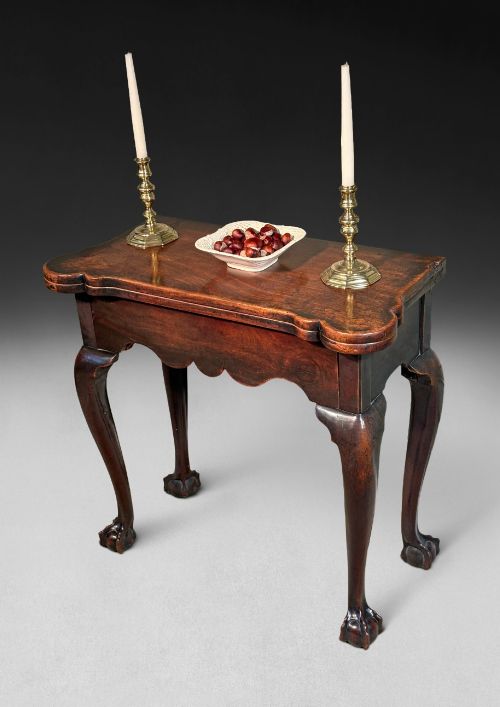
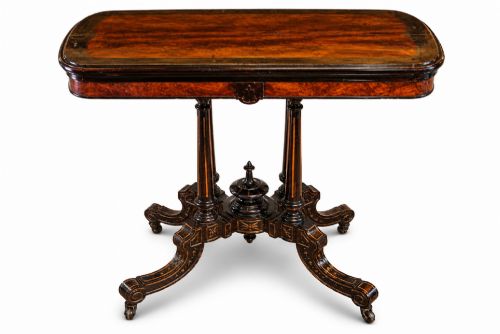
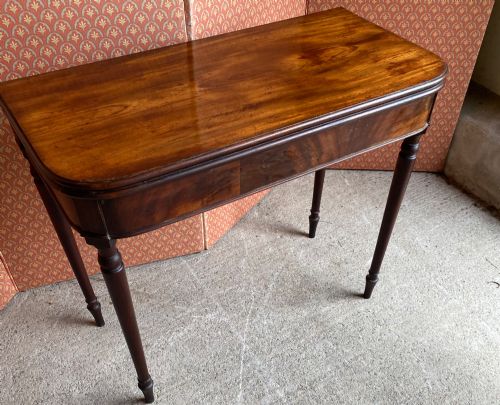
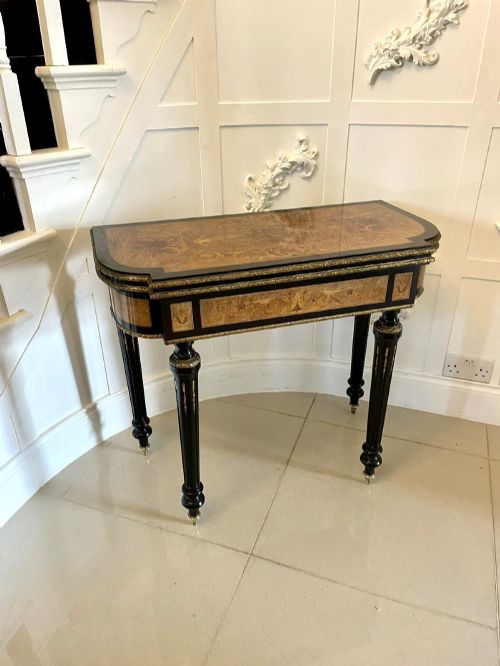
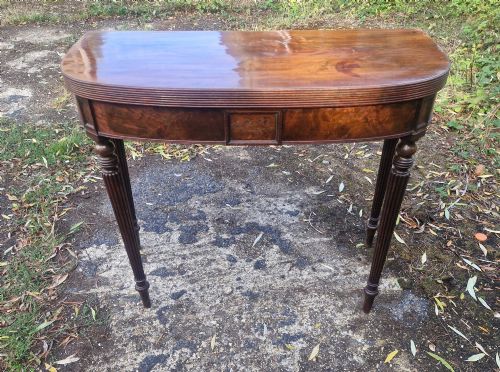
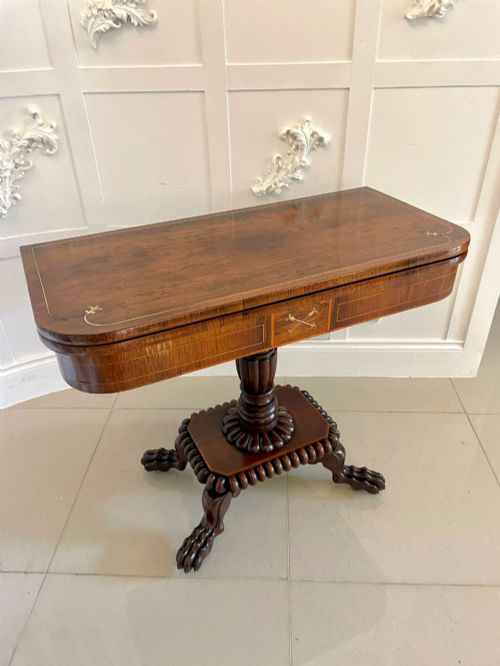
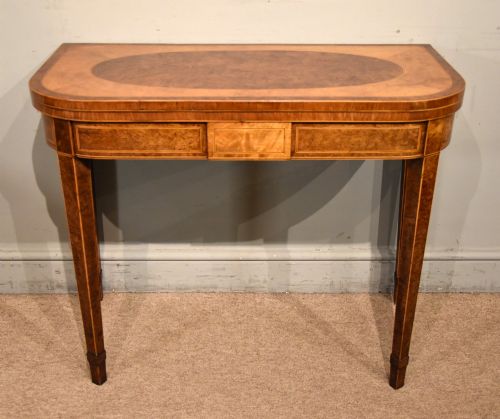
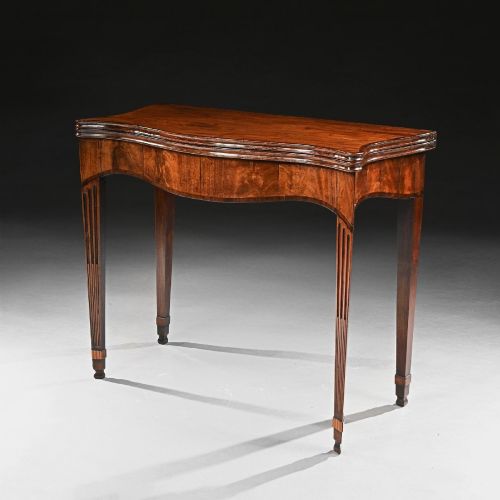
These pieces are foldover gaming table designs in mahogany, rosewood, and walnut, built for card play and tea.
Foldover Gaming Table
A foldover gaming table serves as both a compact console and an expanded surface for cards or tea, appearing frequently in Georgian, Regency, and Victorian formats.
The most common examples on this page are card tables and tea tables constructed from Cuban mahogany, rosewood, and walnut.
Originating largely from British workshops across the eighteenth and nineteenth centuries, these tables transition easily between domestic living spaces and formal rooms.
Materials and Techniques
Cabinet makers utilised dense timbers such as mahogany, rosewood, and burr walnut, often applying veneers over secondary woods to achieve figured surfaces.
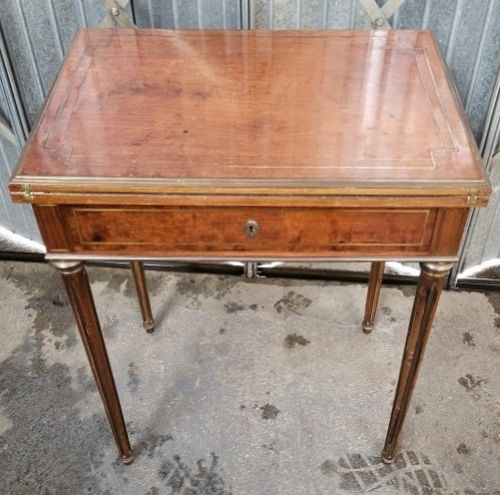
Inlay work incorporated satinwood, boxwood, and brass marquetry, while structural joints relied on concertina actions or swing legs to support the pivoting top leaf.
Foldover Gaming Table Retail Price Guide 2026
Typical asking prices for foldover gaming table among the pieces listed under this phrase on Sellingantiques today, from the lower quarter to the upper quarter. They describe what is for sale here now, not the wider market.
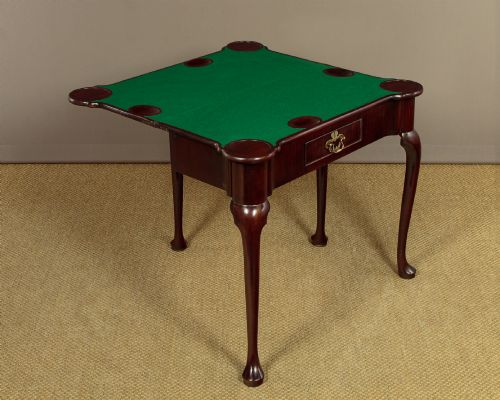
Some tables include dished corners designed specifically to keep gaming counters from rolling onto the floor during an intense match.
Evaluating Construction and Finish
Quality rests on the selection of timber veneers, where highly figured burr walnut or Cuban mahogany distinguishes superior examples from plain stock.
Precision in brass inlay, crispness of carved mouldings, and the smooth operation of concertina actions or rotating tops separate workshop outputs.
George Bullock·Giles Grendey·Gillows
The Foldover Gaming Table Glossary
- Concertina action
- An expanding frame mechanism that allows a four-legged table to open fully with central support. This ingenious joint prevents the rear legs from awkwardly swinging outward.
- Demi-lune
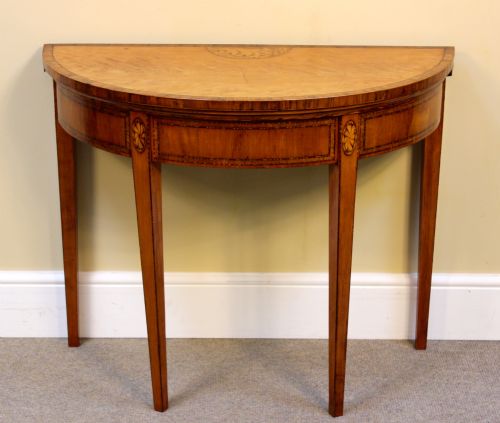
- A half-moon shape with a curved front and flat back edge. These tables fit snugly against a wall when closed.
- Marquetry
- Decorative patterns formed by fitting together thin pieces of wood veneer. Artisans utilised contrasting timbers like satinwood and boxwood for floral or geometric motifs.
- Sabot
- A metal sleeve fitted to the foot of a table leg. Brass examples protect the base and complement inlaid stringing.
- Patination
- The surface sheen developed through age, handling, and polishing. Good examples display a deep, warm glow across the timber.
Foldover Gaming Table: Frequently Asked Questions
How do you use one today?
These tables adapt well to modern living rooms as slim console surfaces behind sofas or in hallways.
Opening the top reveals a baize-lined or polished wood interior suitable for display or occasional use.
How do I spot a Regency table?
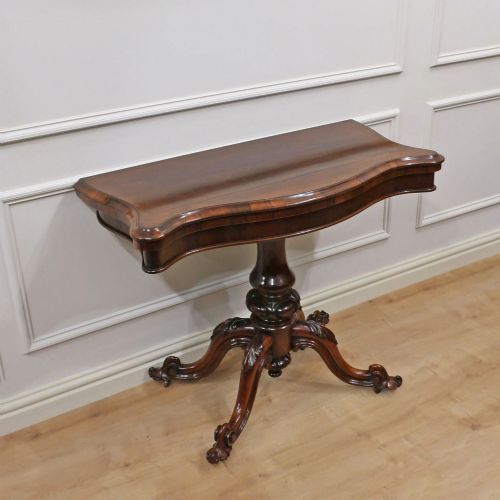
Regency tables frequently incorporate rosewood veneers, brass inlay, and turned pedestal bases with sabots and castors.
They reflect classical revival motifs popular during the early nineteenth century.
What woods were used?
Cabinet makers relied primarily on mahogany, rosewood, and walnut for the main structure and veneers.
Satinwood, boxwood, and brass provided contrasting details for inlay and stringing.