



Folding Wooden Book Stand
These folding wooden book stand pieces are practical reading furniture designed to support volumes at a readable angle, offering convenience and style.
Folding Wooden Book Stand
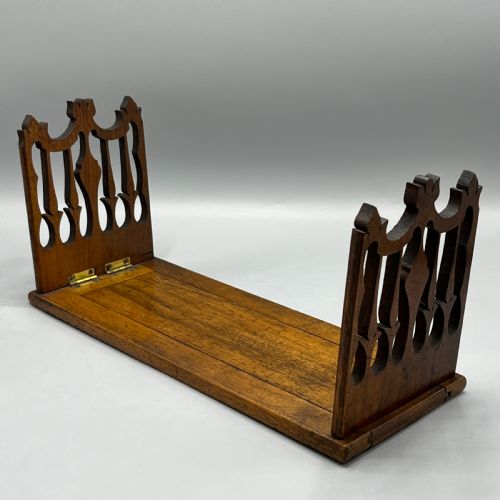
When searching for a folding wooden book stand, you encounter a variety of desk accessories and book slides originating from the Victorian period through to the eighteenth century. These pieces serve the practical purpose of holding books, bibles, and magazines securely while remaining compact when folded.
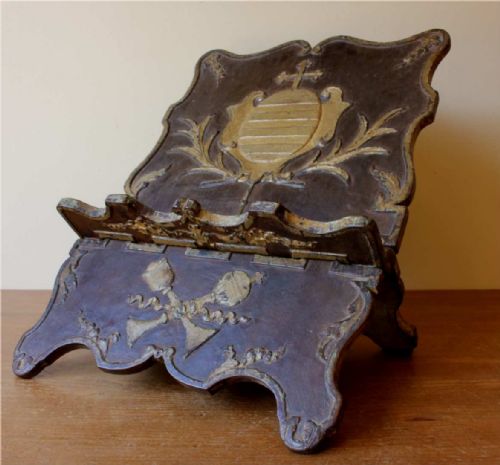
The items found here range from English extending book slides in walnut and ebonised wood to more elaborate Anglo-Indian carved teak folding book racks. You also meet specialised items such as religious missal stands and scholar reading pedestals made from olive wood, coromandel, and whitewood.
Most examples hail from the nineteenth century, utilising dense timbers suitable for daily use in home libraries and club lounges. The selection emphasises functional ingenuity combined with period craftsmanship.
How they were made
Cabinet makers utilised a range of timbers including walnut, teak, olive wood, and ebonised wood to construct the frames and extending mechanisms. Brass mounts and hinges frequently provide the necessary pivot points and sliding actions for folding designs.
Decoration often involves intricate carving, as seen in Anglo-Indian pieces, alongside mother of pearl inlay and brass detailing. Some surfaces feature gesso, gold leaf, or transfers, while bone is occasionally incorporated into the ornamentation.
Folding Wooden Book Stand Retail Price Guide 2026
Typical asking prices for folding wooden book stand among the pieces listed under this phrase on Sellingantiques today, from the lower quarter to the upper quarter. They describe what is for sale here now, not the wider market.
Materials in these listings include walnut, teak, coromandel, brass, and bone.
What varies in quality
The sophistication of the extending or folding mechanism distinguishes simpler utilitarian slides from finer library pieces. Smooth movement of sliding bookends and sturdy construction indicate superior workmanship.
Material selection and decorative execution play a major role in establishing the quality of a piece. Dense, richly figured woods like coromandel or intricately carved teak command attention compared to plain whitewood.
The Folding Wooden Book Stand Glossary
- Book slide
- An extending rack designed to sit on a desk or table, holding a variable number of volumes upright between two bookends. The ends often slide along a wooden base.
- Missal stand
- A specialised folding stand historically used to support heavy religious service books such as missals or bibles on an altar or lectern. They fold flat for storage when not in use.
- Ebonised wood
- Timber treated with a dark stain or finish to imitate ebony, a technique popular during the Victorian era for a sleek, formal appearance.
- Coromandel
- A heavy, dense wood featuring dark brown colouring with dramatic black stripes, prized for luxury nineteenth century desk accessories.
- Mauchline ware
- Scottish souvenir items made from whitewood and decorated with photographic transfers or tartan patterns, often taking the form of small reading stands and boxes.
Folding Wooden Book Stand: Frequently Asked Questions
What is a folding wooden book stand?
A folding wooden book stand is a portable reading accessory designed to prop up books or magazines at an angle. They fold flat when not in use for easy storage.
These items range from simple nineteenth century extending book slides to elaborately carved folding pedestals and missal stands.
How do extending book slides work?
Extending book slides feature a base with a channel or sliding mechanism that allows the ends to move outward. This accommodates a growing or shrinking row of books.
Many examples utilise brass hardware to facilitate this sliding action smoothly.
Where were these stands used?
These pieces found places in Victorian home libraries, studies, club lounges, and offices. Religious stands were utilised for holding service books.
Smaller folding versions were also suitable for travel or placement on desks where space was limited.
What materials are common?
Common timbers include walnut, teak, and ebonised wood, sometimes accented with brass mounts. Finer pieces might incorporate coromandel, olive wood, or mother of pearl inlay.
Decoration also extends to bone details and transfer printing on whitewood souvenirs.