


Folding Step Ladder
These folding step ladder pieces combine practical elevation with ingenious metamorphic joinery, offering both utility and historic charm for your home.
Folding Step Ladder
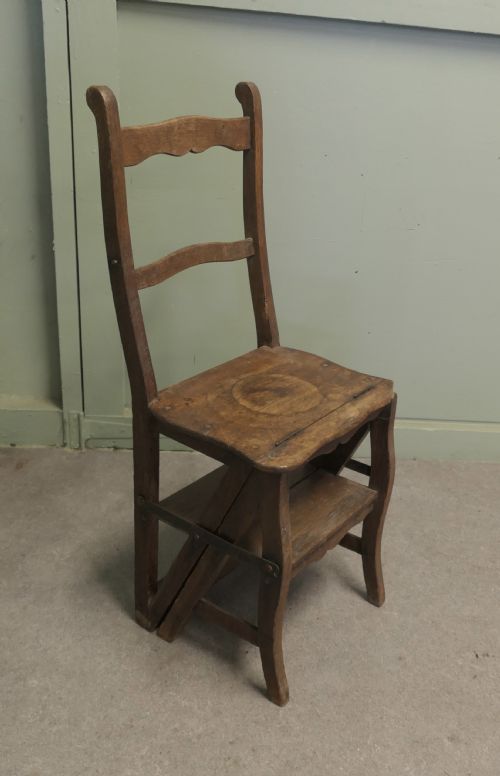
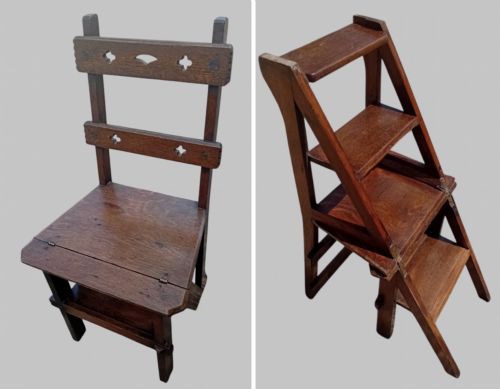
When you search for folding step ladder, you encounter a specialised form of antique designed to reach high shelves or navigate domestic spaces. The selection includes library steps, step ladders, library chairs, armchairs, and metamorphic chairs that shift between seating and elevation. These examples span the 19th Century, Regency, Georgian, 1860, 1890, 1900, 1920, and 1930 periods.
What varies in quality
The sophistication of the metamorphic action distinguishes simpler utility ladders from finely engineered library chairs. Smooth transitions and concealed hinges reflect superior cabinet-making during the Regency and Georgian periods.
Selection of timber grain, such as figured mahogany or quarter-sawn oak, separates standard utility pieces from high-status library furniture. Original hardware, leather inserts, and intact brass fittings retain greater integrity than later replacements.
The Folding Step Ladder Glossary
- Metamorphic
- Furniture designed to transform from one object into another, such as an armchair converting into a set of steps.
- A-frame
- A triangular structural formation providing stability for folding step ladders without requiring wall support.
- Gothic Revival
- A design style drawing on medieval architectural motifs, seen in pointed arches and heavy oak construction.
- Library steps
- Freestanding sets of stairs specifically scaled for accessing elevated bookshelves in period rooms.
Folding Step Ladder: Frequently Asked Questions
How do metamorphic library chairs work?
These clever designs use hidden hinges and pivoting sections that allow the backrest and seat to unfold forward.
Once manipulated, the chair transforms securely into a flight of functional steps for reaching high shelves.
Are these steps safe to use today?
Many historical step ladders and library steps retain sturdy wooden frames and reliable iron or brass folding mechanisms.
It is wise to check the pivot points and general stability before using them for elevation in a modern home.
What woods were commonly used?
Cabinet makers predominantly utilised durable hardwoods like oak and mahogany for high-end library chairs and folding steps.
Utility ladders and simpler pieces were frequently constructed from pine, fruitwood, or general mixed timber.
How do I date a folding ladder?
Stylistic clues such as Regency curves, Georgian proportions, or Gothic Revival tracery help place a piece in its correct period.
Hardware styles, timber selection, and construction methods further clarify whether a ladder originates from the nineteenth century or later.