

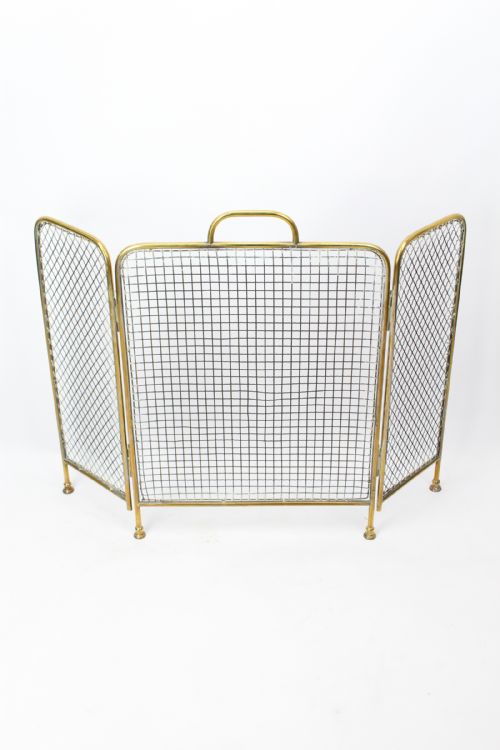


Folding Hearth Guard
A folding hearth guard protects the room from stray sparks while adding polish to the fireplace during the cooler months.

Folding Hearth Guard
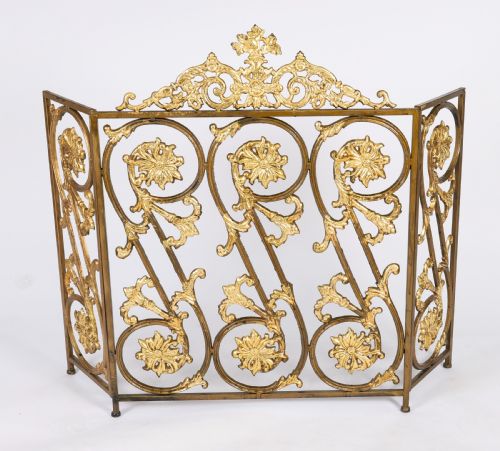
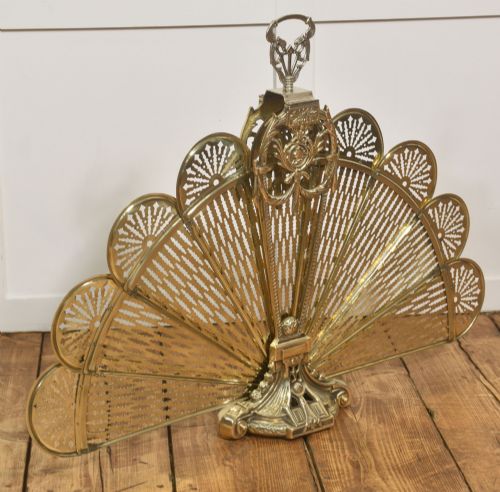
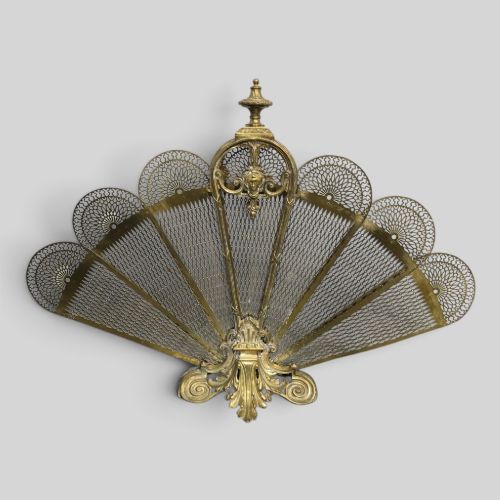
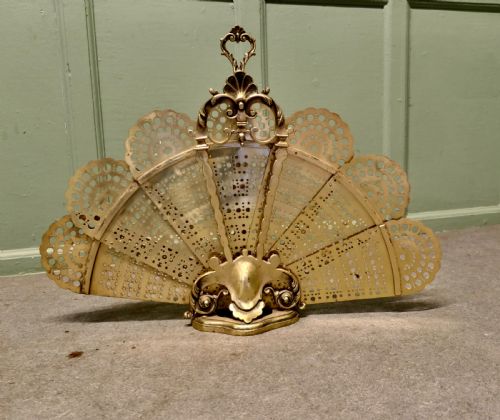
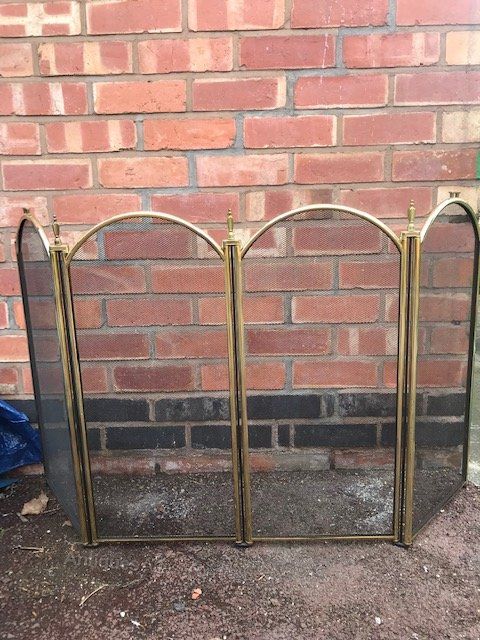
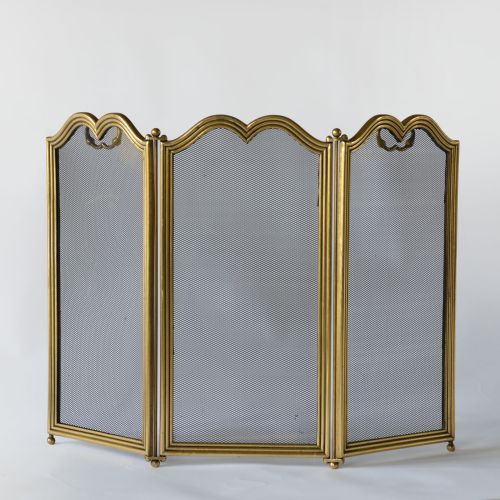
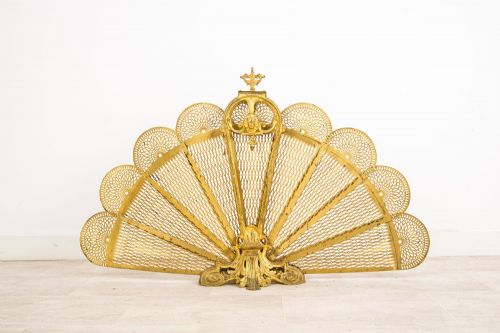
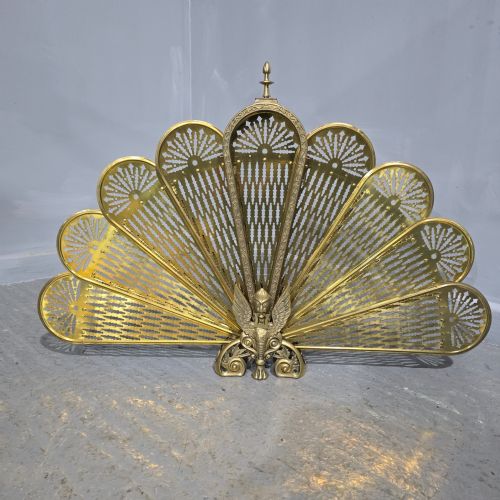
A folding hearth guard takes several forms across the Victorian, Edwardian, and early twentieth-century periods, with the most common being the expanding peacock fan and the multi-section spark guard. These pieces are designed to unfold in front of an active fire and fold flat when the grate is cold.
The materials span brass, gilt brass, bronze, iron, copper, and wire mesh, often styled in French Rococo Revival, Louis XIV Revival, or Arts and Crafts aesthetics. Buyers frequently encounter tripartite folding guards alongside the popular radiating fan configuration.
Origins include domestic British workshops and continental French foundries, providing a range of decorative intensity from simple wire mesh panels to elaborate cast or ormolu frames.
Materials and construction
Construction relies heavily on brass, bronze, iron, and copper, combined with fine wire mesh or articulated metal segments that permit smooth folding action. Metalworking techniques involve casting, etching, and gilt finishing, particularly seen in French Rococo and Louis XIV revival examples.
The peacock fan variations utilise individual overlapping metal blades riveted to a central pivot, allowing the guard to fan outwards symmetrically. Iron and steel frames employ robust riveted joints to support taller mesh panels, suiting the heavier Arts and Crafts designs.
Some guards expand like a proud bird's tail, proving that nineteenth-century safety could also be thoroughly theatrical.
Assessing quality and craftsmanship
Quality rests in the precision of the articulation and the weight of the cast metal used in the frame and base. Pieces with solid brass or ormolu mounts maintain their alignment through repeated folding better than lighter, flexible wire iterations.
The intricacy of the surface detail, such as etched glass panels, chased bronze, or finely pierced brass leaves on a fan guard, distinguishes standard domestic items from finer decorative pieces.
The Folding Hearth Guard Glossary
- Spark guard
- A protective screen, often made of wire mesh or folding sections, designed to contain flying embers from an open fire. These guards are essential for safety in period interiors.
- Ormolu
- Gilt bronze ornamentation applied to furniture and decorative metalwork. This technique was frequently utilised during the nineteenth century on French revival fire screens.
- Peacock fan
- A folding fire screen composed of radiating metal blades that expand into a semicircular fan shape. It mimics the spread tail of a peacock when open.
- Tripartite
- Divided into three sections, referring to folding screens with three hinged panels. This configuration allows the guard to angle around the hearth opening.
Folding Hearth Guard: Frequently Asked Questions
How do I use a folding hearth guard safely?
Place the guard securely in front of the open fireplace before lighting the fire to catch stray embers and sparks.
Ensure the folding sections are fully extended and stable on the hearth floor before leaving the room.
How do I clean brass and bronze fire screens?
Dust the metal regularly with a soft, dry cloth to prevent soot and ash accumulation on the surface.
Avoid harsh chemical polishes that can strip original gilding or patination, particularly on antique ormolu and gilt brass pieces.
How do I date a nineteenth-century hearth guard?
Examine the construction methods, such as riveted joints and cast metal weight, alongside stylistic cues like French Rococo revival or Arts and Crafts motifs.
Victorian and Edwardian pieces often exhibit distinct patination and material combinations like copper and fine mesh.