
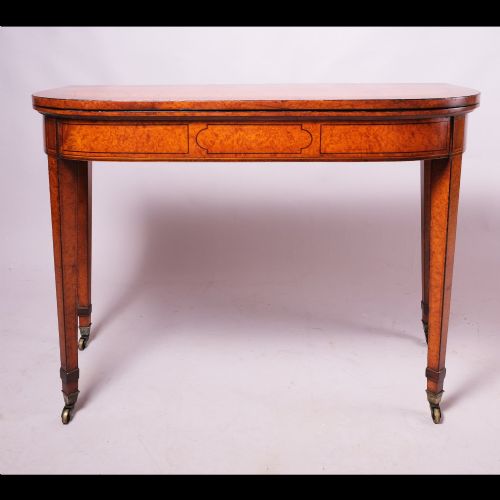

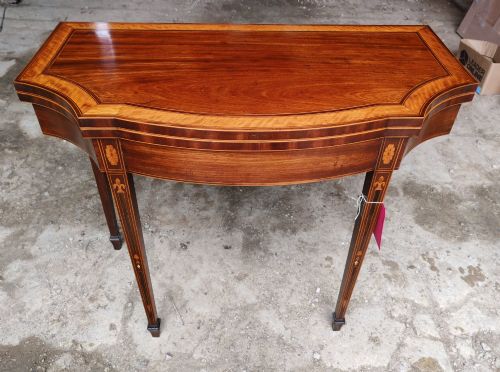
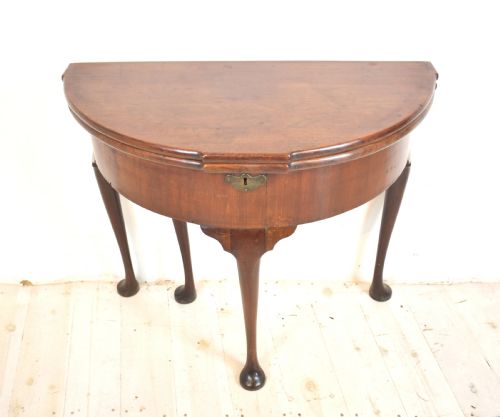


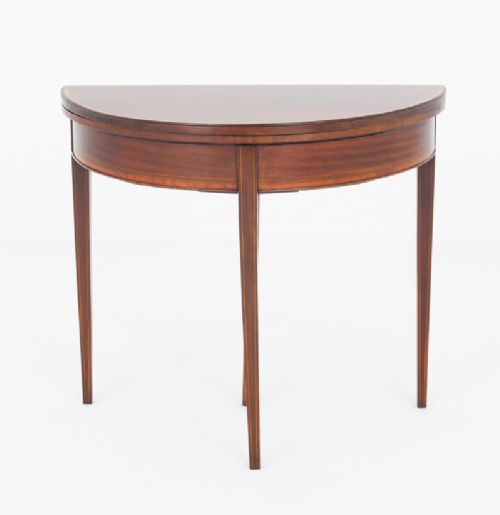

Fold Over Hall Table
A fold over hall table solves the eternal problem of surface space by expanding from a slim console into a generous table.
Fold Over Hall Table
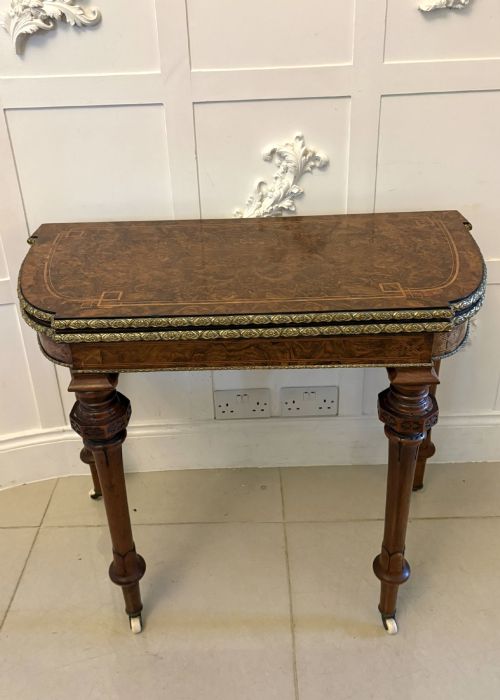
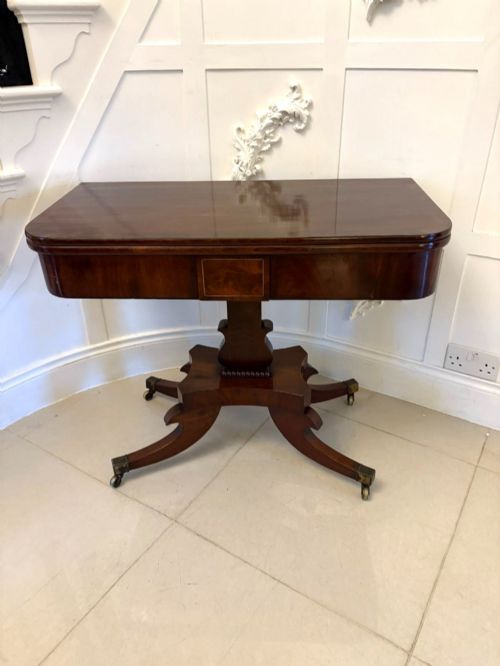
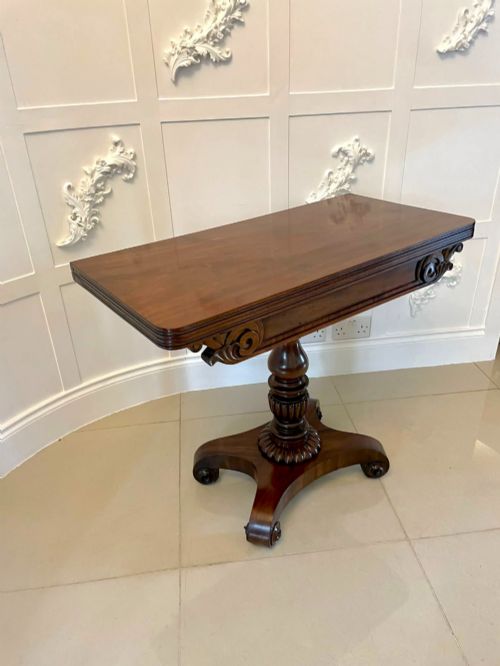
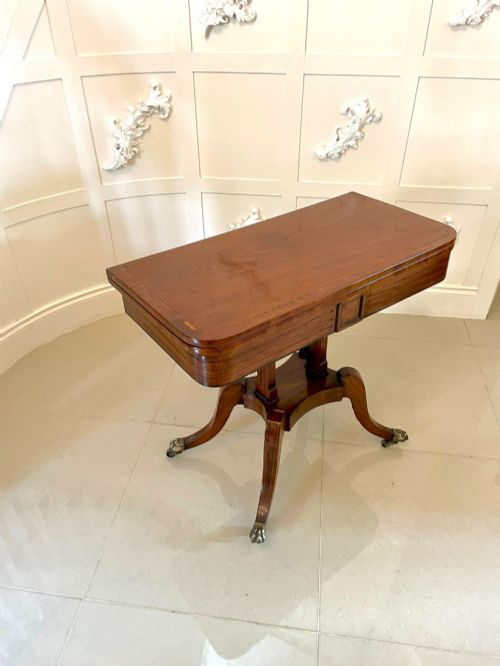
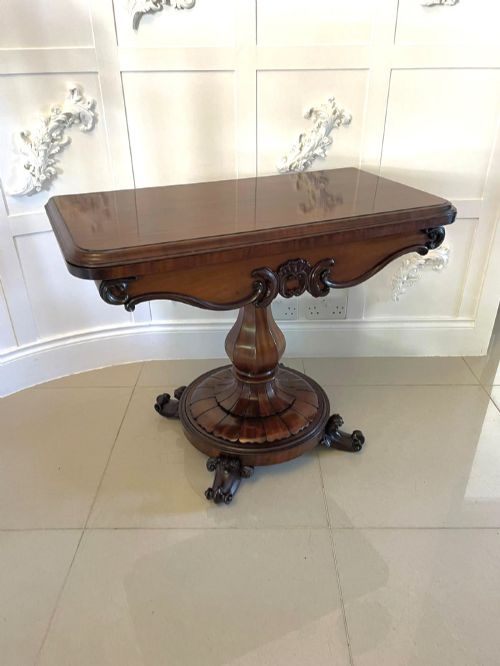
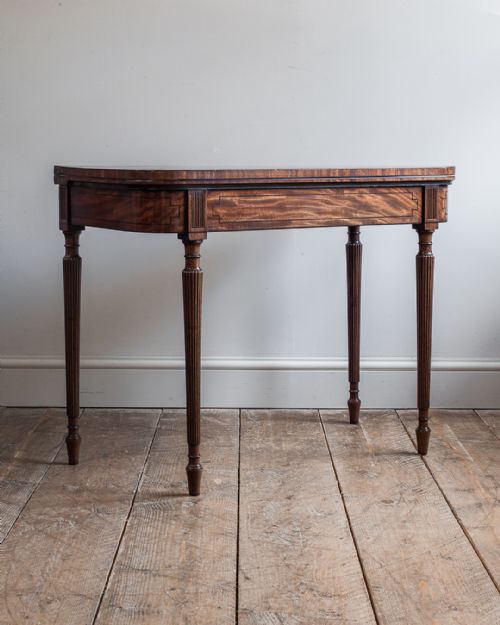
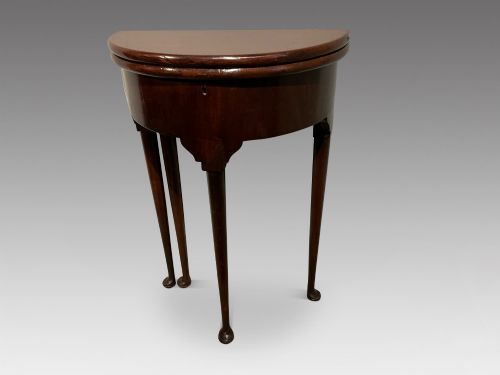
A fold over hall table is essentially a versatile piece designed to sit flush against a wall before opening up for tea, cards or dining. You will most frequently meet mahogany and walnut examples dating from the Georgian, Regency and Victorian periods, often taking D-shaped or demi-lune forms.
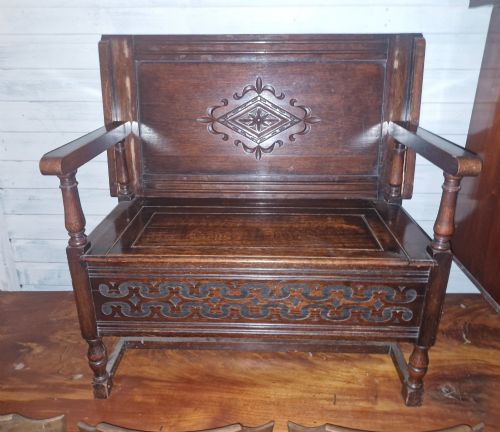
The pieces listed here span centuries of British domestic life, shifting from eighteenth-century mahogany tea tables to nineteenth-century rosewood and burr walnut card tables. Alongside standard console and side variations, you will also discover occasional oak examples featuring clever lift-up mechanisms.
Makers adapted these dual-purpose designs for changing social habits, meaning a single piece could serve as a decorative hallway console by day and a gaming table by night. Their compact closed footprint makes them remarkably adaptable for modern hallways and sitting rooms alike.
Materials and construction
Cabinetmakers relied heavily on dense timbers like mahogany, walnut and rosewood, frequently enhancing flat surfaces with intricate wood inlay or figured veneers. Satinwood and amboyna appear on more decorative interpretations, adding striking contrast and warmth to the grain.
Hinged leaves and pivoting frames required precise joinery to ensure the folded top rested securely without warping over decades of use. Brass mounts, swing-legs and subtle compartment mechanisms further demonstrated the high level of technical skill involved in their construction.
Listings feature mahogany, rosewood and burr walnut alongside oak and amboyna.
Judging quality
Quality rests primarily on the choice of timber and the crispness of the secondary veneers, where richly figured mahogany or burr walnut immediately elevates a piece above plain stock. Timber selection dictates both visual depth and structural stability over time.
The integrity of the hinge mechanism and the smoothness of the pivoting action separate ordinary utility tables from superior cabinetwork. A truly fine example maintains perfect alignment whether open or closed, with tightly fitted joints that show minimal wear.
Gillows·Gregory and Co
The Fold Over Hall Table Glossary
- Demi-lune
- Half-moon shaped. These tables fit snugly against a hallway wall when closed.
- Console table
- A table designed to be fixed against a wall, often supported by ornamental legs or brackets.
- Veneer
- A thin layer of superior wood applied to a base timber to provide an attractive exterior grain pattern.
- Ormolu
- Gilded bronze ornamentation applied to furniture mounts during the nineteenth century.
- Reeded
- Decorated with parallel convex mouldings carved directly into the wooden leg or frame.
Fold Over Hall Table: Frequently Asked Questions
What is a fold over hall table used for?
These tables served primarily as space-saving furniture that could expand when guests arrived for tea or evening card games. In a hallway, the closed top provided a narrow surface for lamps or calling card trays.
When unfolded, the top doubled in size, supported by a swing leg or a pivoting frame. This clever dual purpose made them indispensable in period homes where rooms needed to adapt quickly.
How do I tell a Georgian fold over table from a Victorian one?
Georgian examples generally favour understated elegance, featuring solid mahogany timbers, straight or tapered legs, and minimal decoration. Their lines remain clean and architectural.
Victorian pieces often embrace richer veneers like burr walnut and rosewood, frequently incorporating elaborate brass inlay, ormolu mounts, and more rounded or serpentine profiles.
Can I use a fold over table every day?
Most surviving examples are sturdy enough for daily use as hallway consoles or lamp tables, provided you treat the antique timber with care. They were built by skilled cabinetmakers to withstand active domestic life.
If you plan to open and close the top frequently for dining or games, check the hinge mechanism to ensure it pivots smoothly without straining the surrounding wood.
Why are some called tea tables and others card tables?
The nomenclature usually reflects the original interior purpose or fitted interior details rather than a structural difference. Card tables often feature baize or felt-lined playing surfaces hidden inside the folded top.
Tea tables generally present a polished wooden surface designed to hold porcelain tea services. Both types share the same fundamental fold-over mechanism.