
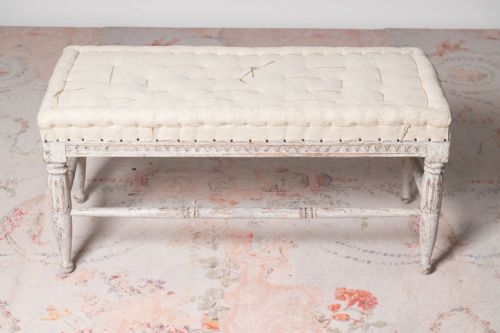


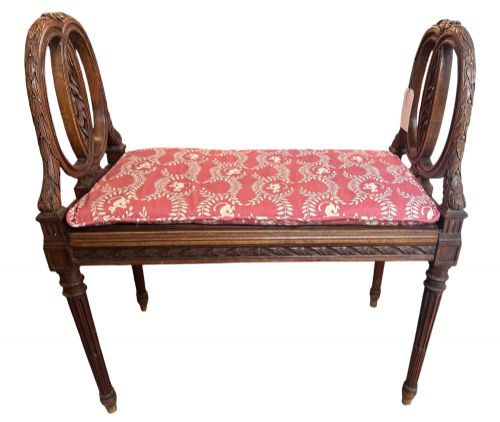


Fluted Leg Upholstered Stool
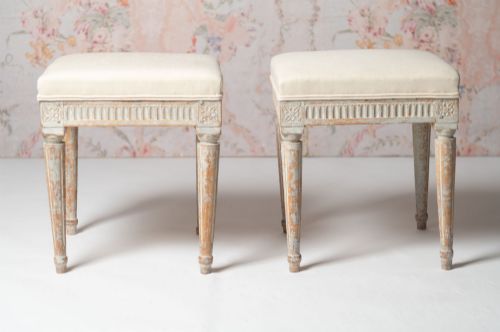
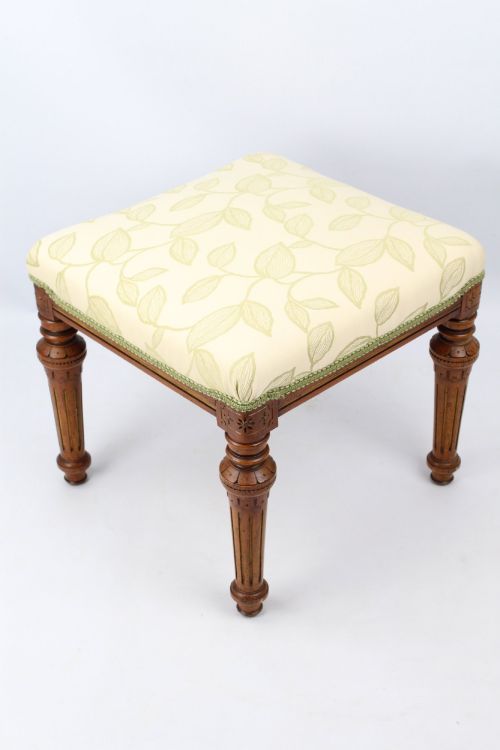
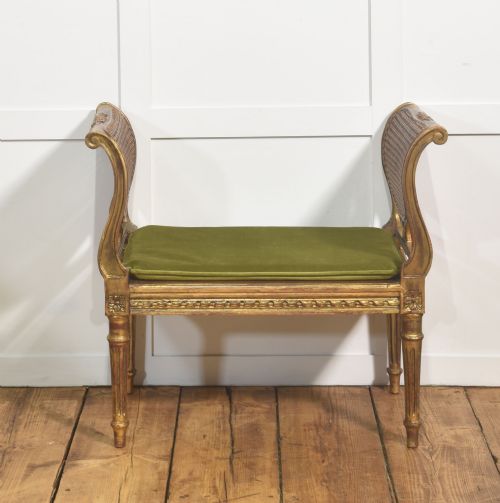
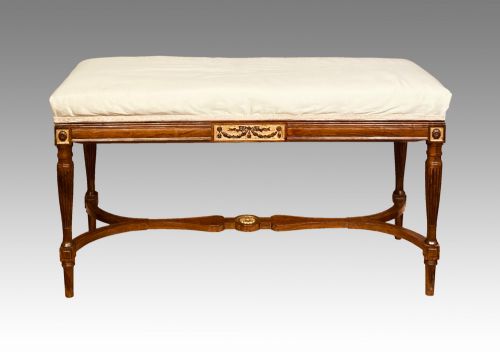
These fluted leg upholstered stool examples combine timber frames with textile or leather seating, offering both decorative presence and practical utility.
Fluted Leg Upholstered Stool
A fluted leg upholstered stool brings together structural timber framing and soft seating surfaces, serving multiple rooms from dressing spaces to reception areas. The selection spans compact footstools and longer benches designed for flexible seating.
Most examples found here date from the nineteenth and eighteenth centuries, with Victorian, Regency, and Swedish Gustavian styles appearing regularly. Makers applied carved fluting to mahogany, walnut, oak, and painted wood frames to create vertical visual rhythm.
Forms range from simple dressing stools to grand window seats and pairs of matched long benches. Buyers encounter various upholstery finishes including linen, velvet, leather, and woven rattan.
Materials and construction
Cabinetmakers shaped dense hardwoods such as mahogany, walnut, and oak to form the structural supports, carving vertical flutes directly into the timber legs. Giltwood and painted wood finishes also feature across French and Swedish pieces from the period.
Upholstery techniques varied from simple drop-in pads to buttoned leather secured with brass studs and modern fabric replacements over original webbing. Caning and woven rattan provide alternative seating surfaces on specific window seats and stools.
Charles Nosotti ran a prominent London mirror and furniture workshop that occasionally diversified into seating with fluted legs.
Distinguishing quality in period pieces
The crispness of the hand-carved fluting on the wooden legs separates standard production from finer workshop output. Sharply defined channels and balanced proportions indicate skilled cabinetmaking.
The integration of the frame joints and the choice of primary timber dictate structural longevity. Heavier native hardwoods and robust joinery distinguish superior framing from simpler constructions.
Charles Nosotti
The Fluted Leg Upholstered Stool Glossary
- Fluting
- Vertical rounded grooves carved into the surface of a furniture leg or column. This decorative technique originates in classical architecture and appears frequently on period seating frames.
- Gustavian
- A Swedish neoclassical design style characterised by pale painted finishes and restrained classical ornamentation. Pieces from this tradition often feature carved wooden frames.
- Giltwood
- Wood that has been coated with a thin layer of gold leaf or gilt finish. It is common on decorative French and English frames.
- Regency
- An English design period spanning the early nineteenth century defined by classical restraint and archaeological revival motifs. Furniture from this era often utilises dark timbers like mahogany.
- Window seat
- An elongated stool or bench designed specifically to fit within a window recess. These pieces frequently incorporate upholstered tops and decorative frame carving.
Fluted Leg Upholstered Stool: Frequently Asked Questions
Where should I place a long stool?
Long stools and benches fit well at the foot of a bed, beneath a window, or along a hallway wall. Their narrow profile allows them to provide extra seating without blocking walkways.
Pairs of long stools also function effectively in larger reception rooms as flexible seating arrangements.
How do I identify a Gustavian stool?
Gustavian pieces typically display pale painted wooden surfaces rather than exposed dark timber. The decoration leans towards restrained Swedish interpretations of French neoclassical design.
Carved details on these stools remain subtle, often paired with neutral linen or cotton upholstery.
What is the difference between a dressing stool and a window seat?
Dressing stools are compact and square, designed to sit neatly beneath a dressing table or vanity. They focus on upright posture and easy mobility.
Window seats are generally longer and rectangular, built to accommodate more than one person in front of a window.
Are the upholstery fabrics original?
Most antique stools have been recovered or reupholstered over time to ensure practical usability. Materials like leather, linen, and velvet often reflect later refurbishments.
The underlying wooden frame and carved legs remain the primary historical components.