



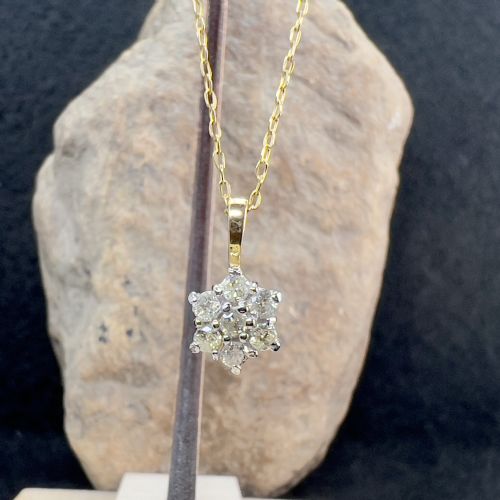


Flower Pendant Necklace
A flower pendant necklace brings together precious metals and floral motifs, offering wearable botanical forms from Victorian, Edwardian, and mid-century periods.
Flower Pendant Necklace
A flower pendant necklace comprises suspended botanical ornaments worn at the neck, frequently taking the form of clusters, daisies, and roses. These pieces appear across Victorian, Edwardian, and mid-century eras, reflecting changing stylistic tastes in floral jewellery.
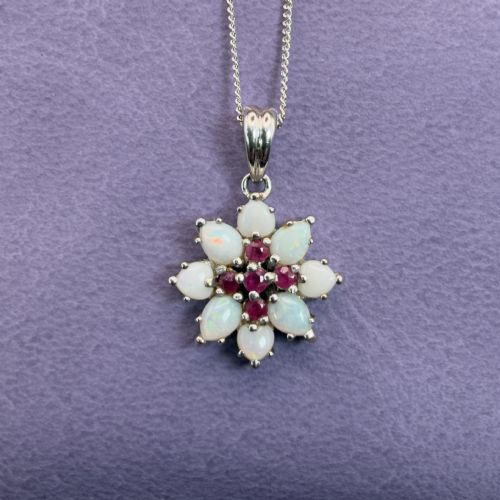
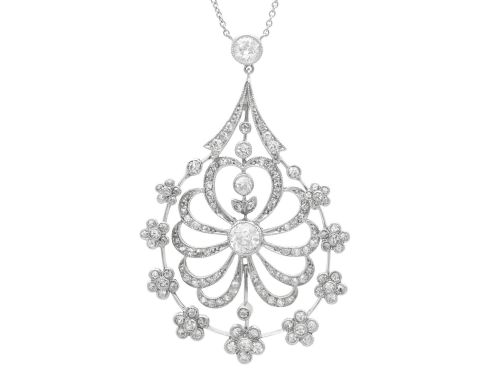
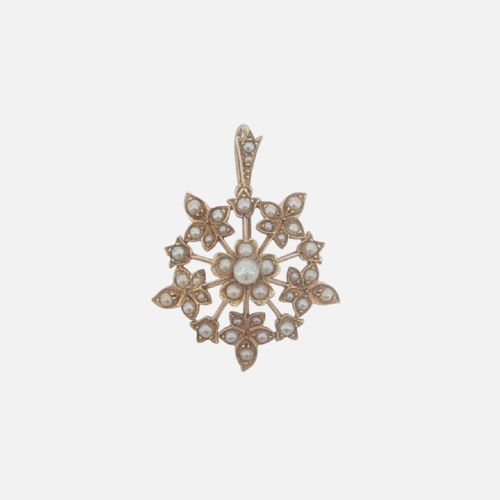
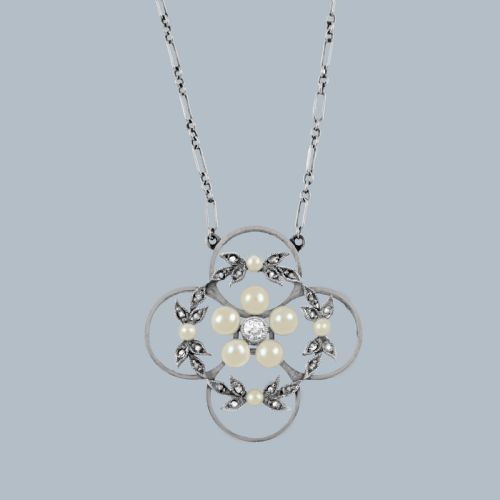
The most common examples on this page combine gold or platinum settings with diamonds, rubies, pearls, and seed pearls. Many items function as both pendants and brooches, demonstrating the versatile craftsmanship typical of antique and vintage jewellery design.
Makers and designers from Liberty & Co to Merrin contributed to this category, utilising traditional motifs ranging from simple single blooms to elaborate cluster formations. Buyers encounter diverse material combinations, including silver-topped gold, white gold, and yellow gold.
Materials and Techniques
Craftsmen built these pieces using varied carats of gold, including 9ct, 15ct, 18ct, alongside platinum and silver. Precious stones such as diamonds, rubies, sapphires, emeralds, and opals were secured alongside natural pearls and seed pearls to shape petals and stamens.
Techniques visible in the listings include cluster settings, enamel work, and carved gemstones like jade and sapphire shaped into floral and vase motifs. Metalwork often pairs silver with gold in older pieces to enhance the brilliance of diamonds.
Flower Pendant Necklace Retail Price Guide 2026
Typical asking prices for flower pendant necklace among the pieces listed under this phrase on Sellingantiques today, from the lower quarter to the upper quarter. They describe what is for sale here now, not the wider market.
Listings feature periods from the 1860s through the 1960s, incorporating gold, platinum, silver, diamonds, rubies, and pearls.
Evaluating Quality
Quality in a flower pendant necklace rests upon the finesse of the stone setting and the harmony of the floral design. Fine examples display well-matched diamonds and vibrant rubies or sapphires that faithfully mimic natural botanical structures.
The choice of high-carat or precious metals, such as 15ct gold and platinum, alongside intricate detailing like enamel or carved stones, distinguishes exceptional pieces from standard commercial production.
Liberty and Co·Merrin
The Flower Pendant Necklace Glossary
- Cluster pendant
- A jewellery piece featuring a central stone encircled by a border of smaller gems, frequently resembling a floral head.
- Seed pearl
- A very small, naturally formed pearl often drilled and used in delicate Victorian and Edwardian floral jewellery.
- Old cut diamond
- A hand-faceted diamond cut popular before the standardisation of modern brilliant cuts, characteristic of antique pieces.
- Festoon necklace
- A decorative necklace featuring draped chains, swags of metal, or suspended elements often linked to Arts and Crafts designs.
- Detachable bale
- A removable loop or ring attached to the top of a pendant that allows it to slide onto a chain or convert into a brooch.
Flower Pendant Necklace: Frequently Asked Questions
What is a flower pendant necklace?
A flower pendant necklace is an item of neck jewellery featuring a botanical or floral motif suspended from a chain. These ornaments translate natural petal and bloom shapes into precious metals and gemstones.
They appear across multiple historical periods, ranging from mid-nineteenth-century Victorian designs to mid-century creations, utilising materials like gold, platinum, diamonds, and pearls.
How do I date a flower pendant necklace?
Dating these pieces relies on examining the metal types, gemstone cuts, and overall stylistic characteristics. Victorian and Edwardian examples often feature silver-topped gold or seed pearls, while mid-century items frequently employ white or yellow gold.
Specific design cues, such as the naturalistic curves of Arts and Crafts pieces or the structured geometry of later decades, further help determine the era of manufacture.
Can these pendants be worn as brooches?
Many antique floral pendants were manufactured with integrated pin mechanisms alongside suspension loops, allowing them to function as both pendants and brooches. This dual functionality was particularly common in nineteenth-century and early twentieth-century pieces.
Wearers can switch between attaching the piece to clothing as a brooch or threading it onto a chain to wear at the neck.
What gems were used in antique flower pendants?
Jewellery makers utilised a wide selection of precious and semi-precious stones to represent floral elements. Diamonds, rubies, sapphires, opals, and emeralds frequently form the petals and centres of these botanical designs.
In addition to faceted stones, natural pearls, seed pearls, and enamel work frequently appear to add texture, colour, and realistic detail to the floral motifs.