



Flow Blue Ceramic
Flow blue ceramic pieces are prized for their distinctive cobalt decoration that bleeds softly into the white glaze, creating a richly atmospheric finish.
Flow Blue Ceramic
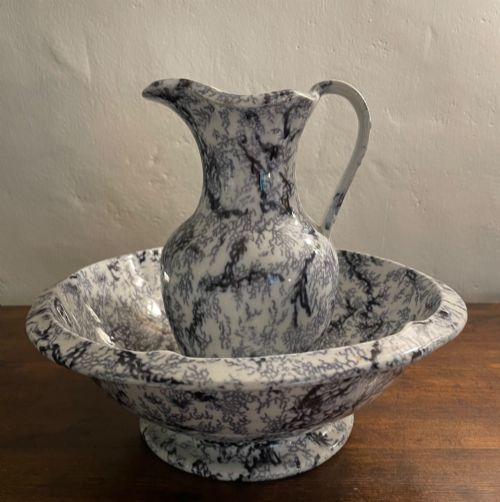
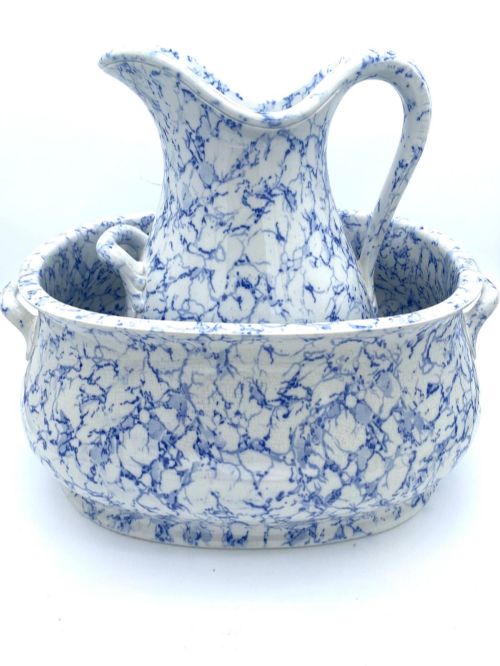
When you search for flow blue ceramic, you encounter pieces that span the nineteenth century, including large wash sets, footbaths, meat platters, and decorative bowls. The nineteenth century yields sizeable examples such as pitchers, basins, and footbaths in deep cobalt patterns.
You will also find smaller domestic objects including biscuit barrels, jugs, and miniature child's sets. Victorian items dominate the selection, often presenting intricate transfer-printed scenes on earthenware bodies.
The style ranges from early pieces around eighteen-forty up to Edwardian examples from nineteen hundred. These ceramics showcase various influences including Rococo Revival, Aesthetic Movement, and Art Nouveau alongside traditional patterns.
Materials and Construction
These pieces are primarily fashioned from earthenware and glazed ceramic, providing a sturdy base for the absorbent blue pigments. Manufacturers sometimes applied gold leaf, gilding, or silver plate to accentuate the rims and handles of the vessels.
The characteristic blurred edge of the decoration occurred during firing when lime or other volatile substances were introduced into the kiln atmosphere to vaporise the cobalt oxide. This technical manipulation caused the blue colour to bleed into the surrounding white glaze.
Flow Blue Ceramic Retail Price Guide 2026
Typical asking prices for flow blue ceramic among the pieces listed under this phrase on Sellingantiques today, from the lower quarter to the upper quarter. They describe what is for sale here now, not the wider market.
Early potters accidentally invented the hazy effect when volatile kiln gases interfered with their plates, transforming a mistake into a celebrated fashion.
Judging Quality
Quality in these ceramics rests upon the crispness of the underlying transfer print before the intentional blurring takes place. Pieces that maintain distinct pattern details beneath the cobalt haze demonstrate superior manufacturing skill.
The application of supplementary details such as hand-gilding, ormolu mounts, or intricate silver plate elevates the status of a piece. Larger forms like footbaths and complete wash sets require greater technical mastery to fire successfully without warping.
Minton·Doulton Burslem·Doulton Lambeth·Carlton Ware·Moorcroft Macintyre
The Flow Blue Ceramic Glossary
- Flow blue
- A style of transfer-printed pottery where the cobalt blue pigment bleeds into the white glaze during the kiln firing. This effect was often intentional and created a soft, hazy aesthetic.
- Earthenware
- A porous type of pottery fired at lower temperatures, commonly used for nineteenth-century domestic ceramics. It requires an impervious glaze to hold liquids.
- Transfer printing
- A method of decorating ceramics by engraving a design onto a copper plate, pulling an impression on tissue paper, and pressing it onto the bisquified clay body.
- Biscuit barrel
- A covered ceramic container historically used for storing dry biscuits at the dining table. These vessels frequently featured metal mounts and lids made of silver plate.
Flow Blue Ceramic: Frequently Asked Questions
What is flow blue ceramic?
Flow blue ceramic refers to nineteenth-century pottery decorated with cobalt designs that intentionally blurred into the white glaze during firing. This technique created a soft, atmospheric depth across plates, jugs, and wash sets.
Makers achieved this effect by introducing volatile substances into the kiln, causing the blue pigment to bleed outwards. The results ranged from subtle halos around the motifs to deep, saturated hazes.
How were these pieces used?
Many of these ceramics served practical daily functions in nineteenth-century households, from large wash sets and footbaths to meat platters and tea services. Smaller items like biscuit barrels held dry goods in the parlour or dining room.
Decorative bowls and wall brackets also fulfilled purely aesthetic roles in Victorian interiors. Child's sets were utilised for juvenile dining or as miniature display pieces.
How do I live with flow blue ceramic?
These pieces integrate easily into traditional and contemporary interiors, bringing rich historical pattern and deep blue tones to shelves, sideboards, and walls. Larger vessels like pitchers and bowls make striking standalone focal points.
Because they are nineteenth-century earthenware, wash them gently by hand rather than placing them in a dishwasher. Avoid harsh abrasives to protect the delicate glazed surfaces and any accompanying gilding.
How do I identify Victorian pieces?
Victorian examples often carry specific aesthetic influences such as Rococo Revival curves or Aesthetic Movement motifs alongside traditional patterns. Examining the weight of the earthenware and the style of the transfer print helps place them in the nineteenth century.
Maker marks stamped or printed on the underside also assist with dating. Late nineteenth-century pieces often reflect the transition toward Edwardian styles around nineteen hundred.