
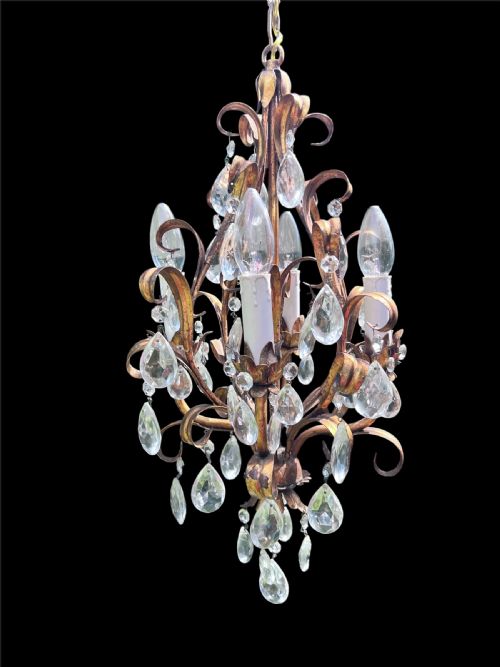


Florentine Crystal Light
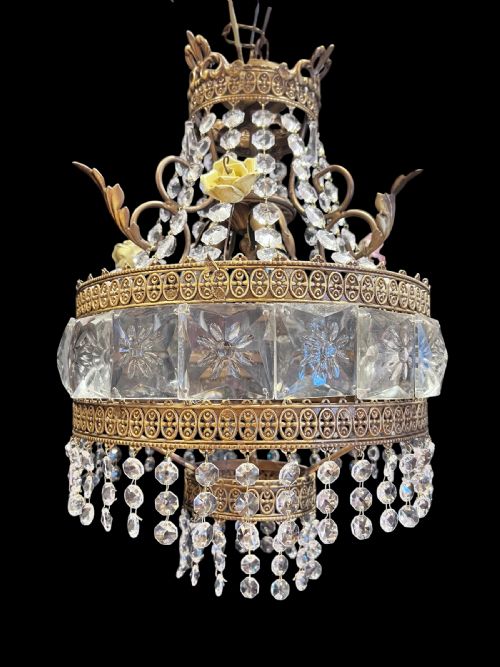
A Florentine crystal light brings dramatic Italian sparkle to a room through gilded metal and cascading glass drops.
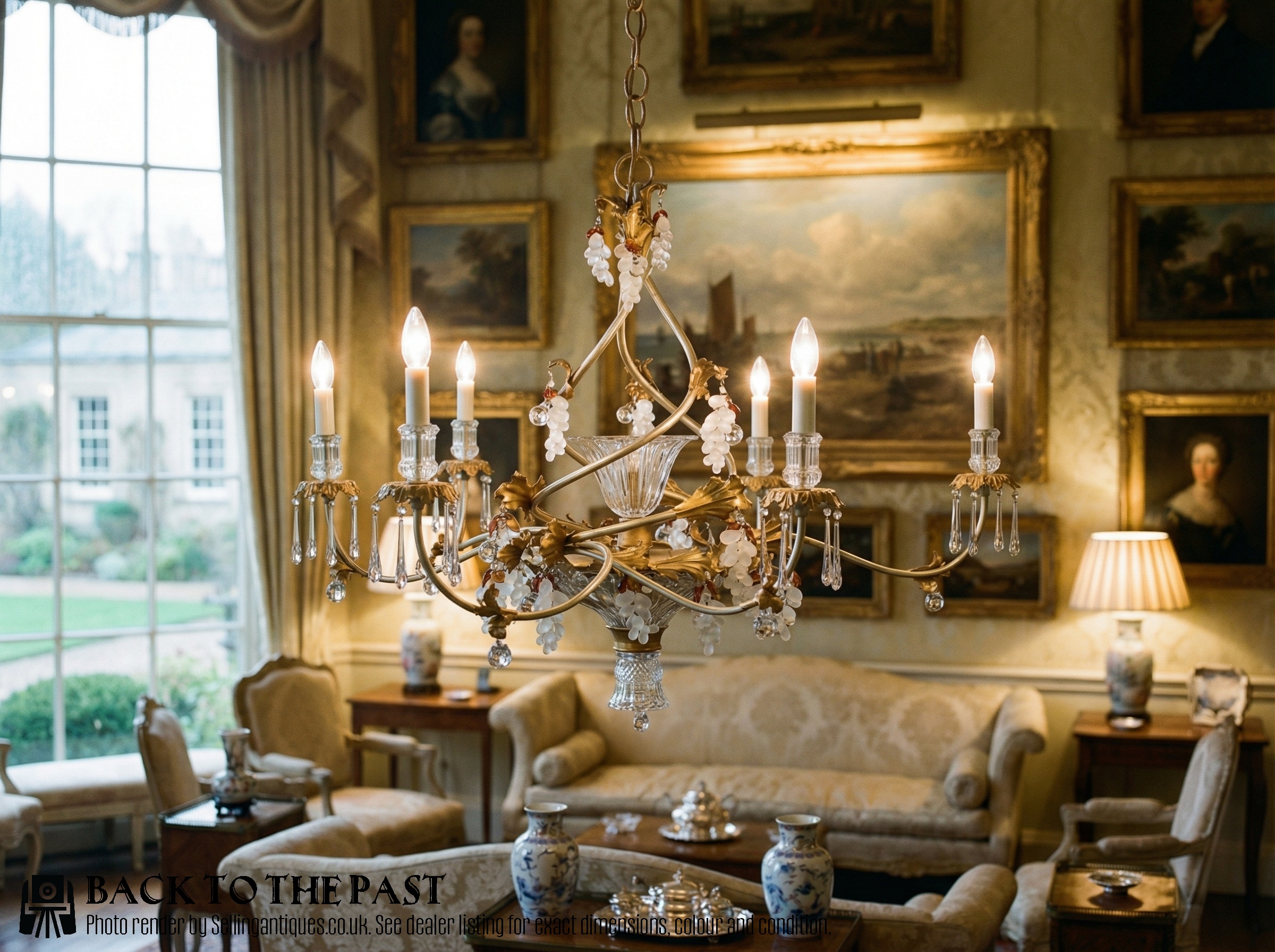
Florentine Crystal Light
A florentine crystal light refers to ornate Italian chandeliers, wall lights, and sconces originating from the early decades of the twentieth century, specifically between nineteen hundred and nineteen thirty. Buyers search for these fixtures to introduce theatrical illumination and classic Italian character into high-ceilinged spaces.
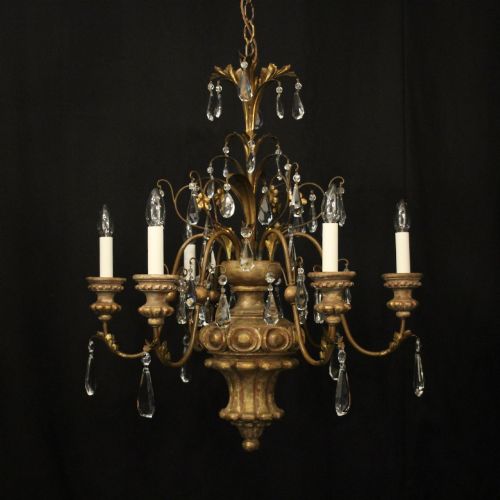
The most common form encountered here is the multi-armed chandelier, featuring six to twenty-four lights dressed with crystal beads and glass drops. Alongside these overhead fixtures, matched pairs of giltwood or gilt-metal wall sconces frequently appear, designed to coordinate with the central lighting.
Stylistically, these pieces draw heavily upon Florentine, Baroque, and Rococo Revival traditions. They combine regional Italian craftsmanship with decorative elements such as porcelain flowers, polychrome finishes, and leafy gilt frameworks.
Materials and construction methods
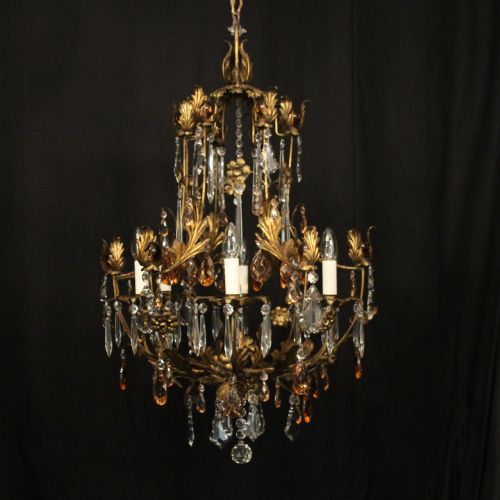
The foundational structure of a florentine crystal light relies on forged iron, brass, bronze, or carved giltwood. Artisans shaped these metals into leafy scrolls, twin arms, and multi-tiered frames before applying gold leaf or polychrome paint.
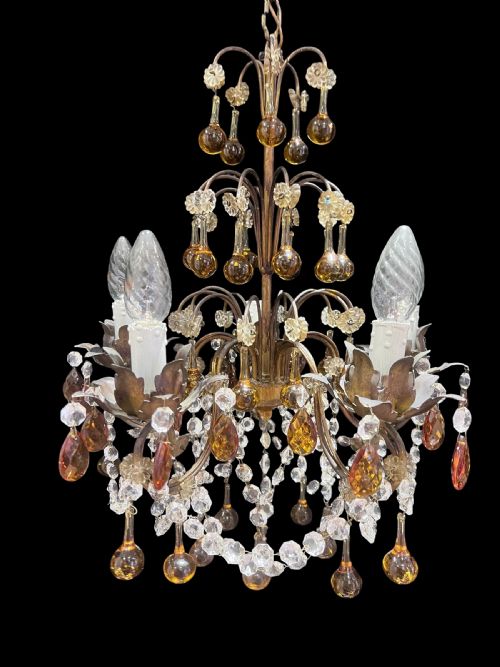
Glass and crystal components are then wired or pinned directly to the metal armature. These comprise faceted drops, coloured fruits, beaded swags, and sometimes delicate porcelain flowers that soften the metallic framework.
Observed materials include iron, brass, giltwood, and coloured glass crystals.
Distinctions in quality and execution
Quality in a florentine crystal light rests upon the density and cut of the glass drops alongside the hand-carved detail of the giltwood or metal frame. Finer examples display intricate leaf work, deep gilding, and substantial crystal weight rather than pressed glass or sparse ornamentation.
Scale and ambition separate standard domestic fixtures from grander salon pieces. Multi-tiered chandeliers carrying twelve to twenty-four lights demonstrate superior metalwork engineering to support the heavy glass load.
The Florentine Crystal Light Glossary
- Giltwood
- Timber treated with gold leaf or gold paint to simulate solid gold. This technique is common on Italian wall lights and chandelier frames from the early twentieth century.
- Polychrome
- Decorated in several colours. This finish often appears on floral or figural elements of Italian lighting.
- Sconce
- A wall-mounted light fixture with arms holding candles or electric lamps. Pairs of these are frequently found flanking larger chandeliers.
- Beaded
- Strung with small glass or crystal spheres. These form curtains and swags across the body of grand Italian chandeliers.
- Rococo Revival
- A nineteenth and twentieth century design movement favoring asymmetry, C-scrolls, and naturalistic plant motifs. This style heavily influences Florentine lighting fixtures.
Florentine Crystal Light: Frequently Asked Questions
How do I clean a crystal chandelier?
Cleaning requires a mild solution of warm water and washing-up liquid applied gently with a soft cloth. Each glass drop should be wiped individually while supported by hand to prevent strain on the wire pins.
Harsh chemical sprays must be avoided because they can damage the gilded finish on the metal or wood frame beneath the crystals.
Are these lights wired for modern electricity?
Most surviving fixtures from this era have been adapted for contemporary electrical standards during their lifespan. Rewiring is often updated by previous owners to ensure safety.
Buyers should inspect the internal wiring upon arrival and consult a qualified electrician to confirm compatibility with local building regulations.
How do I determine the correct chandelier size?
Selecting the right proportion involves measuring the room's length and width in feet and adding those figures together to suggest a diameter in inches. Ceiling height dictates whether a single-tier or multi-tiered chandelier will hang comfortably without dominating the space.
Heavier multi-light fixtures also require secure ceiling joists capable of supporting substantial metal and glass weight.
Can wall lights be wired independently?
Wall sconces operate on standard household electrical circuits and connect directly to wall wiring rather than hanging cords. They are usually controlled by a dedicated wall switch.
Many pairs are designed to sit symmetrically on either side of a fireplace or mirror to balance the room illumination.