

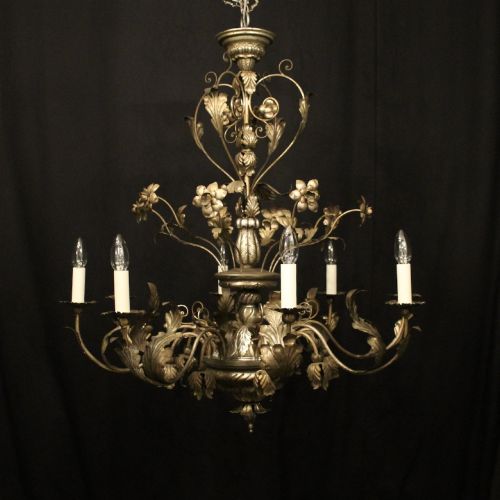
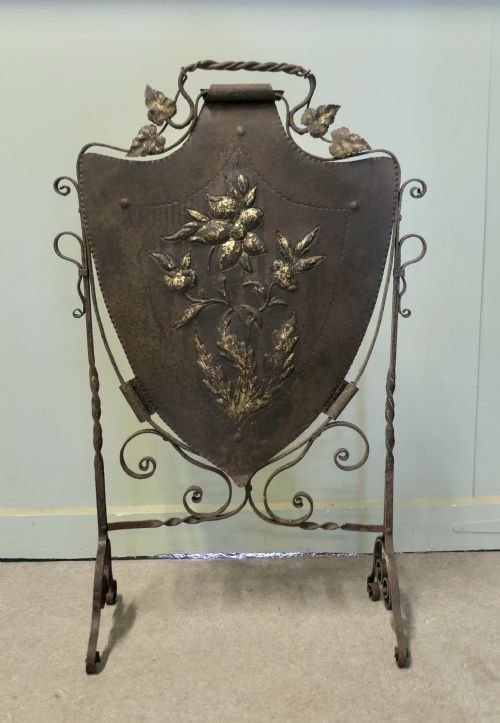

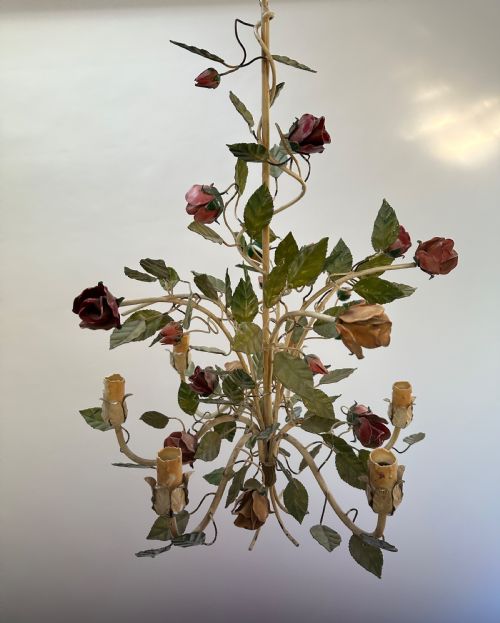
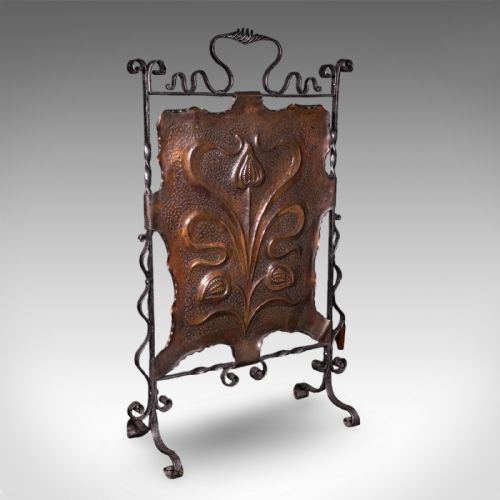


Floral Wrought Iron
These floral wrought iron pieces combine robust metalwork with botanical forms to anchor a room.
Floral Wrought Iron
Floral wrought iron pieces span domestic lighting, firesides, and furniture, drawing on periods from the seventeenth century through to the interwar decades. When searching for floral wrought iron, buyers encounter chandeliers, wall sconces, table lamps, fire screens, and beds.
French chandeliers and wall lights dominate the selection, often pairing forged metal with glass shades. Pieces from the Victorian era and the nineteen-thirties appear regularly, showing diverse regional interpretations of floral motifs.
The objects serve practical domestic functions while displaying ornamental plant forms executed in metal. Furniture items such as chests and beds sit alongside smaller lighting fixtures and fireplace accessories.
How They Were Made
Makers shaped wrought iron manually, hammering the metal while hot to create curling stems, leaves, and floral elements. This technique allows for organic, fluid lines within a rigid medium.
Combinations of wrought iron with gilt metal, painted metal, and copper provide contrasting textures and finishes. Glass elements, including enamelled glass and crystal, frequently accompany the metalwork in lighting fixtures.
Floral Wrought Iron Retail Price Guide 2026
Typical asking prices for floral wrought iron among the pieces listed under this phrase on Sellingantiques today, from the lower quarter to the upper quarter. They describe what is for sale here now, not the wider market.
The listings span periods from the seventeenth century through the Victorian era to the nineteen-thirties, using wrought iron, glass, and paint.
What Varies in Quality
Quality rests on the finesse of the forging and the integration of botanical details. Superior examples demonstrate fluid, convincing plant forms where leaves and petals are individually shaped rather than cast in standard moulds.
The standard of associated materials elevates a piece, such as the use of named glass makers for shades or genuine period gilding. Well-balanced proportions between the structural ironwork and the decorative floral elements distinguish finer items.
Schneider·Daum
The Floral Wrought Iron Glossary
- Wrought iron
- A tough, malleable form of iron that is heated and hammered into shape by hand. This process creates the fibrous texture typical of older metalwork.
- Wall sconce
- A light fixture fixed to a wall that directs illumination upwards or outwards. These often incorporate floral metal arms holding glass shades.
- Fire screen
- A decorative barrier placed in front of a fireplace when not in use. They frequently feature elaborate ironwork framing a mesh or solid panel.
- Chandelier
- A branched ornamental light fixture suspended from the ceiling. Floral variants use metal branches to mimic vines or flower stems.
- Gilt metal
- Metal coated with a thin layer of gold leaf or gilt paint. This finish adds a reflective quality to the underlying iron or bronze.
Floral Wrought Iron: Frequently Asked Questions
What rooms suit floral wrought iron lighting?
These lighting pieces suit dining rooms, hallways, and living spaces where overhead illumination or wall lighting requires a decorative focal point. The botanical motifs blend well with both traditional and eclectic interiors.
Heavier chandeliers and wall sconces provide substantial presence, so ceiling height and room proportions guide the selection.
How do I identify a period piece?
Dating relies on construction marks, style indicators, and the integration of materials such as enamelled glass or copper. Victorian and nineteen-thirties pieces each carry distinct design traits associated with their respective decades.
Examining the hammer marks and joinery reveals the manufacturing methods characteristic of specific eras.
Can I mix different metal finishes?
Combining wrought iron with gilt metal, copper, and painted finishes creates a layered interior. The shared floral theme ties disparate metal tones together.
Matching the scale and period feel matters more than ensuring every metal surface matches exactly.