

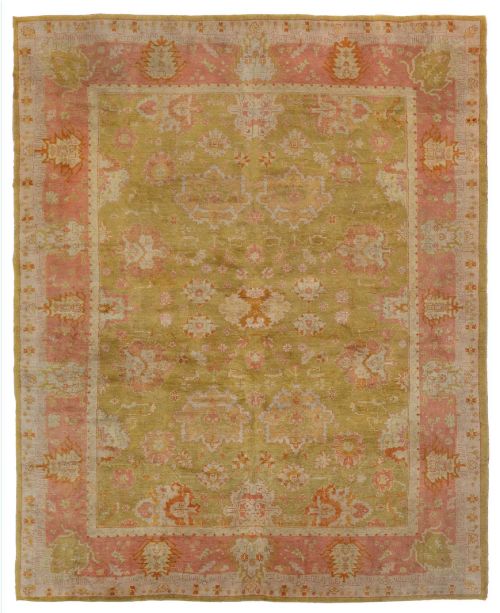



Floral Ushak Carpet
A floral ushak carpet brings grand scale and softer vegetable tones to a room, offering the distinct character of late nineteenth and early twentieth century Anatolian weaving.
Floral Ushak Carpet
A floral ushak carpet represents a tradition of large scale decorative weaving originating from Turkey, spanning periods from the 1880s through to the 1920s. These pieces encompass full size carpets, oversized runners, and smaller rugs that share distinctive Anatolian and Ottoman stylistic roots.
Most examples encountered on this page date from the late nineteenth century, specifically around 1880 and 1890, alongside pieces produced into the early twentieth century. Buyers will find variations ranging from massive decorative room sized carpets down to more compact formats suitable for smaller spaces.
Materials and construction
The construction of these textiles relies fundamentally on traditional materials, combining wool pile with cotton foundations as recorded in the listings. This pairing provides both the soft surface texture necessary for daily use and the structural stability required for large formats.
Weavers working within Ottoman, Turkish, and Oushak traditions utilised these specific materials to execute intricate floral motifs across various formats, from standard area rugs to expansive runners and large decorative carpets.
Floral Ushak Carpet Retail Price Guide 2026
Typical asking prices for floral ushak carpet among the pieces listed under this phrase on Sellingantiques today, from the lower quarter to the upper quarter. They describe what is for sale here now, not the wider market.
Current listings span production dates from the 1880s through to the 1920s, utilising wool and cotton across diverse Ottoman and Anatolian styles.
Assessing quality and proportion
Quality in these carpets rests upon the balance of scale, the handling of the floral design, and the overall integrity of the wool and cotton materials. Larger decorative formats require precise execution to maintain visual harmony across the expanse.
The distinction between standard examples and finer pieces lies in the clarity of the Ottoman and Anatolian stylistic influences, as well as the preservation of the woven structure across decades of age.
The Floral Ushak Carpet Glossary
- Ushak
- A traditional style of carpet originating from the town of Usak in western Turkey, known for large scale floral patterns and softer colour palettes. These carpets hold a prominent place in Ottoman weaving history.
- Oushak
- An alternative spelling for Ushak, frequently used in the trade to describe carpets sharing the same Turkish Anatolian heritage and distinctive design characteristics. Both terms refer to the same tradition of weaving.
- Runner
- A long, narrow format of carpet designed primarily for hallways, corridors, or alongside furniture. Oversize examples appear within the inventory alongside standard rugs.
- Ottoman
- A historical style descriptor relating to the artistic influence of the Ottoman Empire, which informs the decorative vocabulary of these Anatolian carpets. It links the pieces to a rich regional design history.
Floral Ushak Carpet: Frequently Asked Questions
Where should I place a floral ushak carpet?
These carpets suit principal reception rooms, dining areas, and hallways where their large scale and decorative patterns can be fully appreciated. Their substantial dimensions anchor furniture groupings effectively.
Smaller formats work well in bedrooms or studies, bringing warmth and historical pattern to more intimate spaces without overwhelming the room layout.
How do I care for a wool and cotton carpet?
Regular gentle vacuuming without a beater bar helps remove surface dust from the wool pile. Professional cleaning suited to antique textiles maintains the integrity of the materials.
Keeping the carpet out of direct, harsh sunlight prevents the natural dyes from fading prematurely, preserving the soft palette characteristic of these pieces.
What period do these carpets come from?
The pieces listed date primarily from the late nineteenth century, spanning the 1880s and 1890s, with additional examples from the early twentieth century up to the 1920s.
This timeframe captures a period of traditional Anatolian and Ottoman production before later modern adaptations altered standard weaving practices.
What is the difference between a rug and a carpet?
Rug typically refers to smaller or standard area formats, whereas carpet denotes larger, room sized floor coverings designed to occupy a substantial portion of a floor space.
Both categories utilise wool and cotton construction, differing mainly in overall dimensions and how they function within an interior scheme.