


Floral Upholstered Footstool
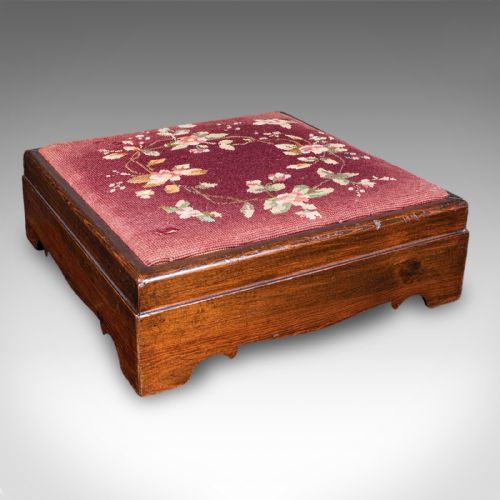
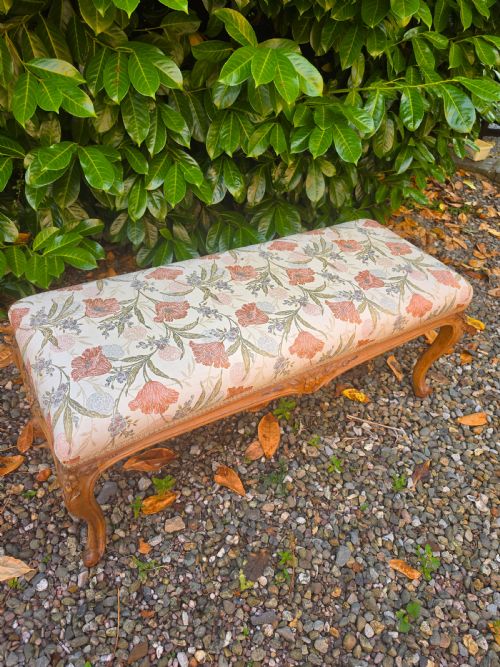
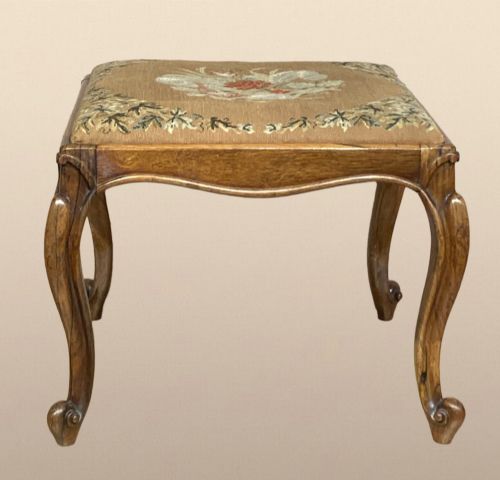
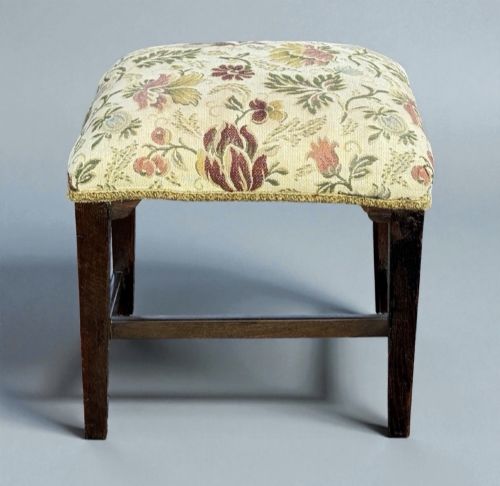
These floral upholstered footstool examples combine period woodwork with decorative textile seats, offering a practical seat or footrest for the fireside.
Floral Upholstered Footstool
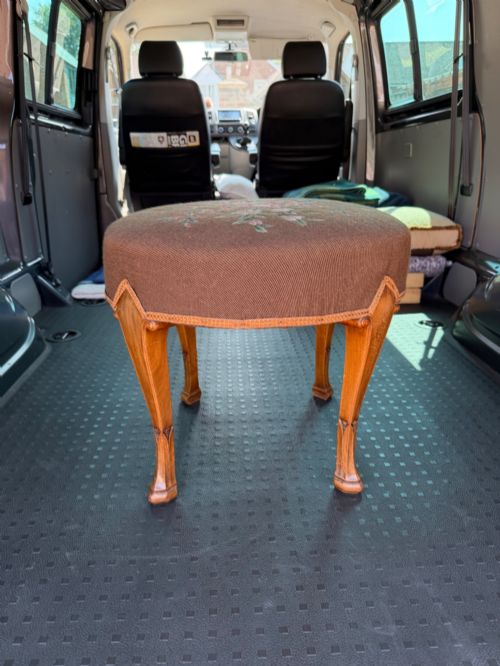
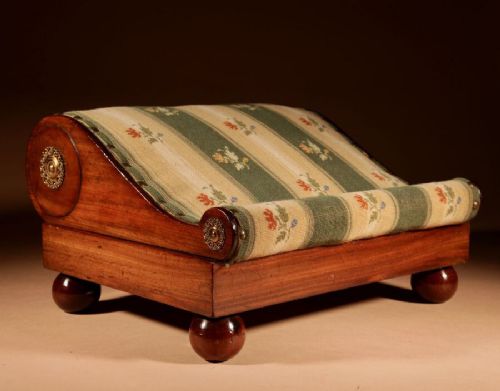
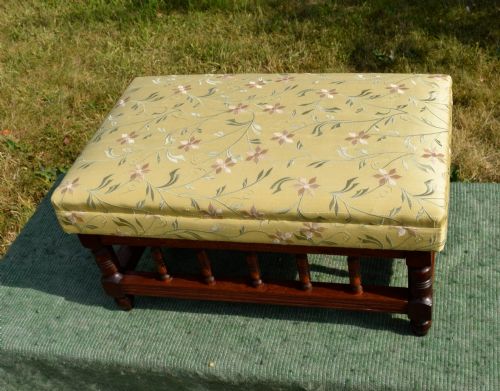
A floral upholstered footstool takes many forms across the nineteenth and early twentieth centuries, appearing as small fireside stools, dressing table seats, and larger ottomans. Walnut and mahogany frame woods predominate, often shaped in Victorian or Edwardian styles alongside earlier Georgian and Queen Anne revivals.
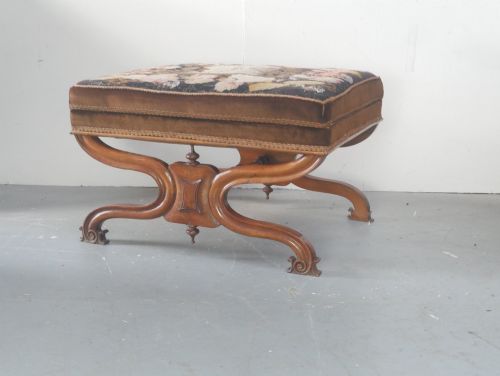
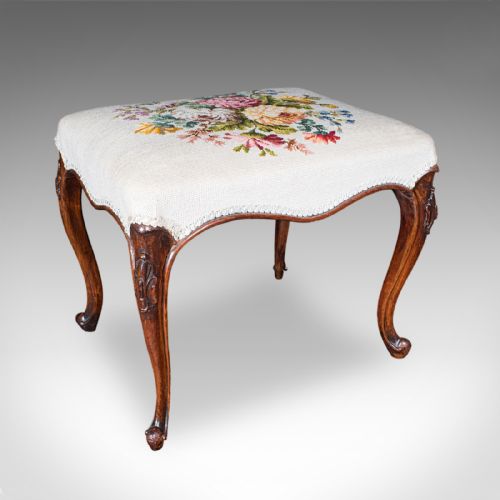
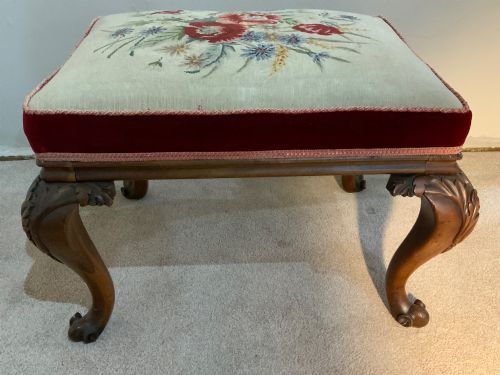
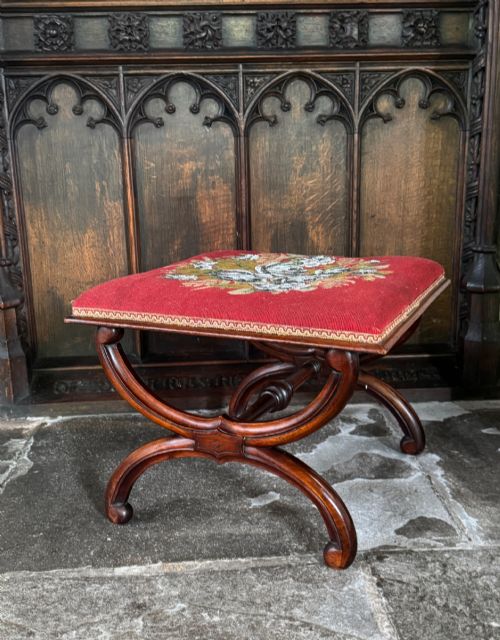
Buyers most frequently meet Victorian examples in walnut or rosewood, frequently featuring carved cabriole legs or X frames. These pieces range from compact needlework footstools to larger upholstered ottomans designed for domestic comfort.
Materials and construction
Frames rely on hardwoods such as walnut, mahogany, rosewood, and pitch pine, shaped with turned, twisted, or cabriole legs. Joinery methods reflect the specific period, from mid-Victorian framing to Edwardian carpentry.
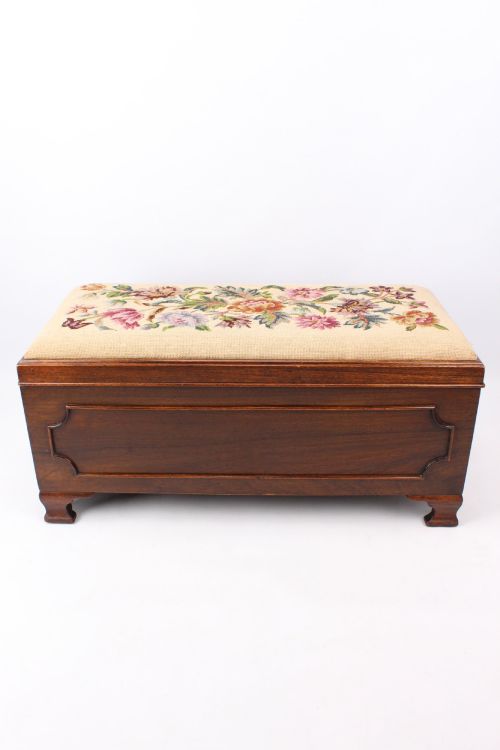
Upholstery combines textile covers like tapestry, wool, velvet, and needlepoint with traditional stuffing techniques. Needlework and beadwork seats provide the decorative floral surface that defines the category.
Listings span multiple decades from the Georgian era through the Edwardian period, uniting walnut and mahogany frames with needlework textiles.
Distinctions in craftsmanship
The standard of timber carving and the crispness of frame details separate finer pieces from simpler utilitarian seats. Substantial walnut and rosewood structures with balanced proportions command greater attention than plain pine frameworks.
The execution and survival of the needlework or tapestry top dictate visual appeal. Hand-stitched needlepoint, beadwork, and period textile covers that retain their colour and tight tension elevate the overall merit of the stool.
Howard and Sons
The Floral Upholstered Footstool Glossary
- Cabriole leg
- A furniture leg that curves outward and then tapers inward, common on Victorian and Queen Anne style stools.
- Needlepoint
- A type of canvas work embroidery used for the floral top of a footstool.
- Ottoman
- A low upholstered seat or footstool, sometimes built with internal storage.
- X frame
- A structural furniture base formed by intersecting diagonal members resembling the letter X.
- Tapisserie
- A textile used for upholstery, often woven with floral or pictorial designs.
Floral Upholstered Footstool: Frequently Asked Questions
How do I date a footstool?
Dating relies on timber choice, leg form, and upholstery style. Victorian pieces often use walnut with carved cabriole supports.
Later Edwardian and 1920s examples show different framing methods and distinct textile patterns while retaining traditional forms.
Were these stools used at the fireside?
Many smaller footstools served specifically beside the hearth to keep feet away from cold drafts. Their compact dimensions suited placement near the fireplace.
Larger ottomans and dressing table stools fulfilled different domestic functions across reception rooms and bedrooms.
What wood was most commonly used?
Mahogany and walnut appear most frequently in the framework of these nineteenth-century pieces. Rosewood also occurs in finer Victorian examples.
Alternative timbers like pitch pine appear in specific regional or Edwardian pieces.
Can I use these stools daily?
Period footstools are sturdy enough for regular use as footrests or occasional seats. Solid hardwood frames provide lasting structural stability.
Care should be taken to protect antique needlework and tapestry covers from excessive wear.