




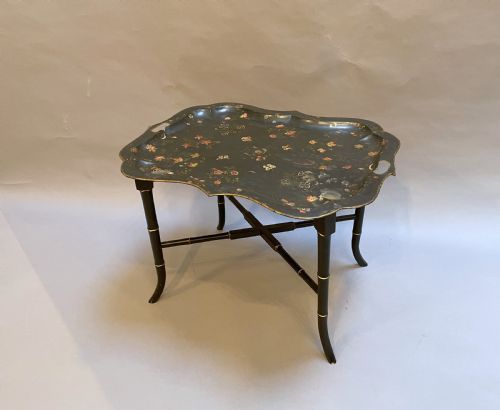


Floral Tray Table
These floral tray tables are practical side and coffee tables combining portable serving surfaces with decorative floral designs from various historical periods.
Floral Tray Table
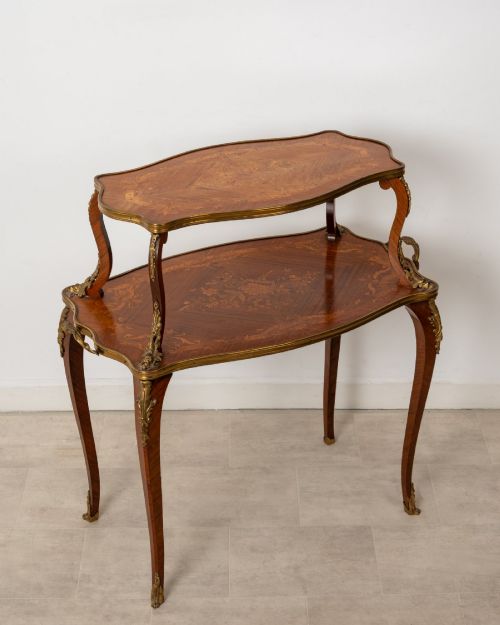
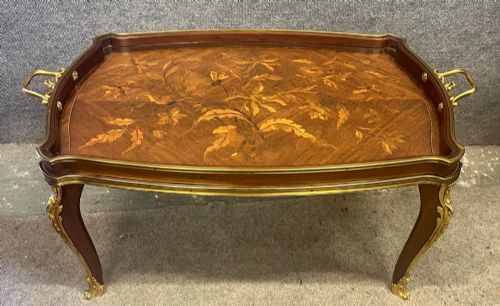
A floral tray table is a versatile surface configuration that typically pairs a removable or fixed serving tray with a supporting stand, appearing across side tables, coffee tables, and occasional tables. Buyers searching for a floral tray table encounter pieces spanning multiple eras, including the eighteenth century, nineteenth century, Victorian, Edwardian, and Art Deco periods.
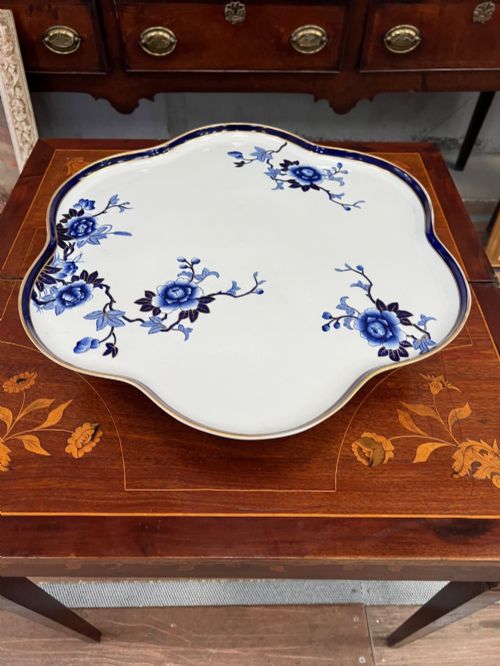
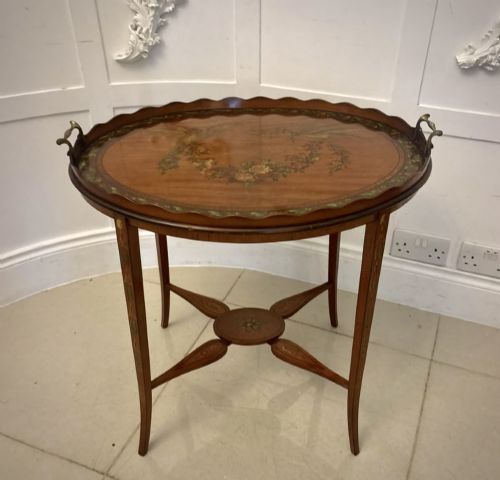
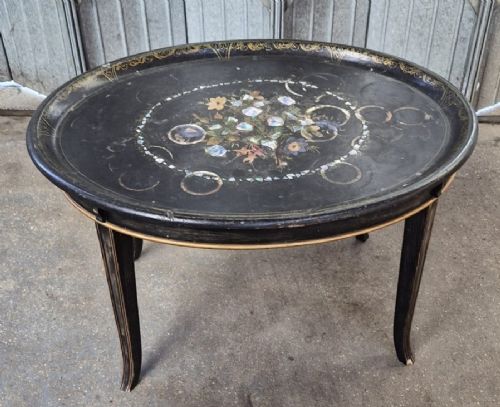
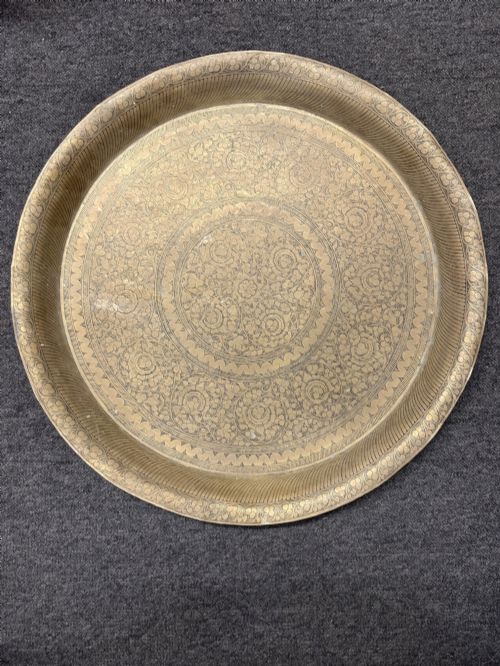
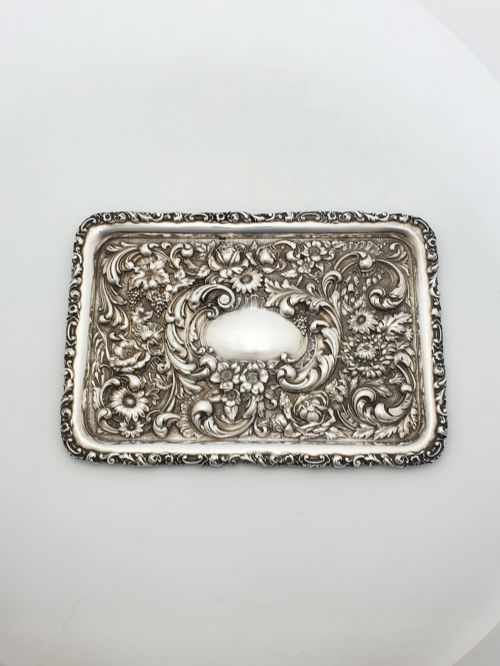
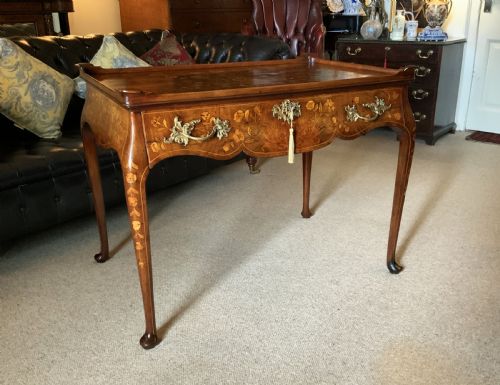
The decorative schemes on these pieces lean heavily into floral motifs, manifested through hand-engraved brass, marquetry inlays of various woods, polychrome paintwork, toleware, and repoussé silver. Forms range from simple serving trays mounted on later stands to integrated two-tier étagères and Dutch marquetry silver-top tables featuring flowers and birds.
Origins vary widely across the selection, encompassing English, French Louis XV style, Dutch, Italian, Indian, and Venetian traditions. These tables serve equally well as functional drinks butlers, serving surfaces, or decorative display pieces within a room.
Materials and construction methods
Construction relies upon traditional cabinetmaking and metalworking techniques, utilising woods such as mahogany, walnut, kingwood, and ebonised bases alongside papier-mâché and brass. Marquetry examples employ precise wood inlays to build intricate floral patterns, while metal pieces utilise hand engraving and repoussé work to achieve raised surface decoration.
Many items combine distinct elements, pairing older serving trays with later stands or incorporating mirror plateaus and polychrome paint. Ormolu mounts, gilt details, and etched glass further enhance the decorative vocabulary of these tables.
Floral Tray Table Retail Price Guide 2026
Typical asking prices for floral tray table among the pieces listed under this phrase on Sellingantiques today, from the lower quarter to the upper quarter. They describe what is for sale here now, not the wider market.
Periods represented range from the eighteenth century and the Victorian era through Edwardian designs to 1930s Venetian pieces.
Distinctions in quality
Quality in these tables rests upon the precision of the floral decoration and the integrity of the materials used, whether in the crispness of brass hand engraving or the fine detail of wood marquetry. Superior pieces exhibit harmonious proportions between the top surface and the supporting stand, alongside skilled joinery or metalwork.
The relationship between the tray and its stand also influences the overall standard, distinguishing purpose-built integrated tables from later marriages of older trays to replacement bases. The depth and execution of the floral motifs, from polychrome paint to repoussé silver, dictate the visual impact of the piece.
The Floral Tray Table Glossary
- Marquetry
- Decorative veneer work applied to furniture surfaces to form floral and pictorial designs using various coloured woods. This technique requires meticulous cutting and fitting of wood pieces.
- Toleware
- Enamelled or japanned metalware, typically tin or steel, painted with floral designs. It provides a durable and decorative surface suitable for serving trays.
- Repoussé
- Metalworking technique where a design is hammered into relief from the reverse side. This creates raised floral patterns on silver and brass trays.
- Étagère
- A piece of furniture consisting of a set of open shelves or tiers for displaying small objects. These often feature marquetry and multiple levels.
- Papier-mâché
- A composite material made from paper pulp or reinforced paper sheets, moulded and varnished. It forms a lightweight yet sturdy base for painted floral trays.
Floral Tray Table: Frequently Asked Questions
What is a floral tray table?
A floral tray table is a versatile piece of furniture that combines a decorative serving tray featuring floral motifs with a supporting stand or table base. These function as portable serving surfaces or permanent side and coffee tables.
They appear in various styles from the eighteenth century onwards, utilising materials like wood marquetry, brass, papier-mâché, and painted finishes to showcase floral designs.
How were these tables used?
Historically, these items served for entertaining, carrying drinks, and presenting food, functioning as portable serving trays that could rest upon folding or fixed stands. Many were used as drinks butlers or occasional serving pieces in reception rooms.
Today, they continue to function as practical coffee tables, side tables, or decorative display surfaces within domestic interiors.
Are the trays removable?
Some floral tray tables feature removable trays that lift off their supporting stands for serving, while others are integrated permanently into a multi-tiered structure or fixed frame. The construction depends on whether the piece was originally built as a single unit or assembled from a separate tray and stand.
Examining the underside of the top surface reveals how the tray attaches to the legs or base.
How do I date a floral tray table?
Dating relies on identifying the prevailing style, construction methods, and materials associated with specific periods like the Victorian, Edwardian, or Louis XV revival eras. Details such as the type of wood, hand-engraving techniques, and painted finishes offer clues to the period of origin.
Some pieces combine an older tray from the eighteenth or nineteenth century with a later stand, requiring separate assessment of both components.