



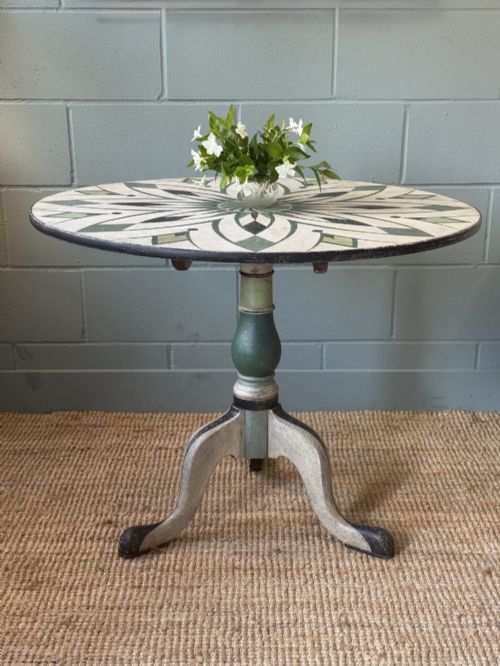


Floral Tilt Top Table
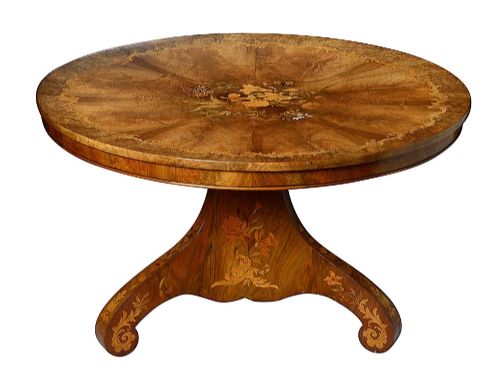
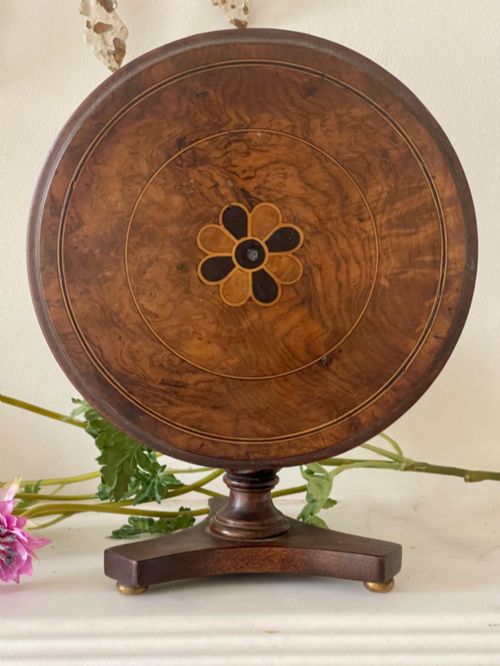
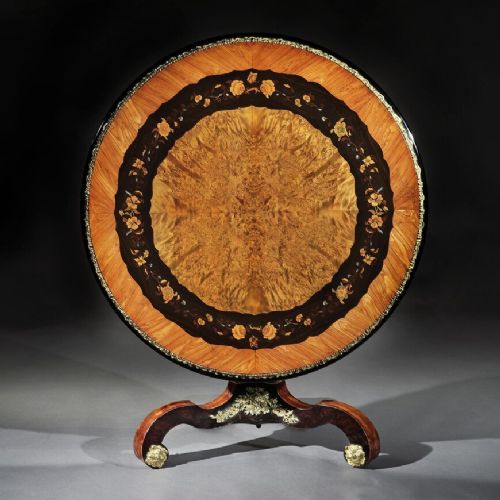
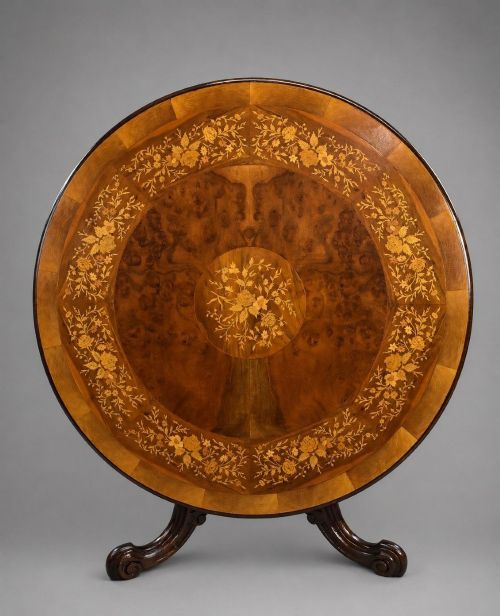
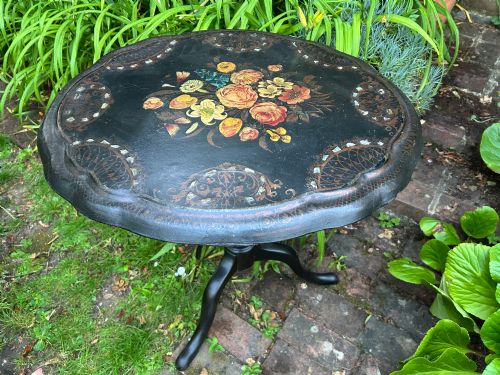
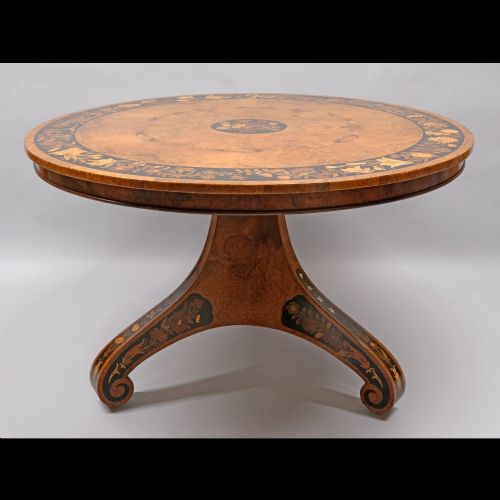
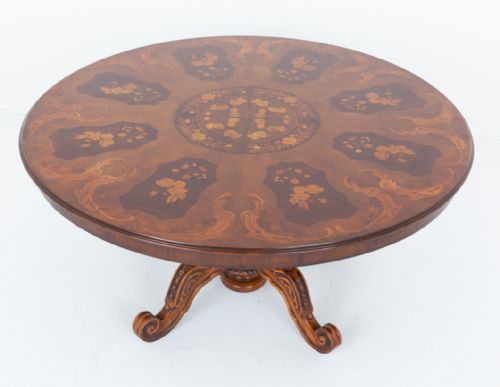
A floral tilt top table brings botanical hand-painting or intricate marquetry directly onto a pivoting wooden surface.
Floral Tilt Top Table
A floral tilt top table combines a pivoting top mechanism with decorative plant or flower motifs. You will encounter various forms spanning from the eighteenth century through the Victorian era and into the early twentieth century.
The selection here encompasses tilt top tables alongside related centre tables, wine tables, and breakfast tables. Walnut, burr walnut, mahogany, and painted wood provide the primary platforms for these floral decorations.
How they were made
Craftsmen utilised solid timbers and applied veneers such as burr walnut, kingwood, and satinwood to form the table surfaces. Marquetry techniques involved cutting contrasting woods to create detailed floral patterns embedded directly into the timber.
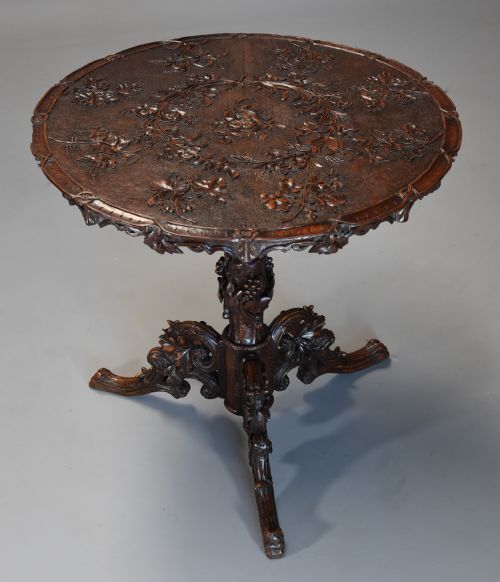
Alternatively, artisans applied paint, lacquer, and japanning directly onto wood, papier-mâché, or linden wood supports. Carved elements in woods like walnut and linden added sculptural depth to the frames and borders.
Floral Tilt Top Table Retail Price Guide 2026
Typical asking prices for floral tilt top table among the pieces listed under this phrase on Sellingantiques today, from the lower quarter to the upper quarter. They describe what is for sale here now, not the wider market.
Some nineteenth-century tables fold away vertically, transforming a sprawling floral bouquet into polite wall art.
What varies in quality
The precision and intricacy of the marquetry inlay dictate much of the visual standard, separating basic floral outlines from elaborate, multi-wood botanical scenes. Hand-painted surfaces also differ significantly in execution, ranging from simple later additions to detailed period artistry.
Selection of base timbers plays a major role, with choice burr walnut, rosewood, and kingwood elevating the stature of the piece. The smoothness and stability of the tilting mechanism further distinguish standard production pieces from exhibition quality works.
Edward Holmes Baldock·John Kendal
The Floral Tilt Top Table Glossary
- Tilt top
- A hinged table surface that pivots vertically for storage against a wall when not in use.
- Marquetry
- The art of applying decorative pieces of veneer to a structure to form intricate patterns and pictures.
- Papier-mâché
- A composite material made from paper pulp mixed with glue and oil, pressed and dried into sturdy table tops.
- Japanning
- A European imitation of East Asian lacquerwork, utilising dark varnishes and painted designs.
- Sycamore
- A dense hardwood often used as a light-coloured canvas for detailed marquetry inlay work.
Floral Tilt Top Table: Frequently Asked Questions
How do I identify a Victorian table?
Victorian tables frequently utilise dense timbers like burr walnut, rosewood, and mahogany combined with elaborate marquetry inlays. Many examples from this period lean towards dark, richly grained woods decorated with floral motifs.
Proportions tend to be sturdy, supported by pillar and tripod bases or carved pedestals that reflect the eclectic revival styles popular during the nineteenth century.
Where were painted tables used?
Painted tables served as occasional, centre, or breakfast furniture in formal drawing rooms and sitting spaces. Their decorative surfaces were designed to display ornaments or hold tea services during gatherings.
Because the painted or japanned designs were delicate, these tables typically occupied sheltered indoor areas rather than heavy-use dining environments.
What is marquetry?
Marquetry is a technique where thin veneers of different coloured woods are cut and assembled into pictorial designs. Craftsmen pieced together floral motifs, leaves, and scrolls before pressing the finished sheet onto the table base.
This method allowed makers to create complex botanical scenes using the natural tones and grains of various timber species.