



Floral Tapestry Bench
These floral tapestry bench examples offer needlework textiles and traditional timber frames, bringing historic pattern and practical seating into domestic spaces.
Floral Tapestry Bench
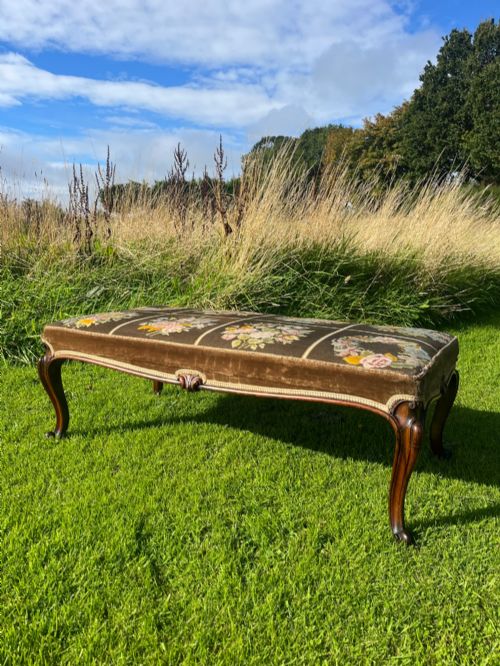
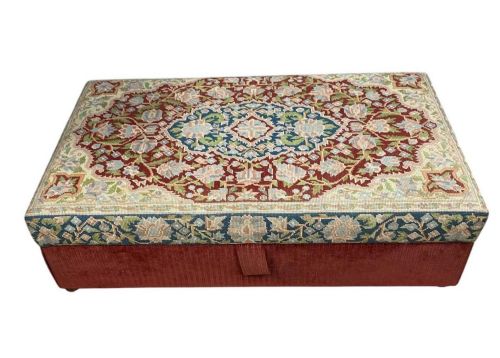
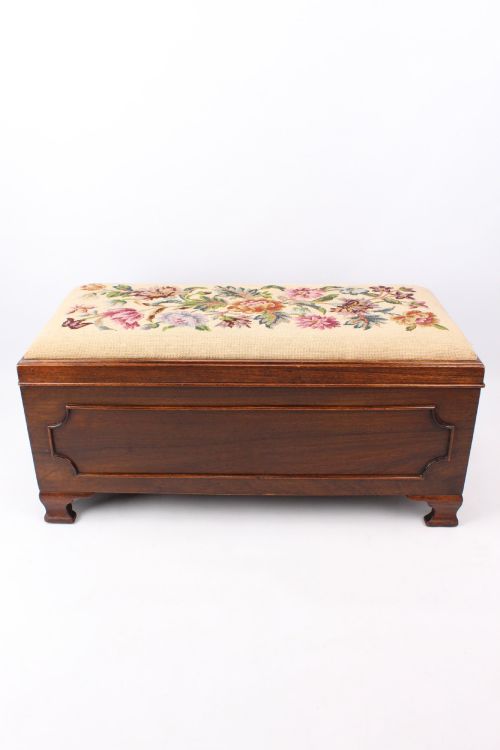
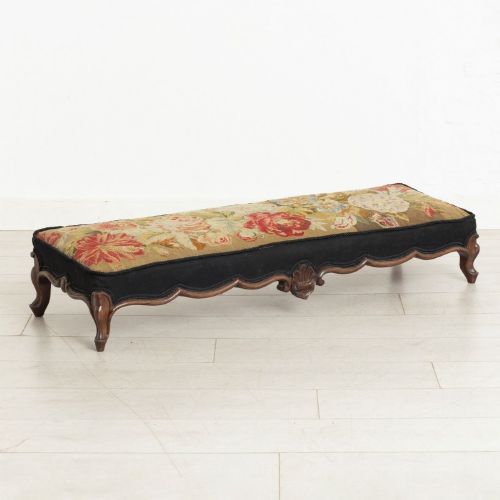
A floral tapestry bench combines a solid wood frame with a textile seat worked in wool and other threads. These pieces appear in forms ranging from small dressing stools to long footstools, ottomans, and daybeds.
The selections span the nineteenth and early twentieth centuries, alongside earlier revivals. Pieces take inspiration from Victorian, Queen Anne, French Provincial, and Georgian styles.
Buyers commonly encounter walnut and mahogany frames supporting needlepoint or woven covers. Many examples feature carved details and traditional leg forms such as cabriole supports.
Materials and construction methods
Makers shaped frames from dense timbers including mahogany and walnut, frequently applying paint or polish to finish the wood. These structural elements support upholstered seats built using traditional textile layers.
Seat covers rely on wool and textile needlework depicting botanical motifs. Brass elements occasionally appear as decorative mounts or hardware on box ottomans and daybeds.
Floral Tapestry Bench Retail Price Guide 2026
Typical asking prices for floral tapestry bench among the pieces listed under this phrase on Sellingantiques today, from the lower quarter to the upper quarter. They describe what is for sale here now, not the wider market.
Listings feature walnut and mahogany timbers paired with wool needlework across Victorian and early twentieth-century forms.
Assessing quality and craftsmanship
Higher quality pieces demonstrate tight joinery and substantial timber frames that remain rigid over time. The density of the wool stitching in the needlework and the clarity of the botanical design separate finer examples from simpler production.
Original upholstery fabric and untouched frames hold distinct interest for collectors who value generational survival. Proportion and carving definition in the wooden legs further distinguish superior workshop output.
Whytock and Reid
The Floral Tapestry Bench Glossary
- Cabriole leg
- A furniture leg that curves outward at the knee and inward at the ankle, ending in a pad or foot. This form derives from classical furniture design and appears frequently on period stools.
- Needlepoint
- A type of canvas work embroidery executed with a yarn in a counted thread stitch. It forms the durable pictorial surface seen on many historic seat tops.
- Ottoman
- A low upholstered seat or bench without a back or arms, sometimes featuring internal storage. Versions in the current selection include box designs and daybed formats.
- Centre stool
- A freestanding piece designed to be viewed from all sides within a room. These larger stools often stand on substantial wooden frames with decorative upholstery.
Floral Tapestry Bench: Frequently Asked Questions
How do I date a tapestry stool?
Dating relies upon timber choice, joinery techniques, and stylistic references to periods like the Victorian era or Queen Anne revival. Secondary woods and framing methods provide further clues to the decade of manufacture.
Textile analysis of the wool and canvas supports the physical assessment of the wooden structure. Comparing leg carvings and upholstery styles against documented examples helps narrow the timeline.
Can these benches be used daily?
Most sturdy wood and wool examples handle normal sitting and footrest duties without issue. Frames built from solid mahogany or walnut offer lasting structural integrity.
Careful placement away from direct sunlight preserves the botanical wool colours in the tapestry top. Gentle textile cleaning maintains the fabric surface over years of domestic use.
What is the difference between a stool and an ottoman?
Stools generally provide compact raised seating or foot support on exposed wooden legs. Ottomans often present a larger surface area and occasionally incorporate internal box storage beneath the seat.
Both forms utilise upholstered textile tops, but ottomans frequently function as daybeds or extended resting platforms. Stools tend to follow traditional chair aesthetics scaled down for auxiliary seating.
How should I clean antique needlework?
Light surface dust removes easily with a soft brush or low suction vacuum applied through a mesh screen. This protects fragile wool threads from pulling or abrasion during maintenance.
Professional textile conservators handle deeper cleaning requirements to prevent shrinkage or dye transfer in historic tapestries. Avoiding moisture prevents water rings on older wooden frames.