






Floral Suzani Textile
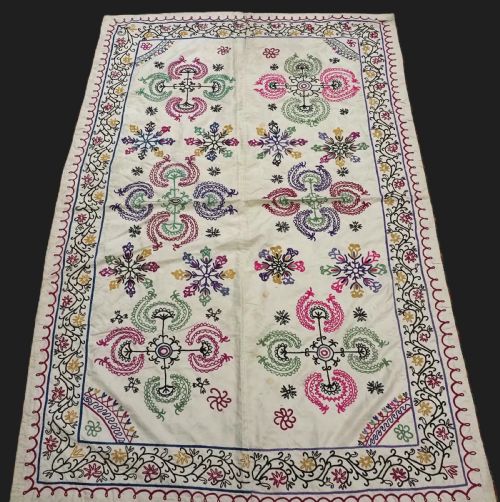
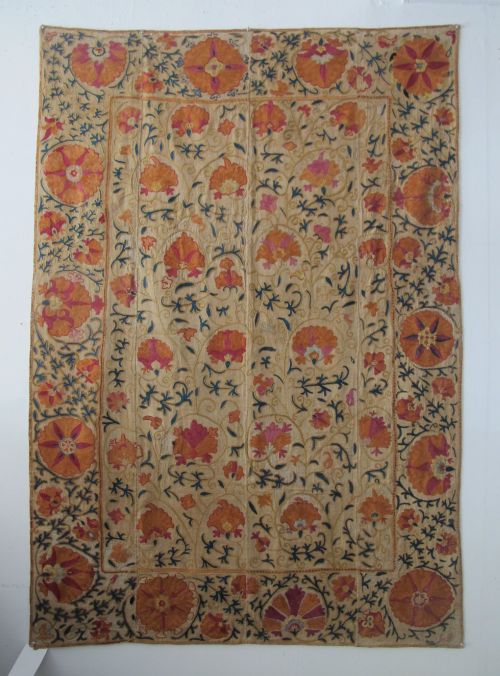
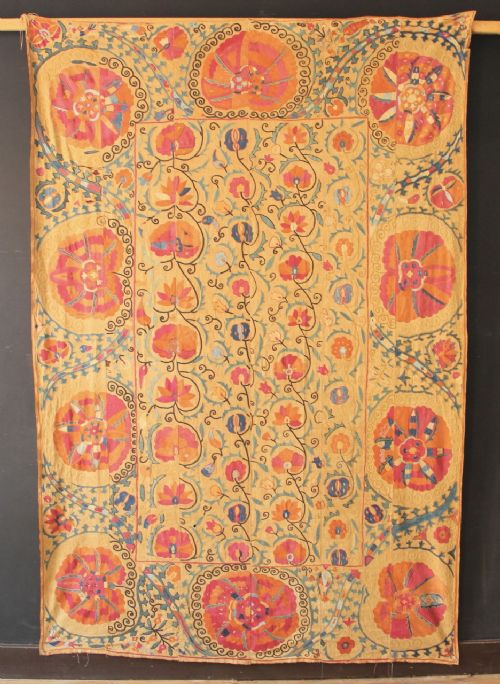
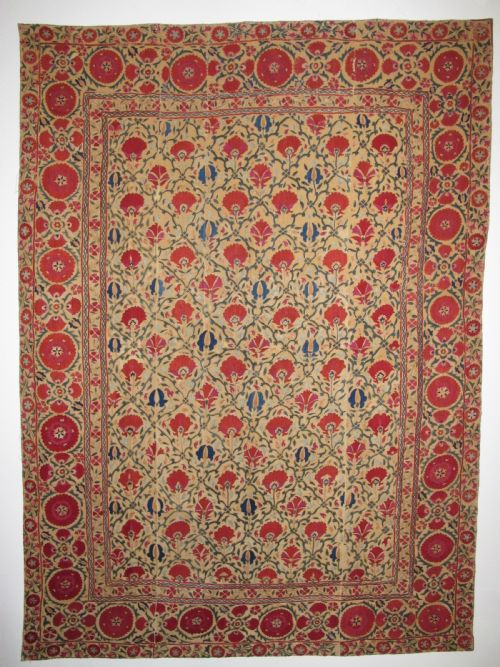
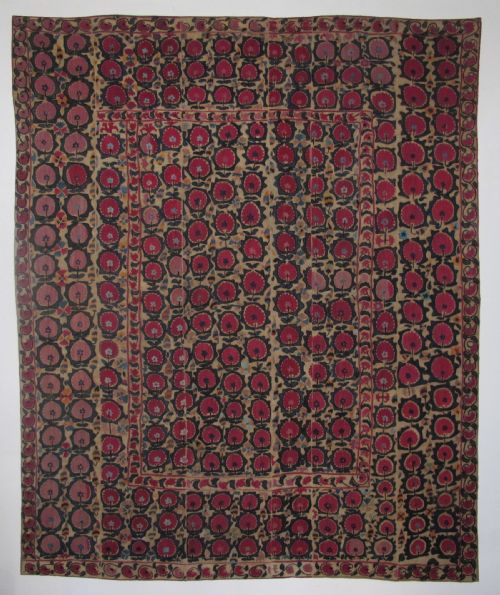
A floral suzani textile is an embroidered panel from Central Asia, carrying silk thread on cotton or silk grounds to bring rich floral motifs into a room.
Floral Suzani Textile
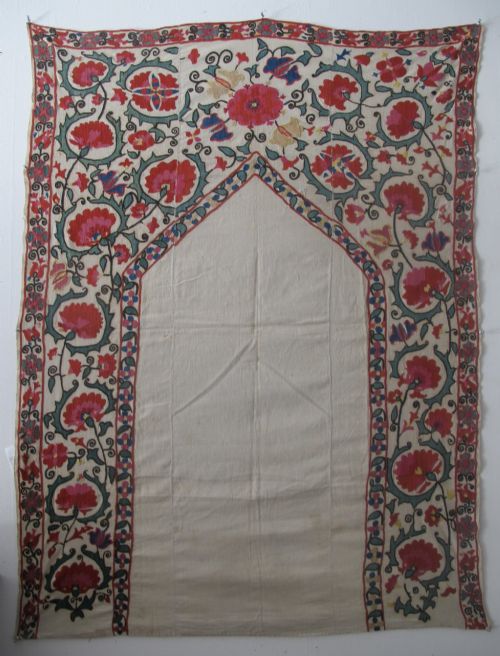
A floral suzani textile is a traditional embroidered hanging or cover originating from Central Asian regions such as Uzbekistan, Bokhara, and Samarkand. These pieces showcase intricate floral motifs, medallions, and architectural or prayer formats worked by hand across various dimensions.
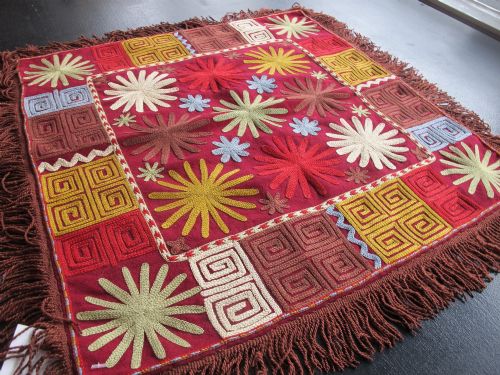
The pieces encountered most frequently on this page date from the nineteenth and early twentieth centuries, particularly around nineteen hundred and eighteen fifty. They include regional variants such as Lakai embroidery and smaller nim suzani panels alongside larger wall hangings.
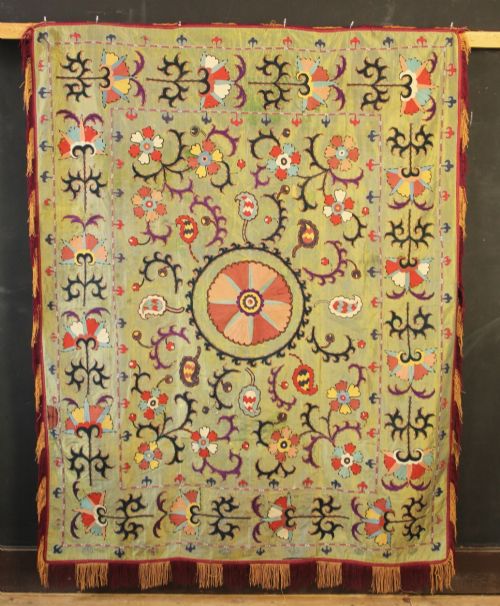
Makers utilised grounds of cotton, silk, and occasionally velvet, applying dense silk thread embroidery to build up the botanical patterns. Each panel reflects the folk art and traditional designs of Central Asian tribal makers from towns like Shakhrisabz and Uratube.
How they were made
Artisans worked with silk thread embroidery applied to woven foundations of cotton or red and yellow cotton grounds, as well as pure silk and velvet. The stitches form dense botanical layouts, floral sprays, and large central medallions across the fabric.
Regional workshops in places like Bokhara and Samarkand relied on distinct needlework traditions, sometimes mounting the silk thread on contrasting coloured cloths. Smaller nim suzani panels and larger covers demonstrate how materials varied from fine silk on silk to silk embroidered onto sturdy cotton.
Floral Suzani Textile Retail Price Guide 2026
Typical asking prices for floral suzani textile among the pieces listed under this phrase on Sellingantiques today, from the lower quarter to the upper quarter. They describe what is for sale here now, not the wider market.
Some nineteenth-century makers stitched hidden geometric charms beneath dense floral petals to ward off the evil eye.
What varies in quality
Quality rests in the density and precision of the silk thread embroidery and the clarity of the botanical design. Finer panels show meticulous needlework that maintains tight tension across the cotton or silk ground, whereas simpler examples display looser execution.
The visual strength of the piece depends on the balance of the floral motifs and the depth of the palette against the ground colour. Regional variations in composition, such as architectural elements or large medallion layouts, separate standard examples from finer works.
The Floral Suzani Textile Glossary
- Suzani
- A traditional embroidered textile from Central Asia, usually worked in silk thread on a cotton or silk foundation. These pieces served as wall hangings, covers, and decorative household furnishings.
- Lakai
- A style of embroidery associated with Lakai tribes in Central Asia, typically characterised by dynamic, smaller-scale geometric and floral compositions. These pieces often appear on nim suzani formats.
- Nim Suzani
- A smaller scale embroidered panel, roughly half the size of a standard full-length hanging. These compact textiles suit smaller wall spaces while retaining the full decorative scheme.
- Bokhara
- A historic centre of textile production in Uzbekistan known for producing finely embroidered suzanis with sophisticated floral and medallion layouts. Pieces attributed to this region often exhibit high needlework density.
- Ground
- The underlying fabric base upon which the silk embroidery is stitched. Grounds range from red or yellow cotton cloth to woven silk and velvet.
Floral Suzani Textile: Frequently Asked Questions
How were floral suzani textiles used originally?
These embroidered panels served as decorative wall hangings, marriage covers, and domestic furnishings within traditional Central Asian homes. Families displayed them to mark significant life events and to add warmth and colour to living spaces.
They were also draped over furniture or used as ceremonial wrappings before eventually entering the collector market as textile art.
How do I care for a textile?
Protect the silk embroidery and cotton ground by keeping the panel away from direct sunlight, which can fade natural dyes over time. Mount the textile professionally or support its weight evenly if hanging it on a wall.
Avoid moisture and abrasive cleaning methods, relying instead on gentle surface dusting by a specialist conservator when necessary.
How can I tell regions apart?
Regional differences appear in the scale of the motifs, the choice of ground fabric, and the specific embroidery technique employed. For instance, Lakai pieces often feature distinctive compact compositions and bold contrasts.
Towns like Bokhara and Shakhrisabz developed recognisable floral arrangements and palette preferences that distinguish their output from other Central Asian workshops.
What is a nim suzani?
A nim suzani is simply a smaller version of the standard embroidered hanging, with 'nim' indicating half or lesser size. These compact panels offer the same intricate silk thread work as larger covers.
They provide a practical option for living spaces where a full-sized textile would prove too large for the wall.