

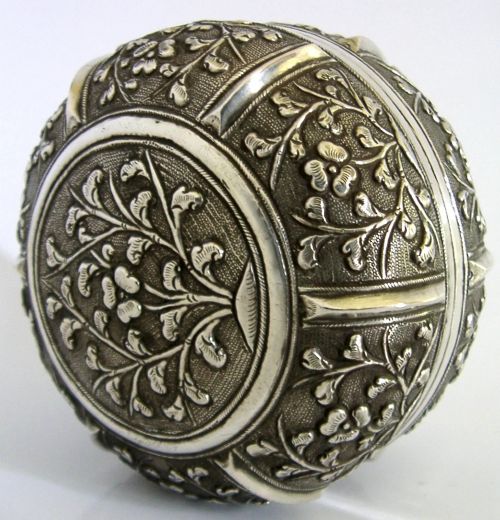


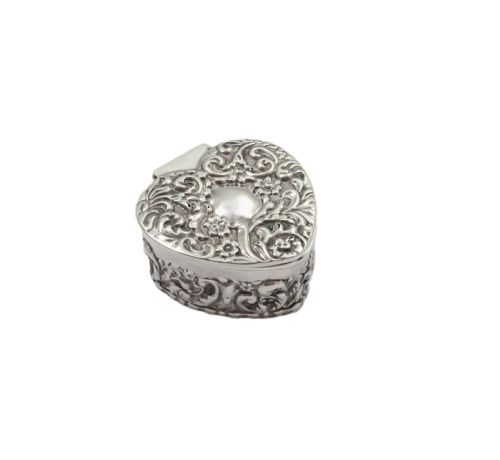


Floral Silver Box
These floral silver box examples span Victorian and Edwardian periods, bringing intricate botanical metalwork and refined storage to a dressing table.
Floral Silver Box
A floral silver box combines practical storage with detailed botanical ornamentation, appearing frequently as trinket holders, dressing table jars, and snuff boxes across the Georgian, Victorian, and Edwardian periods. Buyers searching for a floral silver box will encounter pieces ranging from small pill containers to larger cedar-lined cigarette cases and tea caddies.
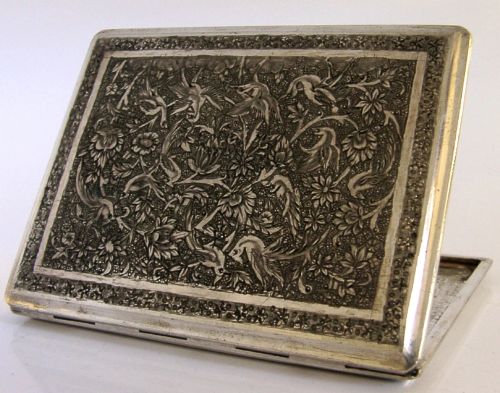
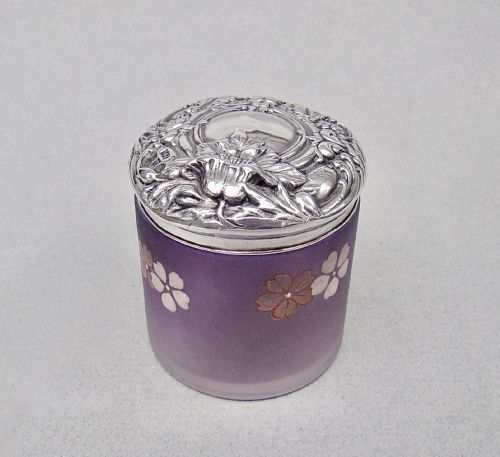
The objects on this page originate from English silversmiths, continental workshops, and international export centres, reflecting diverse regional interpretations of plant motifs. Forms stretch from heart-shaped trinket dishes to hinged rectangular boxes decorated with repousse petals and engraved scrolls.
Domestic pieces designed for vanity tables sit alongside pocket-sized containers meant for tobacco or personal items. Many examples incorporate interior linings of silk, velvet, or leatherette to protect delicate contents.
How they were made
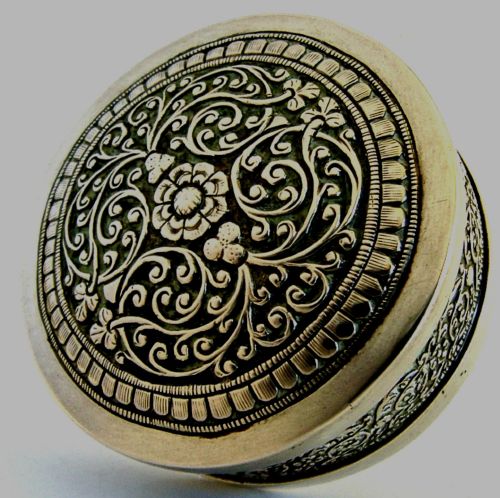
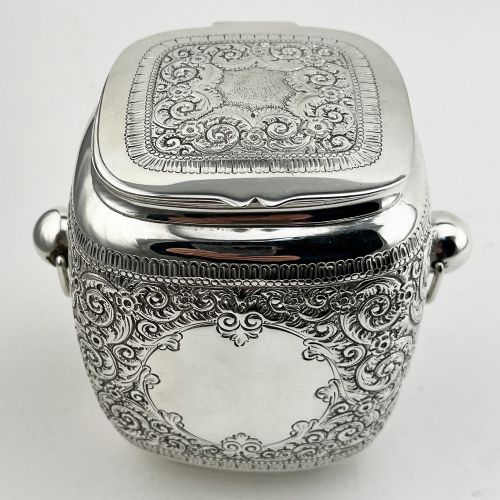
Silversmiths utilised sterling silver and silver plate, shaping metal through hammering, casting, and pressing to establish the structural body of each box. Surface decoration relied heavily on repousse work and chasing, where artisans pushed and hammered the metal from reverse and obverse sides to raise crisp floral reliefs.
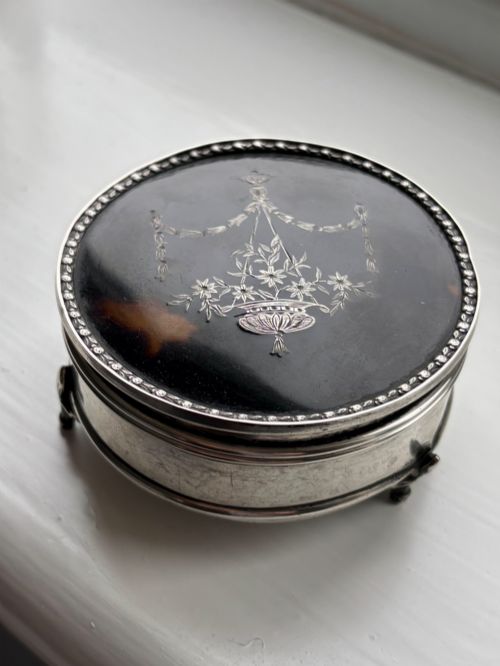
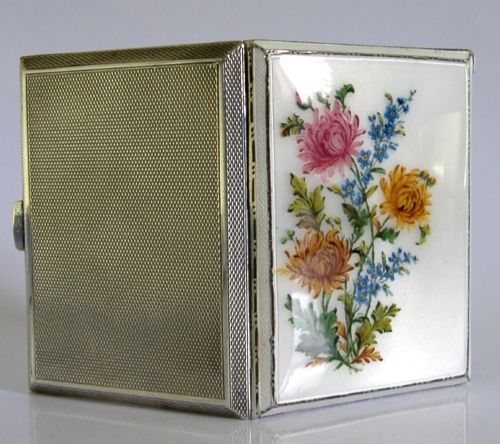
Many items integrate contrasting elements such as faux tortoiseshell, cut crystal glass jars, and guilloche enamel with hand-painted flower garlands. Hinges, clasps, and internal gilt washes require precise metalworking skills to ensure functional longevity and aesthetic cohesion.
Listings feature items from the Georgian, Victorian, and Edwardian periods, utilising sterling silver, enamel, and faux tortoiseshell.
What varies in quality
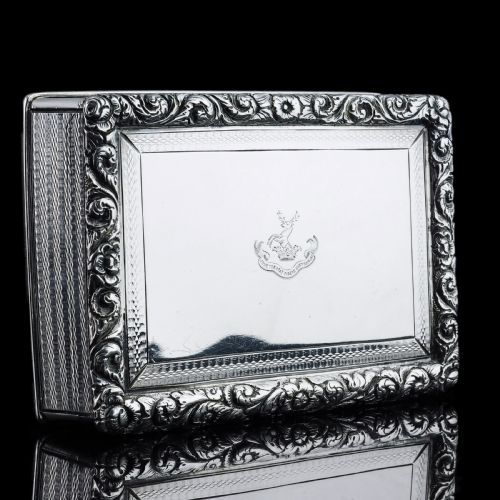
The distinction between standard containers and exceptional pieces rests on the depth and crispness of the floral ornamentation. High-grade examples display hand-chased botanical details with sharp relief work, whereas lower tiers rely on shallow machine stamping.
Maker attribution and material combinations also dictate distinction. Boxes bearing marks from prominent silversmiths command attention, particularly when paired with undamaged enamel panels, flawless faux tortoiseshell inserts, or heavy-gauge solid silver construction.
Ollivant and Botsford·Martin Hall and Co·Goldsmiths and Silversmiths Company·William Hutton·Joseph Willmore·A and J Zimmerman Ltd·Gorham·Thomas Pemberton and Robert Mitchell·Thomas Wilkes Barker·William Comyns and Sons·Nathaniel Mills·Josef Margold
The Floral Silver Box Glossary
- Repousse
- A metalworking technique where the artisan hammers the design from the reverse side to create a raised relief on the front. This method gives floral motifs a tactile, three-dimensional quality.
- Chasing
- Working the metal from the front by sinking lines and refining details after the initial repousse shaping. It sharpens the edges of leaves and petals.
- Guilloche
- An ornamental pattern engraved mechanically into a metal surface with very precise intricate geometric waves. Enamel is frequently layered over this work to create translucent depth.
- Snuff box
- A small lidded container historically used to hold powdered tobacco. These items often feature tight seals and detailed floral chased borders.
- Gilt
- A thin layer of gold applied to the interior surface of a silver box. This treatment protected the metal from corrosive residues.
Floral Silver Box: Frequently Asked Questions
What were floral silver boxes used for?
These boxes served multiple domestic functions, primarily holding jewellery, trinkets, pins, or cosmetics on Victorian and Edwardian dressing tables. Smaller variants were carried in pockets to store snuff or pills.
Interior linings of velvet, silk, or leather protected fragile personal possessions from scratching against the metal walls.
How can I tell the period of a box?
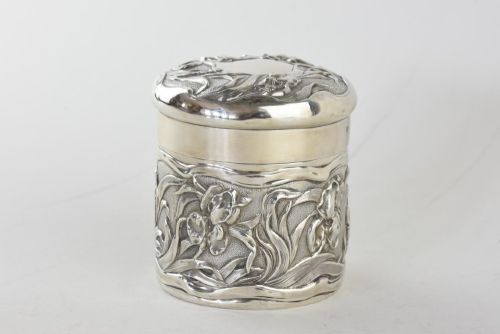
Dating relies on hallmark stamps, stylistic cues, and manufacturing techniques found on the individual piece. Georgian examples often feature heavy hand-chased borders, while Edwardian items frequently showcase lighter Art Nouveau floral scrolls or guilloche enamel.
Examining the hinges, construction seams, and maker marks provides precise chronological context.
Are these boxes made of solid silver?
Listings include both solid sterling silver and silver-plated varieties, alongside items combining silver lids with glass, ceramic, or tortoiseshell bodies. Hallmarks stamped directly into the metal typically verify the purity standard and origin.
Silver-plated pieces feature a base metal core coated with a thin layer of silver.
How do I care for silver and enamel boxes?
Preserving these items requires gentle cleaning with a soft microfibre cloth to avoid scratching delicate repousse details or vulnerable enamel surfaces. Standard metal polishes should be used sparingly and kept away from inserted materials like silk, velvet, or faux tortoiseshell.
Storing boxes in stable, dry environments prevents tarnish accumulation and protects internal linings.