




Floral Repousse Frame
These floral repousse frame examples bring tactile metalwork and organic motifs into any room, offering a genuine piece of period craftsmanship for your photographs or mirrors.
Floral Repousse Frame
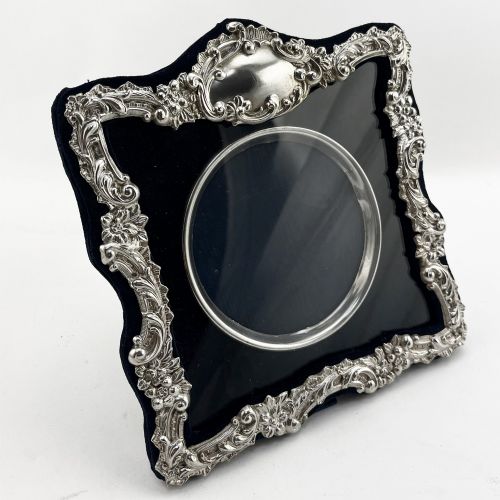
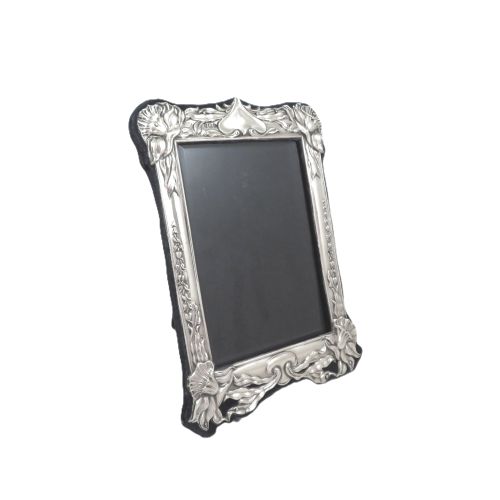
When you search for floral repousse frame, you are looking at photo frames, picture frames, and wall mirrors shaped by hammering metal from the reverse to create raised botanical patterns on the front. These decorative borders surround glass and support photographs or mirror plates.
You are most likely to meet Edwardian and Victorian examples on this page, alongside pieces from 1900 and mid-century Peruvian work. They appear in sterling silver, silver, copper, and brass.
The forms range from small tabletop photo frames backed with wood, velvet, or oak to larger wall mirrors with cushion frames. Their styles draw on Art Nouveau, Arts and Crafts, and rococo or neo-classical revivals.
How they were made
Makers shaped these frames by hammering metal sheets from behind, a technique known as repousse, to push out floral garlands and stylised botanical decoration in relief. Working with malleable metals like sterling silver, silver, copper, and brass allowed artisans to achieve deep, tactile textures.
The front metalwork was mounted onto sturdy structural backs made from hardwood, oak, or velvet to support the glass and the photograph or mirror plate safely. This combination of beaten metal and solid backing ensured the frames could stand on a table or hang securely on a wall.
Floral Repousse Frame Retail Price Guide 2026
Typical asking prices for floral repousse frame among the pieces listed under this phrase on Sellingantiques today, from the lower quarter to the upper quarter. They describe what is for sale here now, not the wider market.
Listings feature brass, copper, and sterling silver worked into floral repousse frames spanning Victorian, Edwardian, and mid-century periods.
What varies in quality
The distinction between ordinary and exceptional work lies in the depth and clarity of the hammered botanical relief. Crisp, deeply punched floral details show a higher degree of hand skill than shallow, flattened stamping.
Material choice and structural integrity also separate tiers of quality, with substantial sterling silver and solid hardwood or oak backs outlasting thin plated metals and flimsy backing boards. The integration of the glass, the frame, and the support easel or hanging loop determines how well the piece survives daily use.
The Floral Repousse Frame Glossary
- Repousse
- A metalworking technique where the artisan hammers a sheet of metal from the reverse side to form a raised design in relief on the front. This process creates the characteristic three-dimensional floral borders found on these frames.
- Sterling silver
- An alloy consisting of 92.5 percent silver and 7.5 percent other metals, usually copper, chosen for durability and lustre. Many of the finest photo frames on this page utilise this specific standard.
- Art Nouveau
- A style popular around 1900 characterised by flowing, organic lines and stylised natural forms. It heavily influenced the botanical decoration seen on many of these copper and silver frames.
- Arts and Crafts
- A design movement valuing handcraftsmanship and simple, honest materials over mass production. Pieces from this tradition often feature hammered copper surfaces and straightforward construction.
Floral Repousse Frame: Frequently Asked Questions
How do I clean my floral repousse frame?
Use a soft cloth to gently dust the raised metal surface without applying harsh pressure to the embossed details. Avoid abrasive dips or heavy polishes that can wear away the definition of the repousse work.
Keep silver cleaning creams away from any velvet or wooden backing materials attached to the frame. A cautious approach preserves both the metal finish and the integrity of the original materials.
What is the difference between silver and sterling silver?
Sterling silver contains a specific high proportion of pure silver alloyed for strength, whereas general silver items may use different purities or plating methods. British and imported pieces often carry hallmarks to indicate this standard.
Checking the metal characteristics helps you understand the composition of your frame. Both varieties provide the durable canvas needed for detailed repousse hammering.
How do I date an Edwardian frame?
Edwardian pieces date from the early twentieth century and frequently exhibit elegant floral embossing, neoclassical garlands, or flowing rococo revival curves. Examining any accompanying hallmarks or maker stamps can provide a precise year of manufacture.
The choice of materials, such as sterling silver paired with oak or velvet backs, also points towards Edwardian manufacturing standards. Comparing the stylistic motifs with dated examples helps confirm the era.