

Floral Pedestal Table
A floral pedestal table brings surface pattern and practical height to a room, using inlaid timbers or painted motifs to anchor a seating arrangement.
Floral Pedestal Table
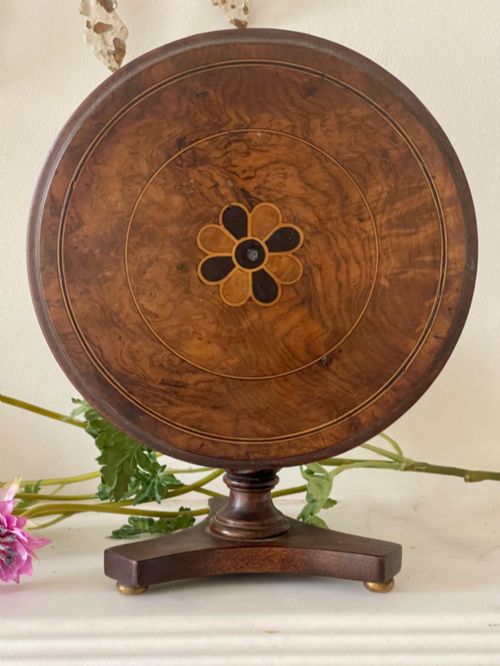
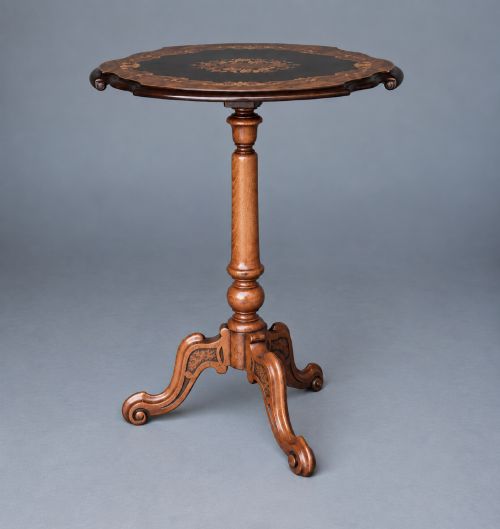
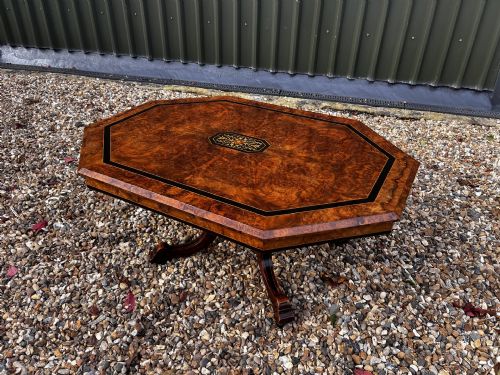
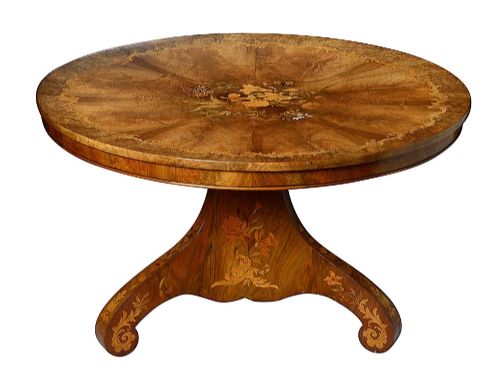
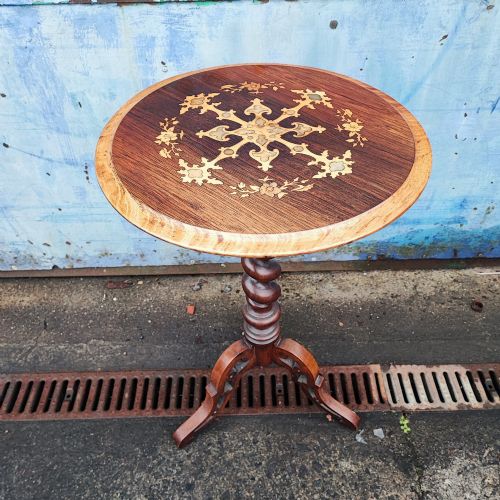
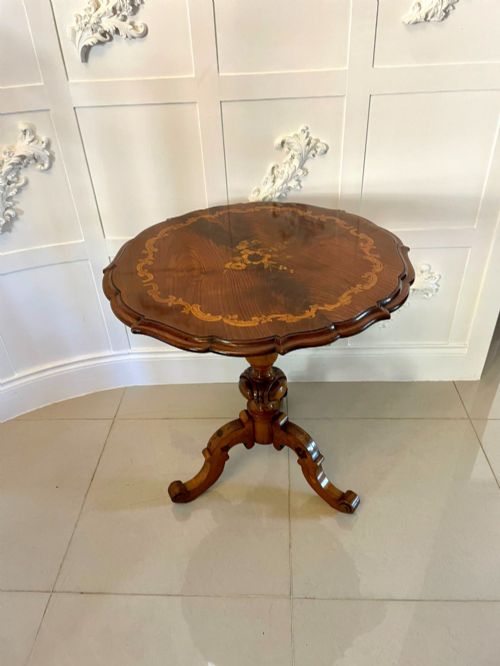
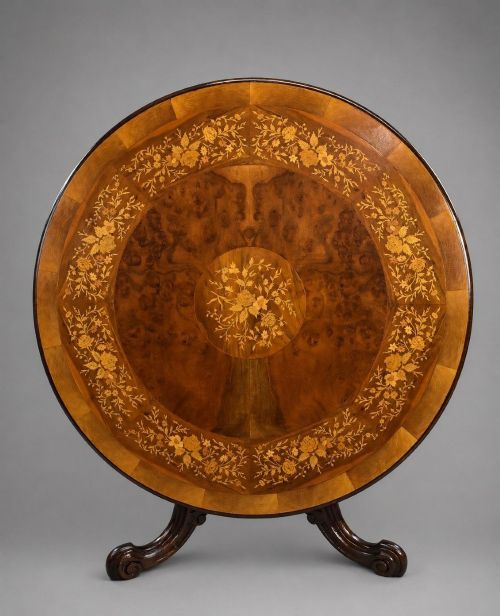
A floral pedestal table centres around a single central column or tripod base, supporting a circular, oval or octagonal top decorated with botanical designs. When searching for a floral pedestal table, buyers encounter pieces primarily from the nineteenth century, including Victorian walnut and burr walnut examples.
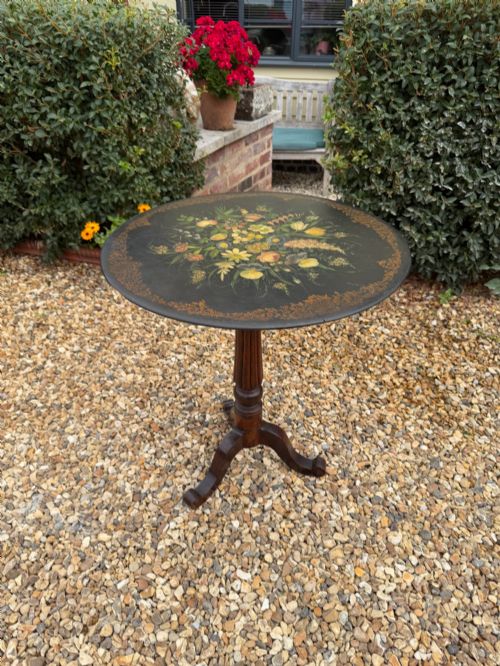
The decorative surface typically employs marquetry inlay using various woods to form floral and leaf patterns, though some pieces feature later painted floral decoration or carved linden wood. These tables serve as occasional tables, wine tables, lamp tables, or plant stands within domestic interiors.
Origins span English Victorian workshops, continental European makers producing Dutch marquetry or Black Forest carvings, and Chinese export pieces. The scale remains compact, designed to fit beside armchairs or in reception rooms as display surfaces.
How they were made
Cabinet makers utilised solid timbers such as mahogany, walnut, rosewood, and oak for the structural frames, columns, and tripod legs. Veneers of burr walnut, kingwood, and olive wood provided smooth planes for decorative treatment.
Marquetry inlay formed the floral motifs, piecing together contrasting woods, bone, and brass into the surface veneer. Alternatively, carvers shaped linden wood into deep relief, or painters applied floral designs directly onto wooden or tilt-top surfaces.
Floral Pedestal Table Retail Price Guide 2026
Typical asking prices for floral pedestal table among the pieces listed under this phrase on Sellingantiques today, from the lower quarter to the upper quarter. They describe what is for sale here now, not the wider market.
Some tables tilt their floral faces to the wall like polite guests resting between dances.
What varies in quality
The precision and complexity of the marquetry inlay determine the baseline quality of the decorative surface, separating simple geometric leaf borders from elaborate, multi-timber floral bouquets. Crispness in the carving of the central pedestal column and the stability of the tripod base also distinguish finer workshops.
Choice of primary and secondary woods shifts the character of the piece, with burr walnut and rosewood commanding attention over standard mahogany or painted pine. The integration of materials like bone inlay or brass stringing indicates higher execution standards.
Holmes Baldock
The Floral Pedestal Table Glossary
- Marquetry inlay
- Decorative woodwork where small pieces of veneer are fitted into a background panel to create pictures or floral patterns. This technique defines the surface ornamentation of many Victorian occasional tables.
- Burr walnut
- Timber taken from the wart or burl growth of a walnut tree, yielding a swirling, highly figured grain pattern. Cabinet makers valued this wood for table tops.
- Tilt top table
- A table designed with a mechanism allowing the surface to hinge vertically when not in use. This mechanism saved space in nineteenth-century rooms.
- Occasional table
- A small, movable table used for specific, temporary purposes such as holding a lamp or book. They appear frequently in nineteenth-century domestic settings.
- Tripod base
- A support structure resting on three feet connected to a central pillar. It provides stability on uneven floors.
Floral Pedestal Table: Frequently Asked Questions
What is a floral pedestal table?
A floral pedestal table is a small accent table supported by a single central column or tripod, featuring botanical marquetry, painted flowers, or carved wood motifs on the top.
These pieces function primarily as occasional tables, lamp stands, or display surfaces for ornaments and plants in living spaces.
How do I style a floral pedestal table?
Place the table beside an armchair, in a hallway, or in an empty corner where the decorated top remains visible.
Keep items placed on the surface minimal to avoid obscuring the marquetry or painted floral details.
How do I date a floral pedestal table?
Dating relies on examining the timber species, construction methods, and the style of the floral inlay or carving.
Nineteenth-century examples frequently employ burr walnut or rosewood with hand-cut marquetry, whereas later pieces show different veneering techniques or machine-cut elements.
Are these tables sturdy?
The structural stability depends on the three-legged pedestal base and the tightness of the joint connecting the column to the top.
Most tables handle everyday placement of lamps and small objects safely, though tilt-top mechanisms require careful handling.