

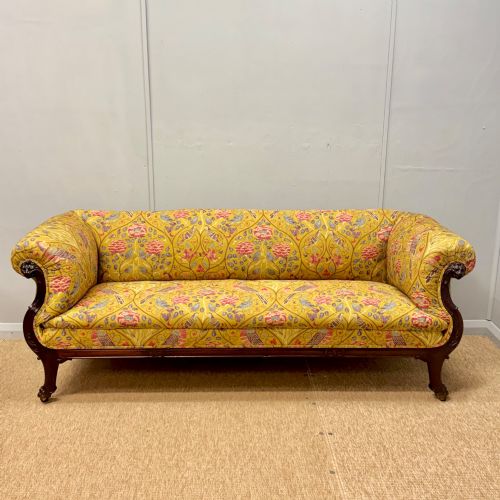
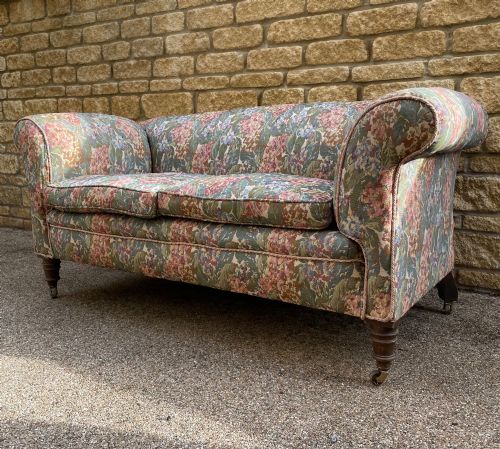
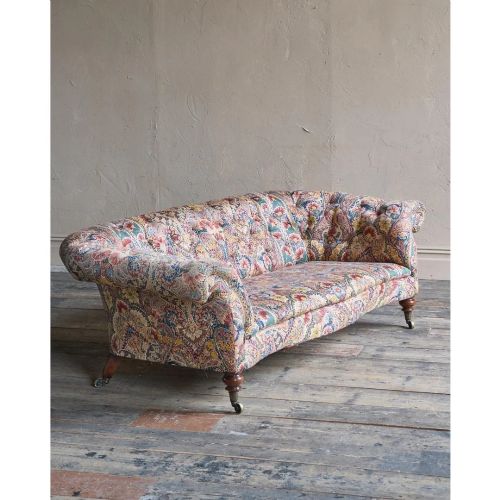
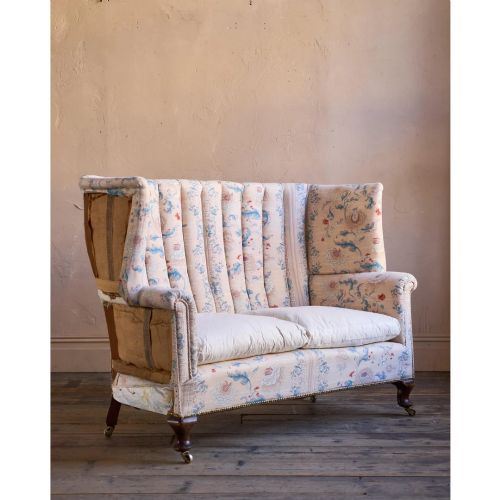
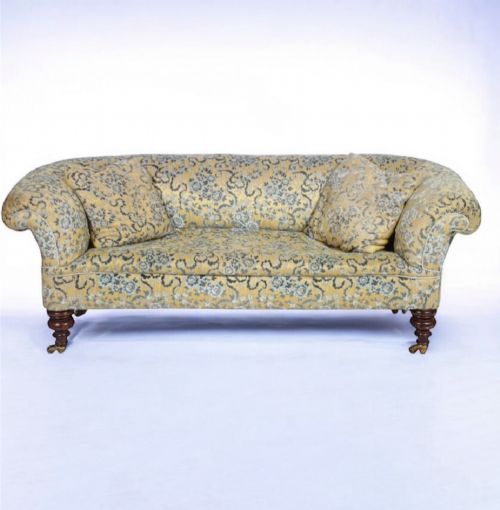


Floral Patterned Settee
These floral patterned settee examples range from walnut 18th-century frames to Edwardian suites, bringing patterned comfort and traditional seating into a room.
Floral Patterned Settee
A floral patterned settee brings traditional upholstery and patterned fabric into a seating space, drawing on 18th-century, Victorian, and Edwardian forms. Buyers searching for a floral patterned settee encounter diverse configurations, from two-seater drop-arm settees to larger Chesterfield and Knowle sofa designs.
The evidence shows forms spanning the 18th century, 19th century, Victorian period, 1910, Edwardian era, and 1930. The most frequent meetings on this page are Victorian and Edwardian upholstered pieces finished in damask, tapestry, or general upholstery fabric.
How they were made
Timbers such as mahogany and English walnut form the structural frames of these pieces, providing a sturdy skeleton beneath the cushions. Wood craftsmanship often pairs with exposed brass details on specific frames.
Upholstery relies on fabric, damask, hessian, and tapestry fabric to cover the springs and padding. Original ticking upholstery appears on certain Edwardian pieces, showing the traditional layers beneath the final patterned exterior.
Floral Patterned Settee Retail Price Guide 2026
Typical asking prices for floral patterned settee among the pieces listed under this phrase on Sellingantiques today, from the lower quarter to the upper quarter. They describe what is for sale here now, not the wider market.
Current listings incorporate timber frames of mahogany and walnut alongside upholstery fabrics including damask, tapestry, and hessian.
What varies in quality
The sophistication of the timber framing and the integrity of the underlying woodwork distinguish finer examples from simpler workshops. Walnut frames from the 18th century demonstrate a different level of cabinet-making compared to later Victorian mahogany frames.
The choice and execution of the outer textile covering, whether damask, tapestry fabric, or standard upholstery, alter the visual weight of the settee. Original textiles and preserved ticking indicate a higher degree of surviving historical fabric integrity.
Howard and Sons
The Floral Patterned Settee Glossary
- Chesterfield Sofa
- A large upholstered sofa traditionally featuring rolled arms and deep button tufting. It remains a staple of 19th-century seating.
- Knowle Sofa
- A distinct sofa style characterised by adjustable or hinged drop arms traditionally held in place by wooden finials and cords. This form appears alongside matching armchairs.
- Damask
- A reversible figured fabric woven on a jacquard loom, frequently utilised for formal upholstery. It displays floral or geometric patterns through contrasting weaves.
- Ticking
- A closely woven heavy cotton or linen material historically used to cover mattress and sofa stuffing. It prevents feather or hair padding from escaping the interior.
- Drop Arm
- A movable arm mechanism on a settee that lowers to create a daybed surface. Victorian examples often incorporate this adjustable feature.
Floral Patterned Settee: Frequently Asked Questions
How do I identify a Victorian settee?
Victorian settees typically display dark mahogany timber frames, heavy upholstery, and sprung seats designed for deep comfort. Their styling reflects the revival of earlier historical periods combined with industrial manufacturing techniques.
Examining the underside woodwork and upholstery construction usually reveals the characteristic methods of the 19th-century workshop.
What is a Knowle sofa?
A Knowle sofa is defined by high backs and distinctive hinged arms secured with vertical wooden finials and decorative cords. This form dates back to the 17th century but appears in later 20th-century variations.
The adjustable arms can be dropped flat to create an open bench arrangement or left upright to enclose the sitter.
Where were walnut settees made?
English walnut settees originate from domestic cabinet-making traditions, particularly during the Queen Anne period of the 18th century. Craftsmen utilised native timber to construct durable frames with cabriole legs.
These early pieces predate the widespread adoption of mahogany and offer a lighter, warmer wood tone in traditional interiors.