





Floral Needlework Art
Floral needlework art brings historical stitchwork into modern rooms, offering tactile depth and enduring colour through centuries of textile tradition.
Floral Needlework Art
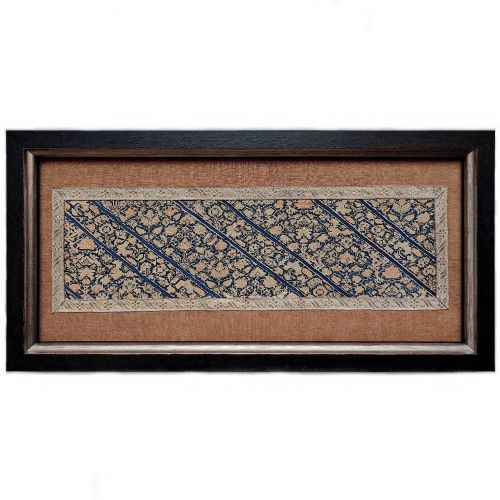
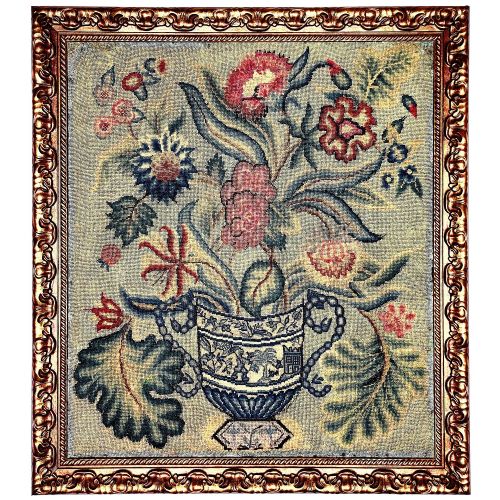
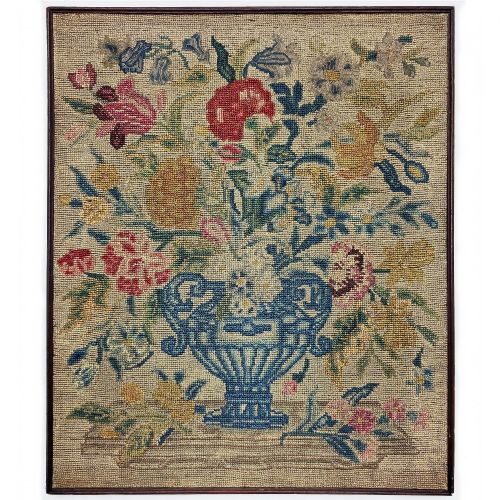
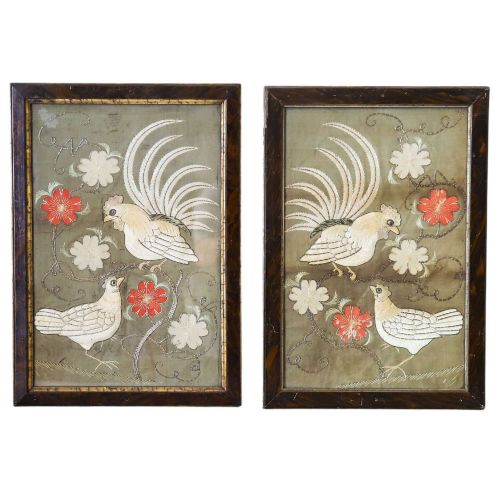
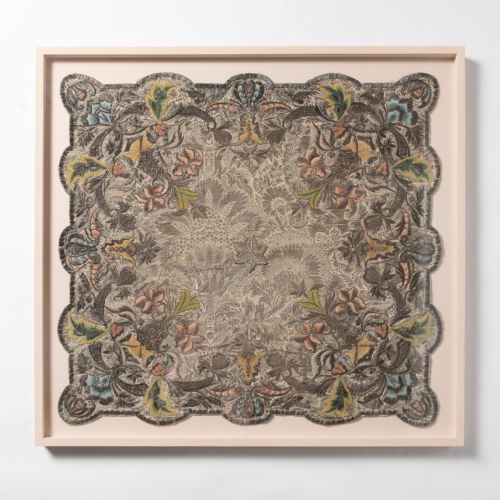
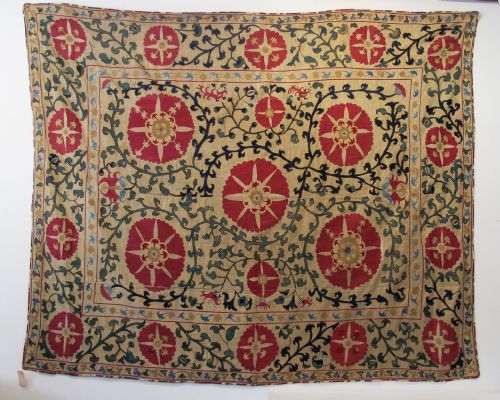
Floral needlework art encompasses framed textile pictures, wall hangings, and embroidered panels spanning from the seventeenth century to the twentieth century. These works range from English country house framed silkwork and folk art samplers to Central Asian suzanis.
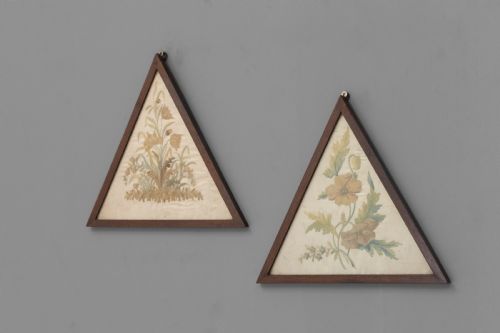
Buyers frequently encounter eighteenth-century needlework pictures alongside nineteenth-century circular floral pieces and seventeenth-century tapestry cushion covers. Materials include silk, wool, linen, and cotton, often housed within period timber or faux tortoiseshell frames.
How they were made
Artisans stitched polychrome silk, wool, and cotton threads onto canvas, linen, and cotton grounds using varied needlework techniques. Many works incorporate gold leaf accents within their frames, enhancing the visual richness of the textile composition.
Central Asian suzanis employ bold tambour or flat stitch embroidery on woven grounds, while European framed pictures utilise fine needlepoint and silk embroidery to render botanical and figurative motifs with painterly precision.
Floral Needlework Art Retail Price Guide 2026
Typical asking prices for floral needlework art among the pieces listed under this phrase on Sellingantiques today, from the lower quarter to the upper quarter. They describe what is for sale here now, not the wider market.
Listings feature textile works spanning from the seventeenth century to the twentieth century, created using silk, wool, linen, and cotton.
What varies in quality
The sophistication of the botanical design and the tightness of the stitchwork distinguish finer examples from simpler provincial pieces. Precision in needle control and the preservation of original dyed thread colours dictate visual impact.
The integrity of the mounting and the presence of period frames, such as faux tortoiseshell or carved wood, influence the overall historical cohesion of the piece.
The Floral Needlework Art Glossary
- Suzani
- A large embroidered tribal hanging originating from Central Asia, typically featuring bold floral motifs on a cotton or linen ground.
- Sampler
- A piece of stitching produced as a demonstration or test of skill in various embroidery stitches, often dated and signed.
- Needlework picture
- A framed textile composition stitched with wool or silk to create a pictorial image, popular in eighteenth and nineteenth-century interiors.
- Tapestry
- A form of textile art traditionally woven on a vertical loom rather than embroidered, depicting figurative or decorative scenes.
Floral Needlework Art: Frequently Asked Questions
How do I hang antique textiles?
Mount textile art away from direct sunlight to protect delicate silk and wool threads from fading over time.
Ensure frames are securely fitted with conservation-grade backing materials to support the weight of the fabric safely.
What is a suzani?
A suzani is a large embroidered wall hanging from Central Asia, traditionally created by brides as part of their dowry.
These pieces feature vibrant floral patterns stitched in silk on cotton or linen grounds.
How do I clean historic needlework?
Historic needlework requires delicate professional conservation rather than standard domestic cleaning methods.
Dust surfaces gently with a soft brush or vacuum through a protective mesh screen.
How do I date antique embroidery?
Dating relies on examining the fibre types, dye colours, backing fabrics, and the style of the wooden frames.
Needlework techniques and stitch structures also shift noticeably between the seventeenth and nineteenth centuries.