




Floral Needlepoint Art
Floral needlepoint art brings historic hand-worked textiles into modern interiors as framed pictures, panels, and upholstered chairs.
Floral Needlepoint Art
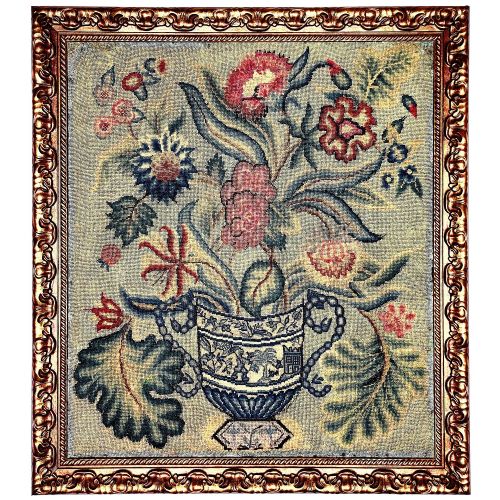
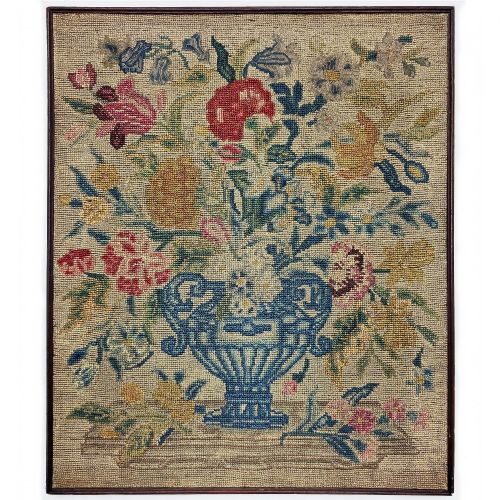
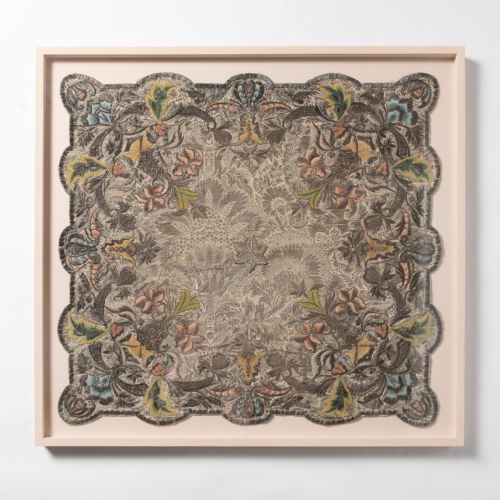
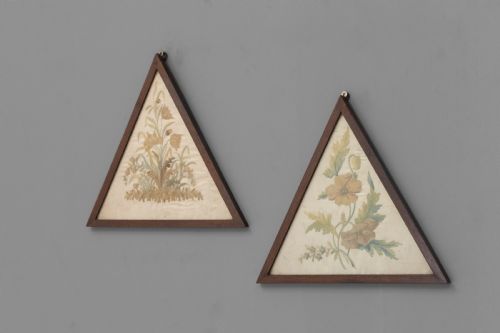
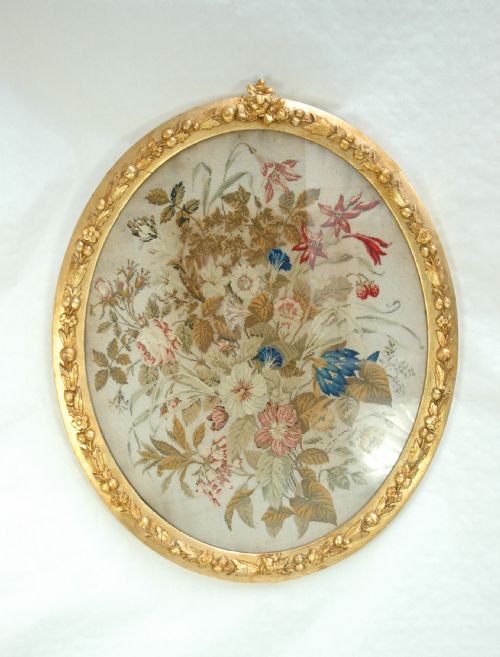
Floral needlepoint art comprises hand-stitched textile pieces created across multiple centuries, ranging from early needlework pictures to framed panels and upholstered seating. These works display botanical and garden subjects worked in wool and silk on canvas or linen grounds.
The pieces most frequently met on this page include framed needlework pictures from the eighteenth century alongside nineteenth-century floral needlework examples. Buyers also encounter textile art integrated into furniture such as elbow chairs, hall chairs, and cushion covers.
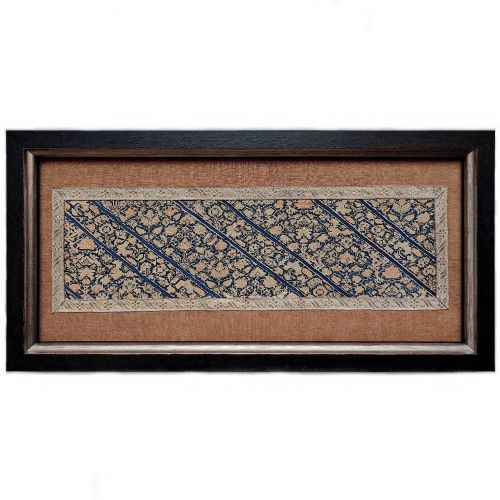
Origins span English, French, Italian, Portuguese, and Chinese workshops, demonstrating diverse regional approaches to floral needlepoint art. These items function primarily as wall art and textile art, preserved within period frames or mounted behind glass.
Materials and construction
Maker execution relies on wool and silk threads stitched meticulously onto linen, canvas, or tapestry foundations. Silkwork introduces fine detail and sheen, whilst wool provides texture and durability across panels and pictures.
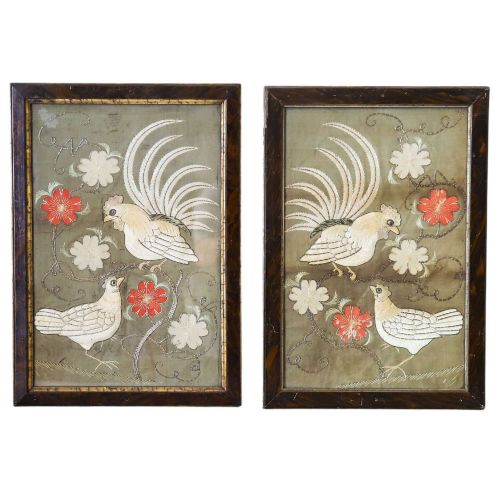
Framing methods utilise wood and glass, often incorporating period surrounds like faux tortoiseshell to protect the fragile textiles. Structural pieces integrate beech, walnut, and mahogany frames or chair carcases to support the needlework elements.
Floral Needlepoint Art Retail Price Guide 2026
Typical asking prices for floral needlepoint art among the pieces listed under this phrase on Sellingantiques today, from the lower quarter to the upper quarter. They describe what is for sale here now, not the wider market.
Listings feature works spanning the seventeenth century through to the twentieth century, utilising silk, wool, and mahogany.
Distinctions in quality
Quality rests in the precision of the stitch work and the complexity of the botanical composition. Finer needlepoint pictures demonstrate superior tonal shading in silk and wool, creating realistic depth within floral motifs.
The preservation of the textile ground and the integrity of the original framing elevate the standing of a piece. Better examples retain vibrant thread colours and secure mounting that protects the historic fabric from environmental degradation.
The Floral Needlepoint Art Glossary
- Needlework picture
- A framed textile composition worked by hand using threads on a fabric ground. These pieces were often produced as domestic decorative art and mounted for display.
- Tapestry
- A form of textile art woven on a loom or worked by hand to create pictorial designs. Early examples frequently depict figurative or floral scenes intended for cushion covers or wall hanging.
- Silkwork
- Embroidery executed primarily using silk threads to achieve a lustrous finish. This technique allows for delicate colour gradations and fine botanical detail.
- Sampler
- A piece of stitching produced to demonstrate proficiency in various embroidery techniques and stitches. They often record alphabets, motifs, and dates.
Floral Needlepoint Art: Frequently Asked Questions
How do I hang floral needlework art?
Protect delicate textiles from direct sunlight by positioning them on interior walls away from harsh windows. Ensure the framing is secure and uses conservation glass to shield the silk and wool threads.
Keep pieces away from high-moisture areas like kitchens or damp rooms to preserve the organic fibres of the canvas and backing.
Are these pieces framed?
Many examples are mounted in period wooden frames, occasionally featuring decorative finishes such as faux tortoiseshell. These surrounds are chosen to protect the delicate needlework.
Some textile items appear as panels or cushion covers without modern wall-hanging hardware, requiring specialist framing or display.
What materials were used?
Historic makers utilised wool and silk threads stitched onto woven grounds of linen or canvas. These fibres provide the structure and colour for the botanical designs.
Support structures for mounted works incorporate timber frames, whilst upholstered forms utilise woods such as mahogany, walnut, beech, or oak.
How old are these textiles?
The pieces span multiple periods, with examples originating from the seventeenth, eighteenth, and nineteenth centuries. Stylistic indicators like framing and stitching density help distinguish between eras.
Victorian and Georgian specimens show distinct approaches to floral composition and colour palettes compared to earlier seventeenth-century works.