






Floral Metal Light
A floral metal light brings botanical form and ambient illumination into a room, offering enduring decorative appeal through crafted blooms and leaves.
Floral Metal Light
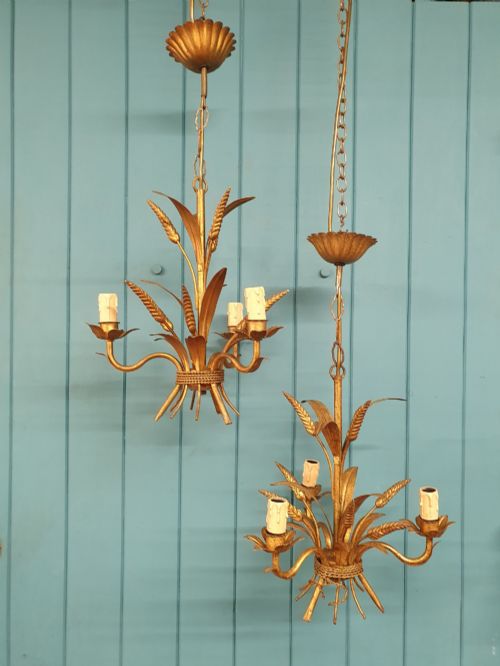
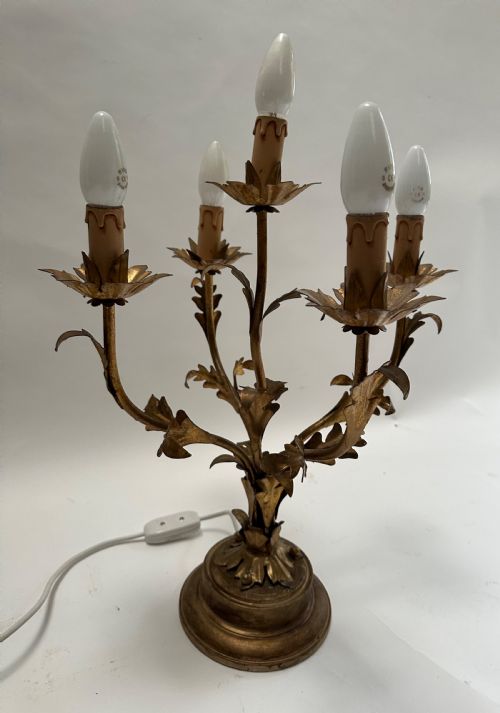
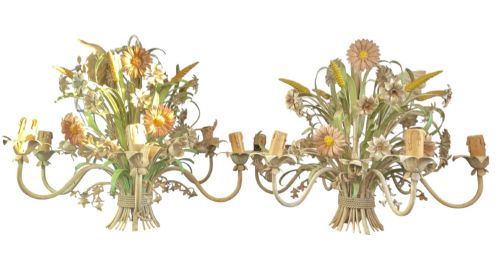
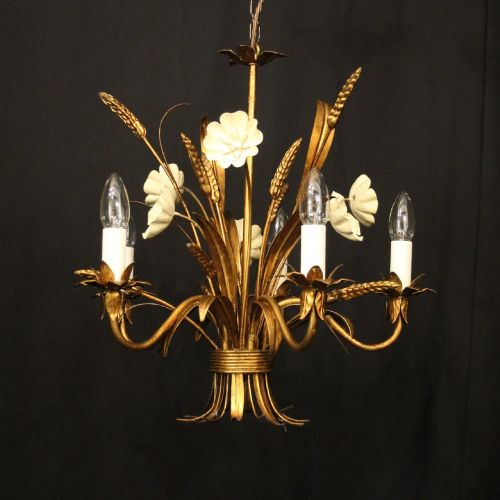
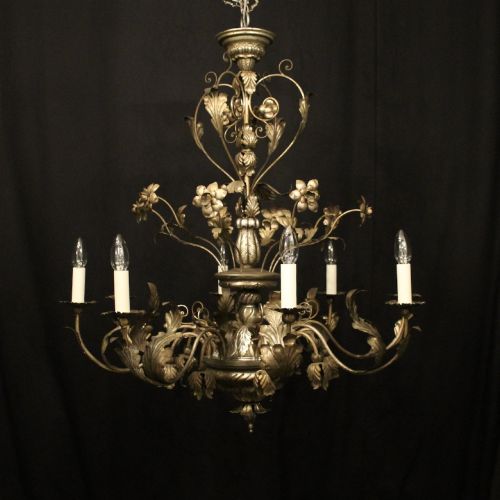
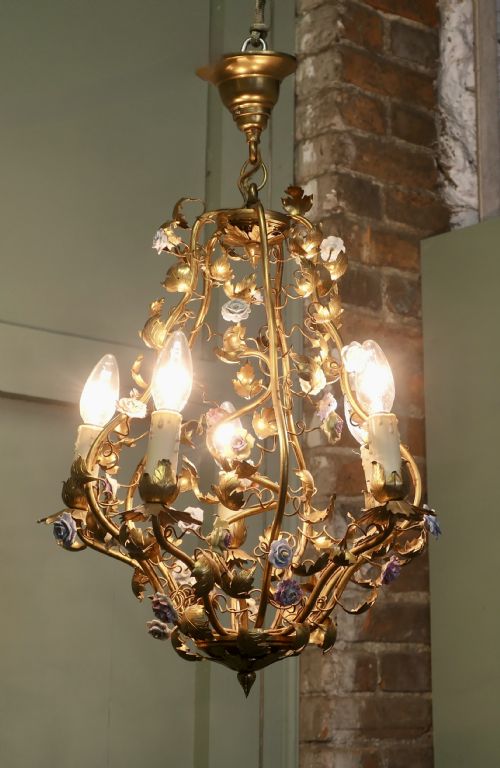
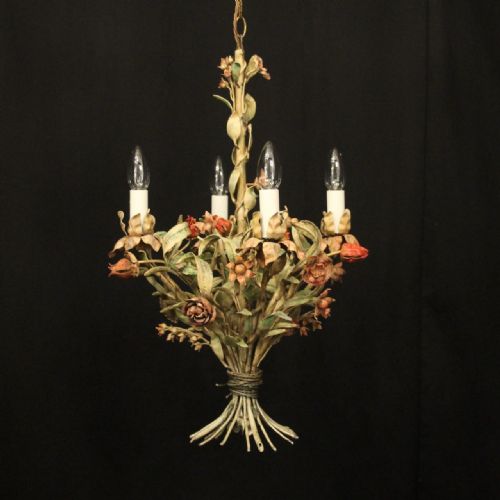
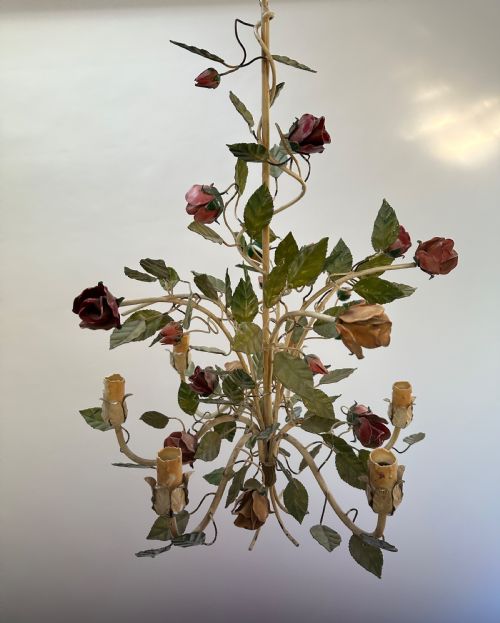
A floral metal light bridges botanical decoration and functional illumination, encompassing multi-branch chandeliers, wall sconces, and converted lamps. These pieces combine metal armatures with floral elements fashioned from toleware, ceramic, or gilt metal.
The selection here draws predominantly from early twentieth-century French and Italian workshops, featuring items dated from the Victorian period through the nineteen-thirties. French chandeliers and wall lights utilising polychrome toleware and porcelain flowers appear frequently alongside Florentine gilt creations.
Buyers encounter diverse configurations, ranging from single-light hall lanterns and pairs of wall lights to grand multi-bulb chandeliers adorned with crystal drops and beaded shades. Forms extend to table lamps adapted from nineteenth-century Chinese cloisonné vases and Samson porcelain vessels.
Materials and construction methods
Craftsmen built structural frameworks using brass, wrought iron, and cast or gilded metal, forming the branching arms and backplates necessary to support multiple light sources. Toleware components, painted metal petals, and ceramic flowers were then soldered, wired, or pinned directly to the metal armature.
Surface decoration relies heavily on gold leaf application, silver gilt finishes, and polychrome enamel paints to render realistic floral petals and foliage. Crystal drops, beaded glass elements, and porcelain flower heads are integrated to catch and refract the light.
Floral Metal Light Retail Price Guide 2026
Typical asking prices for floral metal light among the pieces listed under this phrase on Sellingantiques today, from the lower quarter to the upper quarter. They describe what is for sale here now, not the wider market.
The inventory records pieces spanning the nineteenth century through the nineteen-thirties, dominated by French toleware and Italian Florentine gilt metal styles.
Distinctions in execution and design
Quality rests upon the delicacy of the botanical modelling, where individually shaped metal toleware petals or hand-painted ceramic flowers surpass mass-stamped equivalents in visual depth. The integration of the wiring concealment and the crispness of the gilt or silvered surface finish further divide standard production from superior examples.
The sophistication of the armature design, such as complex tent and waterfall configurations or intricately chased brass frames, marks the upper tier of execution. Cohesion between the metal structural elements and the applied floral adornments determines the overall success of the piece.
The Floral Metal Light Glossary
- Toleware
- Painted or lacquered sheet metal used extensively in decorative objects. It is frequently shaped into leaves and petals for French light fittings.
- Gilt metal
- Metal treated with a gold-coloured finish or gold leaf to simulate solid gold. This technique provides a reflective surface suited to chandelier frames.
- Cloisonné
- An enamel technique where metal wire outlines compartments on a base object before filling with coloured paste. Vases finished in this manner are often converted into lamps.
- Ormolu
- Gilded bronze mounts applied to decorative objects and ceramic bodies. It appears frequently on nineteenth-century French pieces.
- Wall sconce
- A light fixture fixed to a wall rather than suspended from a ceiling. Pairs of these fixtures are common in period interiors.
Floral Metal Light: Frequently Asked Questions
How do I hang a heavy antique chandelier?
Suspension requires locating a ceiling joist or installing a heavy-duty metal bracket capable of supporting the combined weight of the metal frame and glass components.
Electrical connection should be handled by a qualified professional to ensure the internal wiring safely accommodates modern voltage.
Can these lights be wired for modern bulbs?
Most pieces accept standard lamp holders, allowing electricians to update internal wiring while retaining the original exterior metal and ceramic components.
Care should be taken to select bulb wattages that respect the thermal limits of delicate toleware and painted petals.
How do I clean painted metal and ceramic flowers?
Dusting requires a soft brush or a dry cloth to prevent moisture from damaging painted polychrome surfaces and delicate leaf joints.
Abrasive cleaners must be avoided entirely to preserve the original gilt finishes and hand-painted details on the floral elements.
How are different periods identified?
Stylistic markers such as Art Nouveau plant tendrils or Edwardian brass framing help distinguish the era of manufacture alongside construction techniques like hand-soldering and wire types.
Comparing the specific floral forms against documented toleware and porcelain styles provides further chronological context.