


Floral Metal Ceiling Fitting
These floral metal ceiling fitting examples bring sculptural botanical forms and gentle illumination into a room, offering distinct decorative presence.
Floral Metal Ceiling Fitting
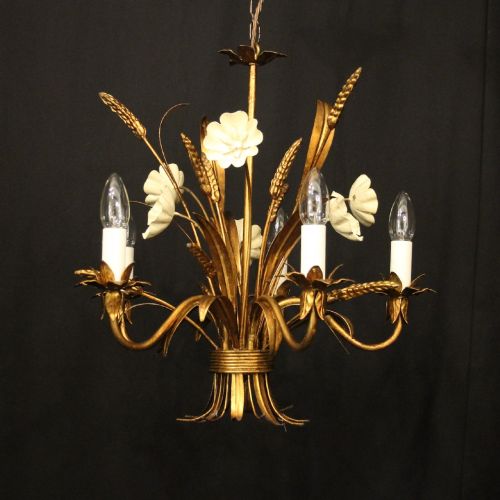
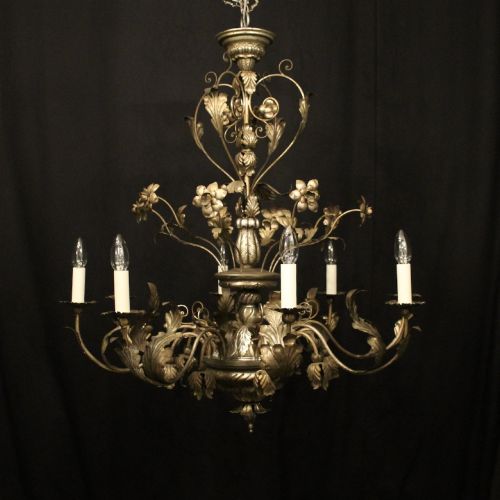
A floral metal ceiling fitting typically takes the form of a chandelier suspended from above, bringing botanical motifs directly into interior spaces. When searching for a floral metal ceiling fitting, buyers encounter pieces configured with varying light counts, ranging from compact five-bulb arrangements up to grander twelve-light structures. These lighting fixtures frequently showcase naturalistic plant elements, incorporating metallic foliage and blossom details that define their overall silhouette.
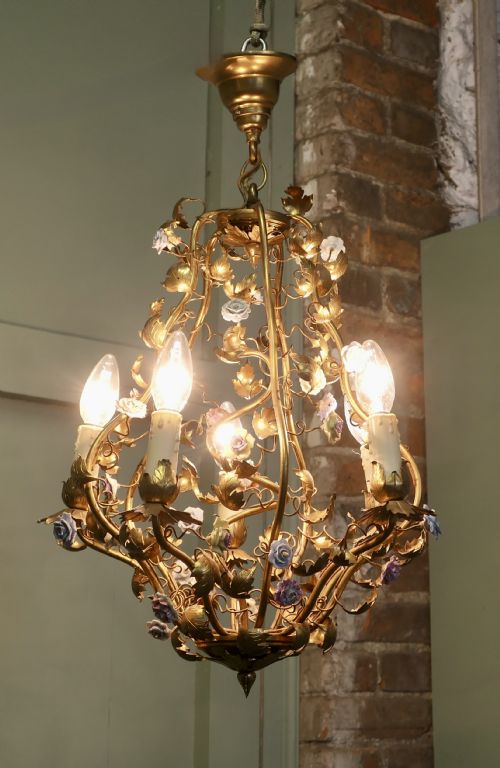
The selections span several distinct decades from the early twentieth century, drawing on Edwardian sensibilities alongside pieces dated through the 1900s, 1910s, 1920s, and 1930s. Regional influences shape these designs markedly, with French Country, French Chateau, and French Mid-Century aesthetics appearing alongside Italian Florentine, Italian Rococo, and Florentine traditions. Buyers are most likely to meet French and Italian interpretations that integrate toleware, ceramic flowers, or wheatsheaf motifs into their metal armatures.
Materials and construction methods
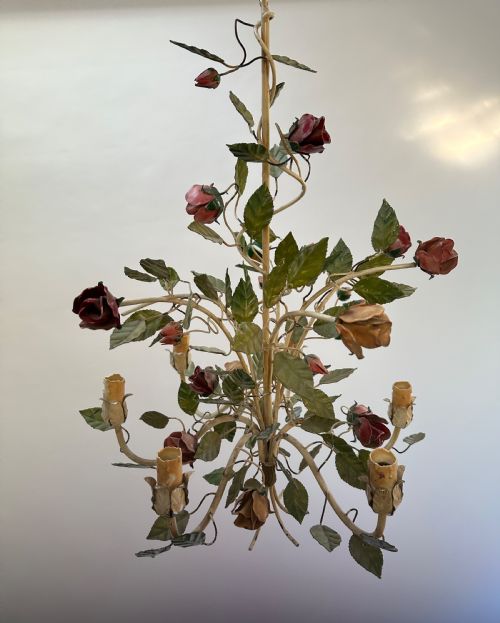
Makers utilised various metals as the structural base for these fixtures, employing wrought iron alongside cast elements finished with gilt metal, gilded metal, silvered metal, or plain iron. Surface treatments like gilt and silvering catch and reflect ambient light, enhancing the luminosity of the fixture when illuminated. Toleware components and painted metal finishes introduce vibrant polychrome colour to the botanical details, mimicking natural petals and leaves.
Glass and crystal elements frequently complement the metalwork, suspended from the arms or central stems to add refractive sparkle. Ceramic flowers are integrated into specific toleware designs, introducing tactile, fired-earth textures among the painted metal foliage. Artisans shaped these diverse components by hand, welding and soldering iron and gilt metal into intricate multi-light chandelier frameworks.
Assessing quality in period metalwork
Quality in a floral metal ceiling fitting is determined by the finesse of the metalworking and the naturalism of the botanical carving or shaping. Superior pieces display finely articulated petals, leaves, and wheatsheaves that avoid a stiff or mechanical appearance, showing deliberate attention to organic form. The execution of the surface gilding or silvering also marks the tier of a piece, with layered applications retaining depth and subtlety over decades.
The integration of secondary materials such as hand-painted polychrome toleware, ceramic blossoms, and cut crystal droplets separates standard production from exceptional examples. A heavier, more stable arm structure combined with harmonious proportions across multi-light configurations indicates superior workshop output. The coherence between the iron or gilt armature and the floral ornaments dictates the overall visual success of the chandelier.
The Floral Metal Ceiling Fitting Glossary
- Toleware
- Painted or lacquered metalware, typically tin or iron, used to create colourful floral and foliage decorations on period lighting. This technique allows artisans to introduce lasting hues of red, green, and blue to metal leaves and petals.
- Gilt metal
- Metal that has been coated with a thin layer of gold leaf or gilt paint to impart a warm, lustrous metallic sheen. The application elevates the decorative status of iron and bronze armatures.
- Wheatsheaf
- A decorative motif shaped like bundled stalks of wheat, frequently utilised in French chandelier designs to symbolise abundance. Metal versions are bound together gracefully beneath the suspension point.
- Florentine
- A regional Italian style characterised by ornate, highly decorative foliage, scrollwork, and gilded finishes rooted in Renaissance traditions. Pieces from this tradition emphasise lush botanical abundance and elaborate metal framing.
- Polychrome
- The practice of decorating surfaces with multiple distinct colours, seen here in painted metal and toleware floral components. This coloration mimics the natural appearance of garden blooms.
Floral Metal Ceiling Fitting: Frequently Asked Questions
What periods do these chandeliers come from?
The available lighting spans the Edwardian era through the opening decades of the twentieth century, specifically including pieces from the 1900s, 1910s, 1920s, and 1930s.
These dates reflect a period of eclectic revivalism in European domestic interiors, where historical styles were reinterpreted with naturalistic botanical motifs.
Which regional styles are most common?
French and Italian design traditions dominate the selection, encompassing French Country, French Chateau, and Florentine aesthetics.
French pieces frequently feature toleware and ceramic flowers, whereas Italian items often showcase elaborate silvered or gilded metalwork paired with crystal elements.
How do I know if a piece is Italian or French?
Italian fixtures frequently display Florentine or Rococo influences with heavy gilding, silvered finishes, and dense crystal additions. French variants often lean toward toleware, ceramic floral elements, and wheatsheaf motifs.
Examining the specific combination of painted metal leaves and structural framing usually reveals the regional workshop origin.
How many lights do these fixtures usually have?
Light counts range from compact five-bulb arrangements up to grander structures featuring seven, eight, nine, or twelve lights.
The scale of the chandelier generally corresponds to the number of lights, with larger Florentine and French rooms demanding higher bulb capacities.